
The U.S. Department of Energy’s Fermi National Accelerator Laboratory will receive a total of $9 million in funding over three years for its Advanced Quantum Networks for Scientific Discovery (AQNET-SD) project. AQNET-SD will build upon previous groundbreaking work toward establishing national-scale quantum networks by using sophisticated techniques to push the technology to its limits. The funding is provided by the DOE Office of Science Advanced Scientific Computing Research program.
DOE is advancing research in quantum networks that can lead to a nationwide quantum internet which enables the development of new capabilities and enables new applications beyond what can be achieved with classic networks. The networks are aimed at making it possible to interconnect multiple quantum devices and realize a diverse set of protocols that enable the amount of precision required when taking measurements and scaling up quantum computers. Essentially, this work can help transform science, the economy and everyday life; the science enabled by the new networks could lead to faster cars, new medicines and improved manufacturing materials.
Transmitting quantum data across long distances is a challenge. AQNET-SD researchers will develop several technologies and protocols to establish and optimize a quantum network between Fermilab and DOE’s Argonne National Laboratory using quantum-encoded photons, the particles that transmit quantum information. They will also demonstrate the feasibility of the coexistence of quantum and classic technologies, which increases efficiency when the best-suited technology performs any given task. Finally, researchers will deploy a hybrid free-space optical fiber network, which offers highly secure, high-speed, low-latency, low-power data transfer. All of these efforts will help advance quantum communication and computing technologies by sharing the future of quantum computing.
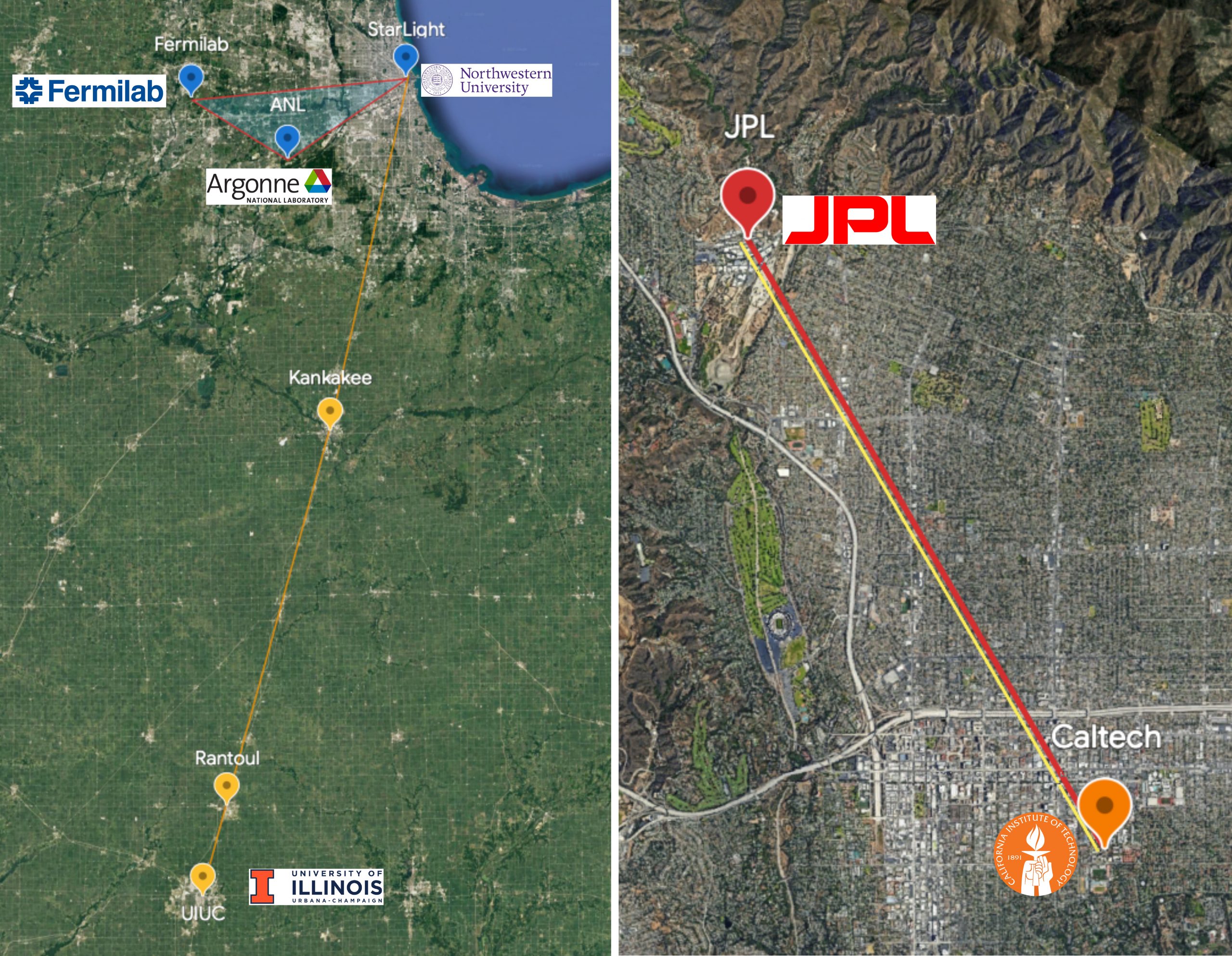
Envisioned extensions of an operating quantum network for the AQNET-SD project. Left: The network includes several Chicagoland quantum nodes at Fermilab, Argonne, Starlight (a hub for national and international research and education networks in Chicago), and University of Illinois at Urbana-Champaign via links to Kankakee, Illinois, and Rantoul, Illinois. Right: Quantum links (both free-space and fiber) between Caltech and Jet Propulsion Laboratory. Image: IEQNET collaboration
“We are taking advantage of Fermilab’s expertise in systems engineering integration, advanced controls, readout electronics and ultra-sensitive sensors, which are all necessary for conducting successful particle physics experiments and applying them toward building a reliable, scalable and secure quantum network,” said Cristian Pena, principal investigator of the project at Fermilab.
However, improving quantum networks has implications beyond particle physics.
“Quantum networks are the foundation for distributed and scaled-up quantum computing, which has potential applications in banking, national security, energy delivery infrastructure, information security, and many other areas,” said Panagiotis Spentzouris, director of emerging technologies at Fermilab. He is also the principal investigator for the Illinois‐Express Quantum Network (IEQNET) project. “Needless to say, if quantum networking and quantum computing work, the world will look different.”
AQNET-SD is building on the success of IEQNET, led by Fermilab. This project, which included Argonne National Laboratory as well as academia and industry partners, developed, implemented and successfully demonstrated a quantum network between Fermilab and Argonne. IEQNET’s success was instrumental in driving forward the research that continues with this project.
Both Fermilab and Argonne have been awarded funding for separate projects that will leverage the expertise and capabilities developed by IEQNET. Collaboration between the two national labs will continue, as Fermilab will participate in the Argonne-led project, InterQnet.
“We are excited to have two projects funded in the Chicago region. Building on the ongoing collaboration among Argonne, Fermilab and other partners, we are poised to make great strides in scaling quantum networks in both the Argonne- and Fermilab-led projects,” said Rajkumar Kettimuthu of Argonne, principal investigator of the InterQnet project.
In addition to Fermilab and Argonne, the AQNET-SD project includes recognized leaders in the field: Caltech, the Jet Propulsion Laboratory, Northwestern University and the University of Illinois at Urbana-Champaign, each of which brings unique strengths and expertise in quantum network technologies
Fermi National Accelerator Laboratory is America’s premier national laboratory for particle physics research. A U.S. Department of Energy Office of Science laboratory, Fermilab is located near Chicago, Illinois, and operated under contract by the Fermi Research Alliance LLC. Visit Fermilab’s website at https://www.fnal.gov and follow us on Twitter @Fermilab.
The DOE Office of Science is the single largest supporter of basic research in the physical sciences in the United States and is working to address some of the most pressing challenges of our time. For more information, please visit science.energy.gov.
Eight students have received the prestigious U.S. Department of Energy Office of Science Graduate Student Research Award to conduct their research at Fermi National Accelerator Laboratory.
The DOE Office of Science selected a total of 60 graduate students representing 26 states this cycle. The fellowship will expose students to world-class training and state-of-the-art facilities and resources at the DOE national laboratories. The Fermilab recipients are:

Karia Dibert
Karia Dibert, University of Chicago
Fermilab advisor: Adam Anderson
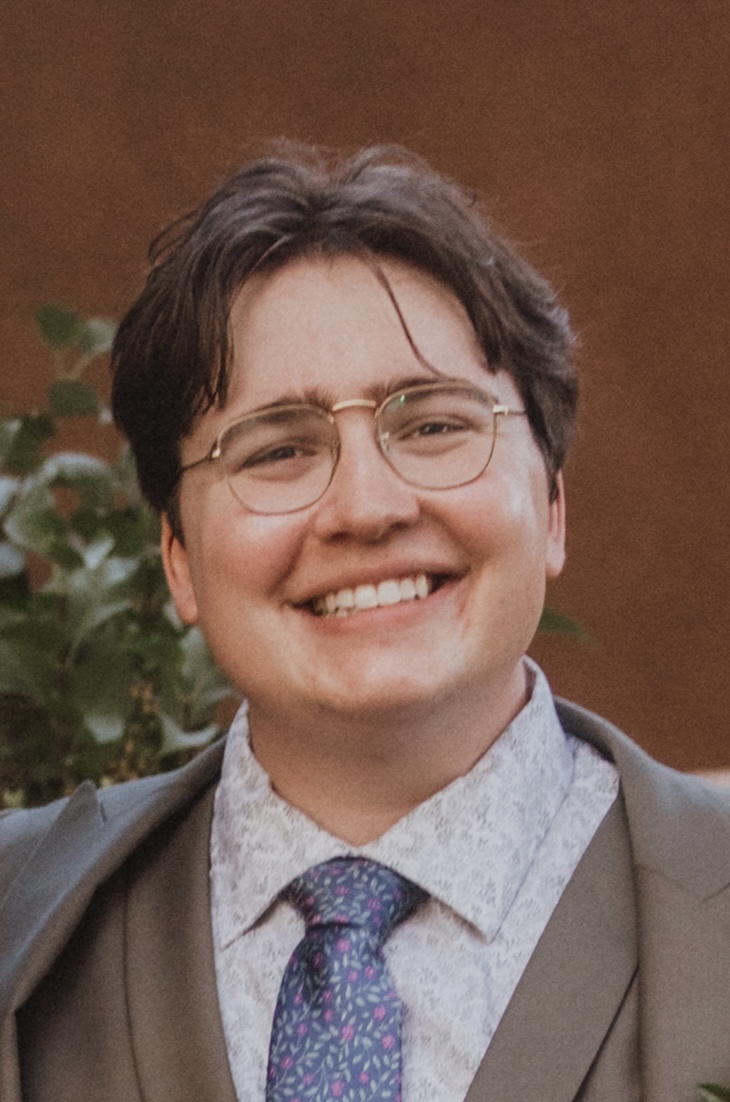
Kylar Greene
Kylar Greene, University of New Mexico
Fermilab advisor: Gordon Krnjaic

Duncan Rocha
Duncan Rocha, University of Chicago
Fermilab advisor: Marcela Carena
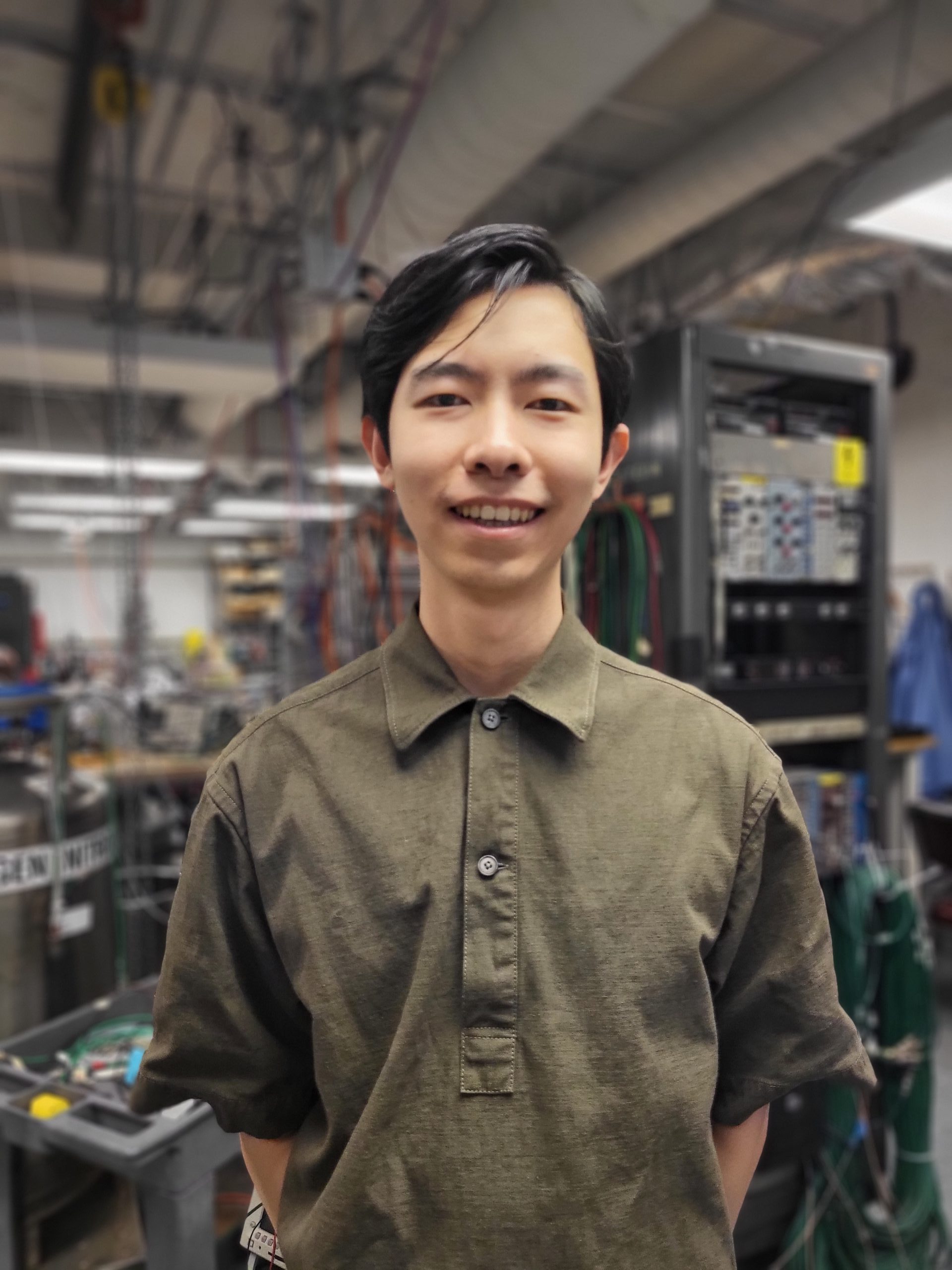
Zhiheng Sheng
Zhiheng Sheng, Northwestern University
Fermilab advisor: Dan Baxter
Zachary Williams
Zachary Williams, University of Minnesota
Fermilab advisor: Lauren Hsu

Jean Wolfs
Jean Wolfs, University of Rochester
Fermilab advisor: Louise Suter
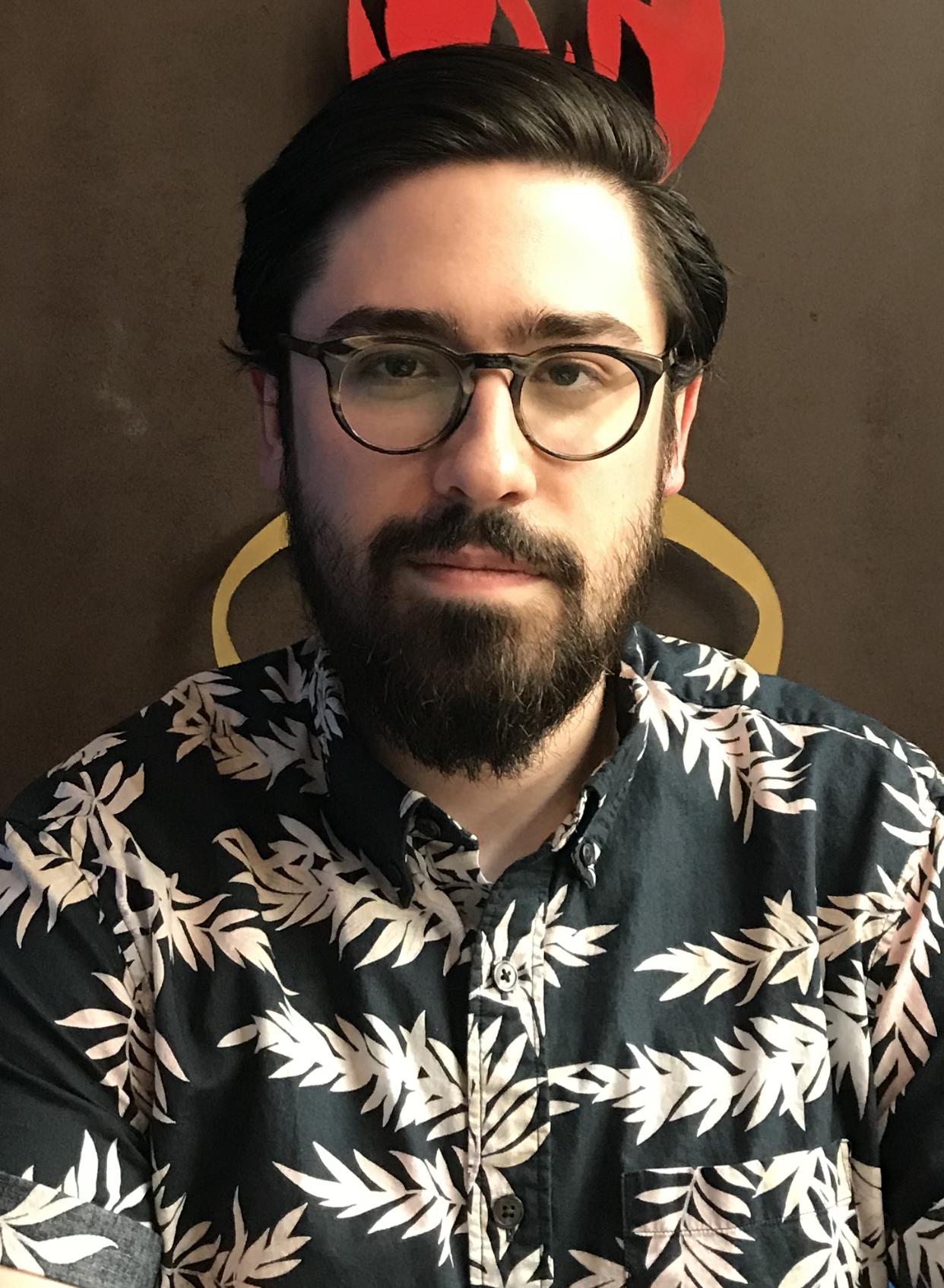 Anthony Wood, University of Houston
Fermilab advisor: Minerba Betancourt
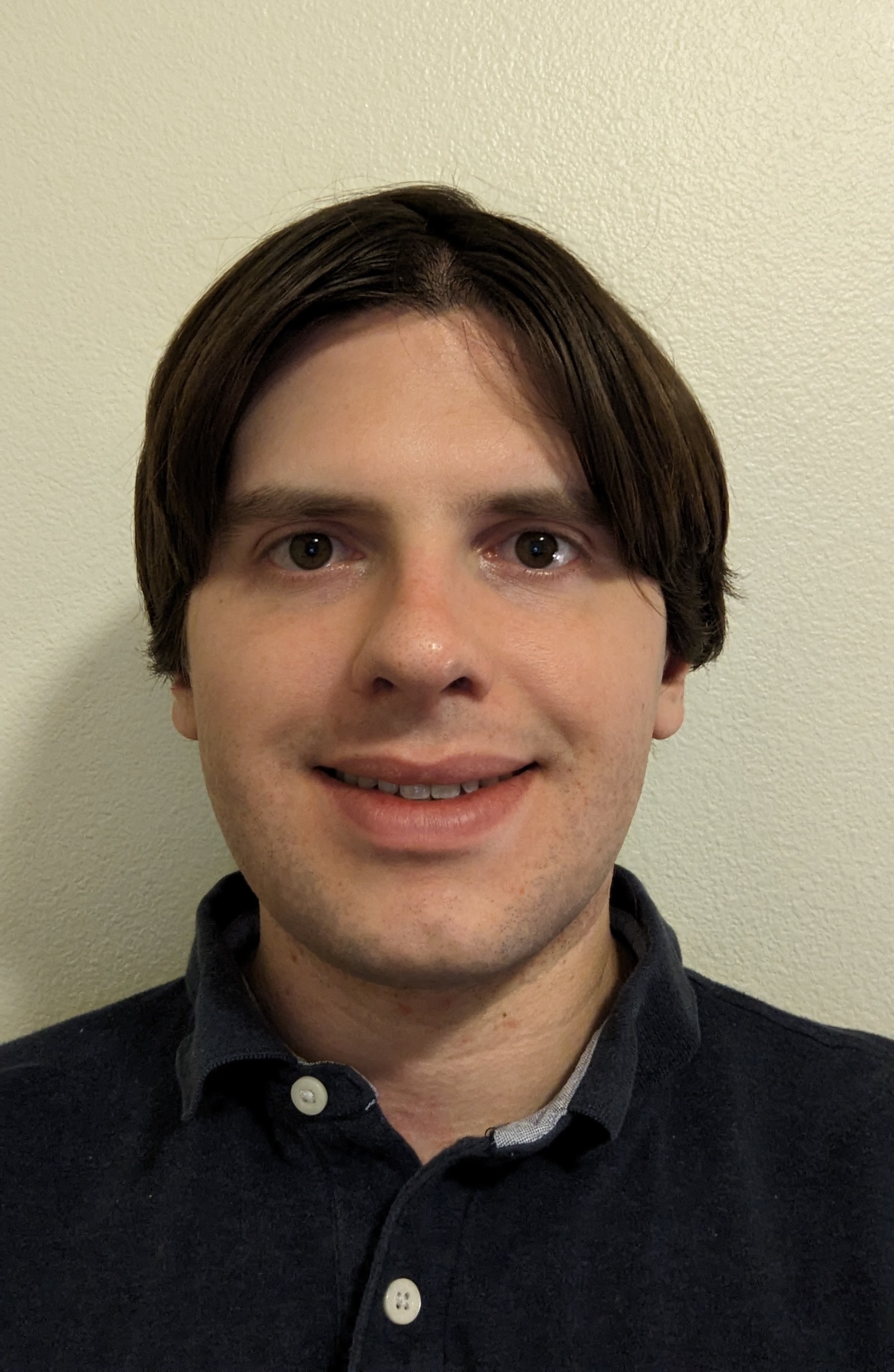
Alejandro Yankelevich
Alejandro Yankelevich, University of California–Irvine
Fermilab advisor: David Christian
“This is an incredible experience for students – being able to conduct research at a national laboratory will have far reaching impacts,” said Asmeret Asefaw Berhe, director of the DOE Office of Science. “We hope that these students will continue their path in science and I look forward to seeing what they do in the future.”
The goal of the SCGSR program is to prepare U.S. graduate students for STEM careers critically important to the DOE Office of Science mission by providing graduate thesis research opportunities through extended residency at DOE national laboratories. While the research projects address scientific and technological challenges at national and international scales, the extended residency is expected to advance the awardees’ overall doctoral research and training with access to the expertise, resources and capabilities available at the DOE laboratories.
Awards were made through the SCGSR program’s first of two annual solicitation cycles for fiscal year 2023. Applications for the ongoing 2023 Solicitation 2 cycle are due 5 p.m. ET, Nov. 8, 2023. An application assistance workshop will take place on Oct. 10, 2023; prospective applicants can register here.
Fermilab is supported by the Office of Science of the U.S. Department of Energy. The Office of Science is the single largest supporter of basic research in the physical sciences in the United States and is working to address some of the most pressing challenges of our time. For more information, visit science.energy.gov.
The U.S. Department of Energy’s Project Leadership Institute has awarded Cristian Boffo a 2022 PLI Capstone Project Award. Boffo is project manager for the Proton Improvement Plan II, or PIP-II, project at Fermi National Accelerator Laboratory.
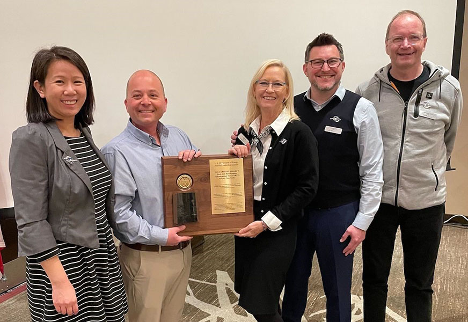
Cristian Boffo displays the Project Leadership Institute capstone award plaque alongside his teammates, from left: Janet Kan, SLAC National Accelerator Laboratory; Chris Crawford, Savannah River National Laboratory; Ann Shattuck, Los Alamos National Laboratory; Cristian Boffo, Fermilab; and Matthaeus Leitner, Lawrence Berkeley National Laboratory. Photo: Los Alamos National Laboratory
The Project Leadership Institute is a DOE program to support the development of the future leaders of major, high-risk DOE projects. Its mission is to cultivate a diverse network of successful DOE project delivery practitioners, thus contributing to building a culture of project management excellence across DOE.
“Highly complex projects require not only the right tools, know-how and ability to problem solve but also effective collaboration and interpersonal skills,” said Elaine McCluskey, PLI director. “The PLI program is focused on developing project leaders, inviting them to be introspective and support their growth from managers to leaders.”
The PLI takes a cohort of 20 to 25 program managers, project directors, project managers, control account managers and project controls analysts, and DOE federal employees engaged with major projects from all the DOE laboratories. The program provides participants with the tools necessary to be a successful project leader in the DOE system, including training on how to collaborate with others and respect one another.
“The program is building a strong foundation of leaders at Fermilab and all the DOE sites to address the challenges in DOE now and in the future,” said McCluskey.
PLI divides the cohort into teams of four or five people. Each team works together over the course of a full calendar year to perform a case study analysis. The program culminates in a final written and oral team presentation.
The 2022 case study analysis focused on the performance of the multi-laboratory team that successfully completed the Dual Axis Radiographic Hydrodynamic Testing facility — or DARHT, the first hydrodynamic test facility instrument built in the nation — at Los Alamos National Laboratory. The PLI participants watched presentations about the case study, interviewed project leaders at all levels from DOE to group mangers, and visited the facility to analyze the performance of the project and the team dynamics behind it.
Boffo and his team kept their attention on the culture around the project, which he thinks helped them stand out from the others. “For us, the focus was to understand how project culture and personal interactions affected the performance of the project. How did people act? How did they change the way they acted to be successful?” said Boffo. “We named our team ‘Culture Club’ to make our intentions very clear.”
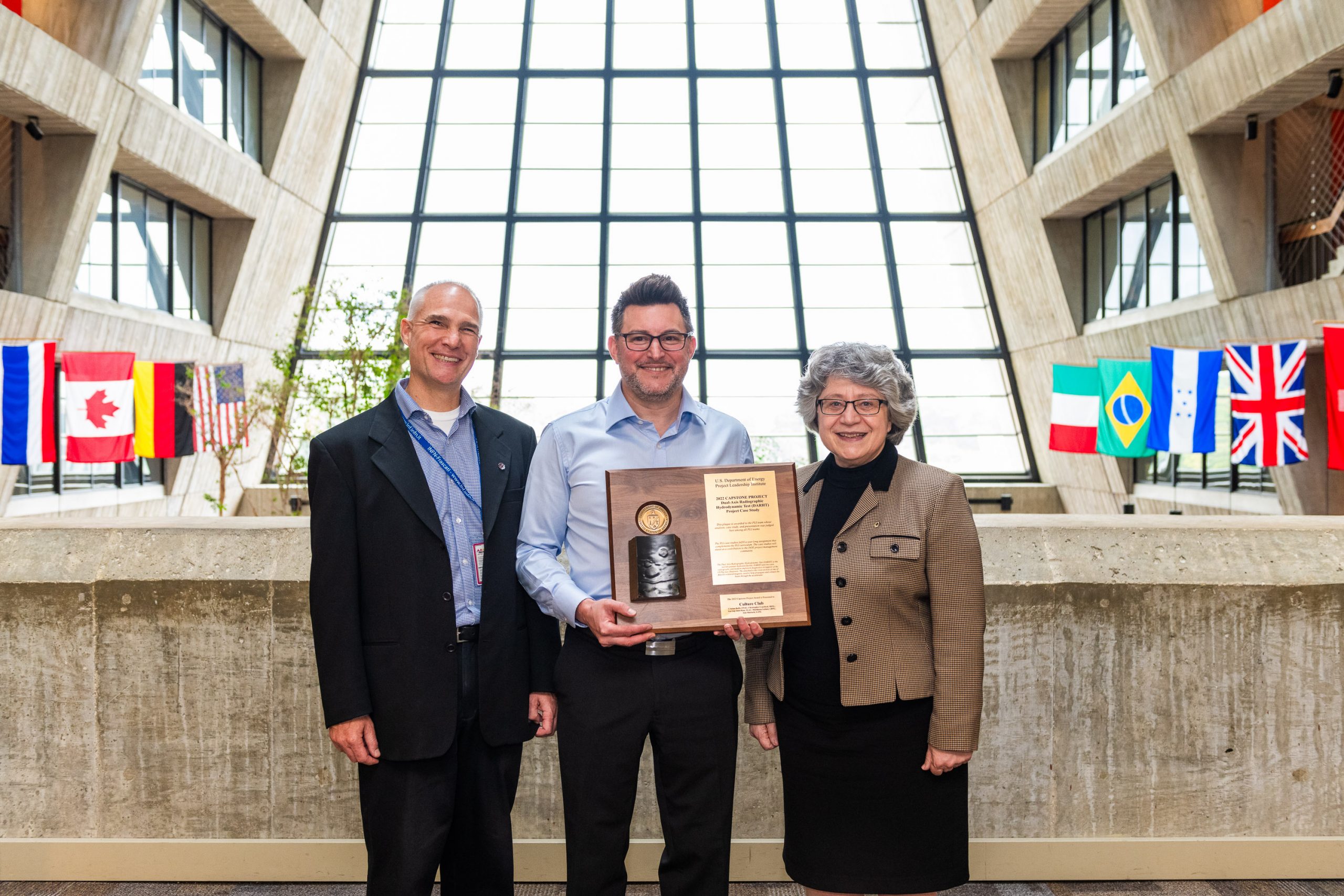
From the left, Doug Glenzinski, Cristian Boffo and Lia Merminga stand with the 2022 PLI Project Capstone Award winners’ plaque. Photo: Dan Svoboda, Fermilab
He also thought their final presentation, titled “Riding the Waves to Success,” helped them clinch the top spot. After being taught strategies for effective presentations, his team employed “waves” as a theme throughout their summary. The waves represented both the waves employed by the technology involved in DARHT, as well as the metaphorical waves of the stalls and starts of the project’s progression.
Boffo said the experience allowed him to perform a deep dive in the DOE system. “I learned and applied project management in industry,” he said. “When I joined PIP-II, I had to learn the DOE processes, and that’s very different than industry standards.”
Boffo also said the program is an excellent networking opportunity. He has kept in touch with his cohort, as well as members of previous cohorts, thanks to the extensive PLI alumni network.
Nearly nine months after the 2022 PLI program ended, Boffo said he still sees the benefits in his work today. “The more you do with it, the more you get out,” he said.
The winning PLI team receives a plaque that is passed between the labs of the participants, after which it is permanently displayed in DOE headquarters in Germantown, Maryland. The plaque recently arrived at Fermilab and is on display in the executive suite near Director Lia Merminga’s office.
In addition to Boffo, the winning team consisted of Chris Crawford, Savannah River National Laboratory; Janet Kan, SLAC National Accelerator Laboratory; Matthaeus Leitner, Lawrence Berkeley National Laboratory; and Ann Shattuck, Los Alamos National Laboratory.
Previously, Fermilab’s Luisella Lari received a 2018 PLI Capstone Project Award.
Fermi National Accelerator Laboratory is supported by the Office of Science of the U.S. Department of Energy. The Office of Science is the single largest supporter of basic research in the physical sciences in the United States and is working to address some of the most pressing challenges of our time. For more information, please visit science.energy.gov.