
Recommended reading
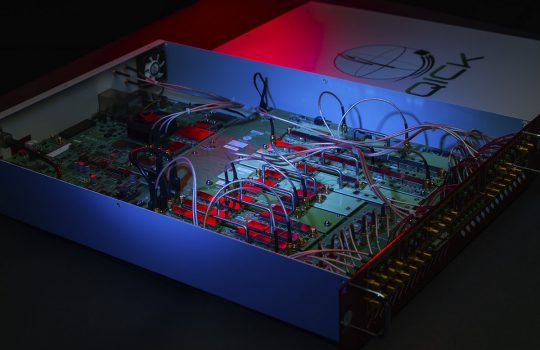
Fermilab and Harmoniqs integrate open-source tools to advance qubit control optimization
Fermilab developed the Quantum Instrumentation Control Kit, or QICK, as a compact, customizable and cost-effective quantum readout and control option for scientists. Harmoniqs, a quantum computing software company, developed Piccolo.jl, a quantum control and calibration software package. Together, their developers are integrating the two to achieve precise, repeatable qubit control, providing better results in less time.

Anna Grassellino appointed to DOE Office of Science Advisory Committee
Anna Grassellino of Fermilab will serve on SCAC and chair the quantum subcommittee, tasked with advancing national quantum goals.

Fermilab’s new director clarifies mission and achieves progress in first 100 days
With a sharp focus on Fermilab’s core scientific mission, Norbert Holtkamp is establishing clear priorities and a disciplined strategy that align the laboratory with the nation’s most ambitious research goals. His leadership is positioning Fermilab for long‑term success.