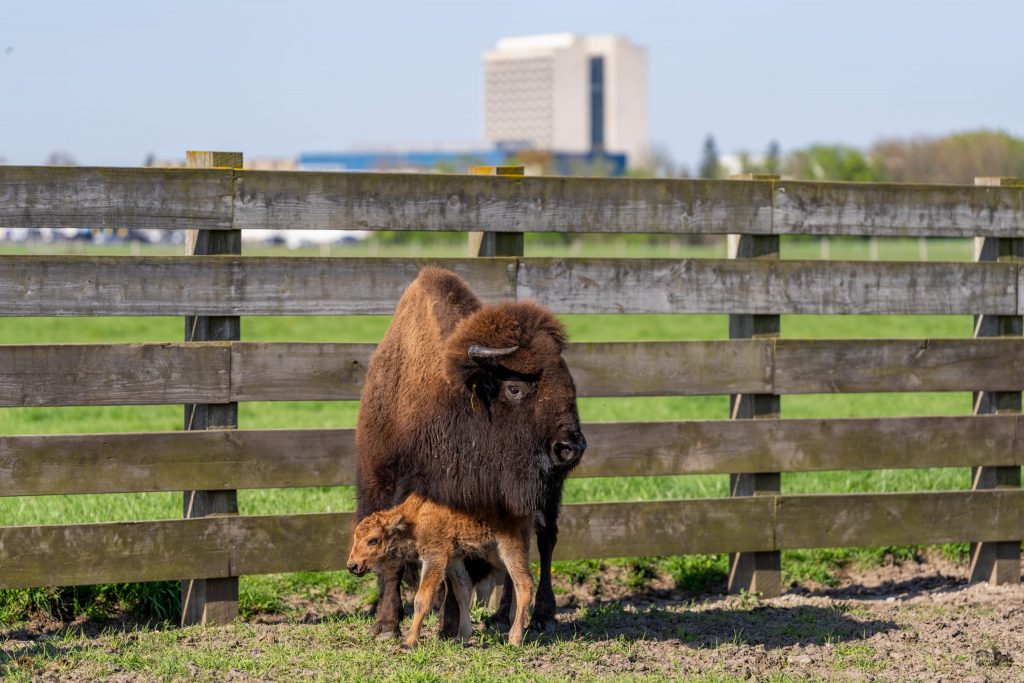
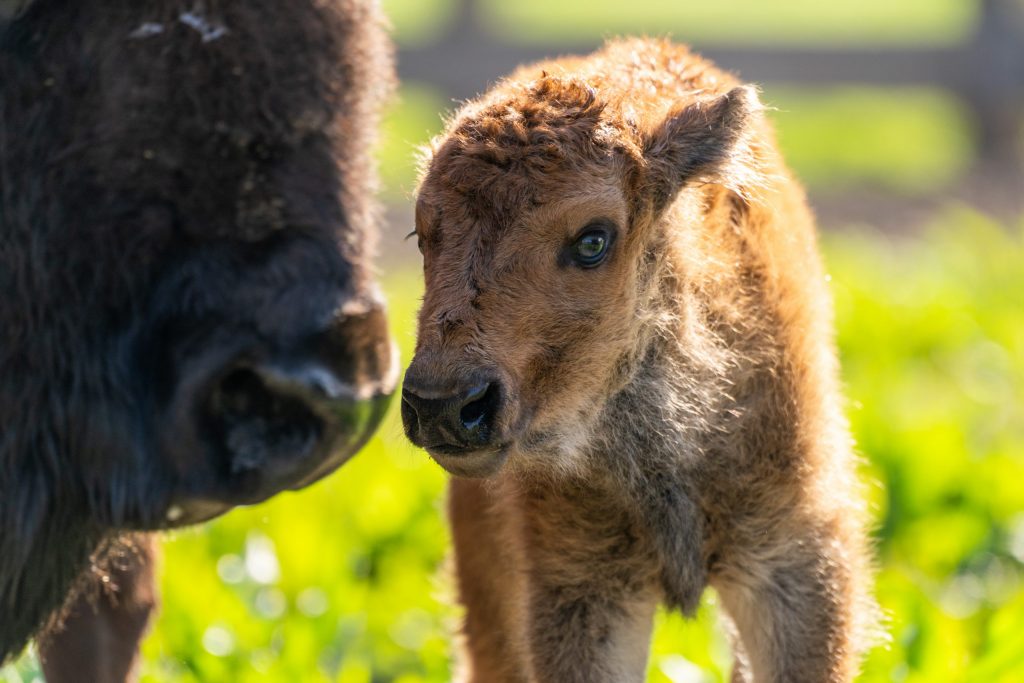
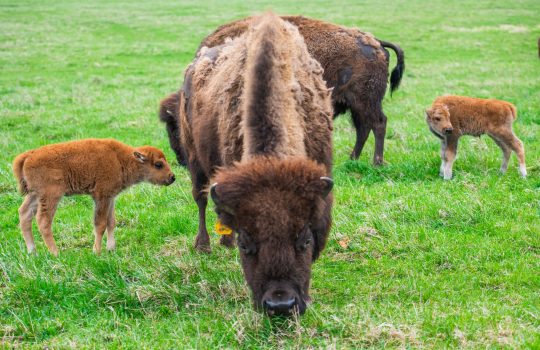
Spring has blossomed on the prairie land at Fermi National Accelerator Laboratory with one of the laboratory’s most cherished traditions: the arrival of the first newborn American bison calf. Today, the first cinnamon-colored baby bison was born and is healthy, and the calf is staying close to its mother as it takes its first steps on the open grassland.
Establishing and maintaining the bison herd at Fermilab is a bold symbol of the laboratory’s achievements on the frontiers of science. By establishing the herd of bison, the founder of Fermilab, Robert Wilson, intended to connect the laboratory with the Illinois prairie that once dominated the region. He believed that a cutting‑edge scientific facility should also honor the history and environment of the land it occupies.
“People come to Fermilab for world‑class science, but the bison herd has become one of the most beloved parts of our identity,” said Fermilab Director Norbert Holtkamp. “Fermilab occupies a very special place with the local community and in the global scientific landscape.”
Bison are hardy animals that can live outside year-round in most any weather. The Fermilab herd is managed to live naturally on the prairie, with Fermilab keepers only providing them with structures within corrals to block the strong winds that swirl across Fermilab’s flat landscape.
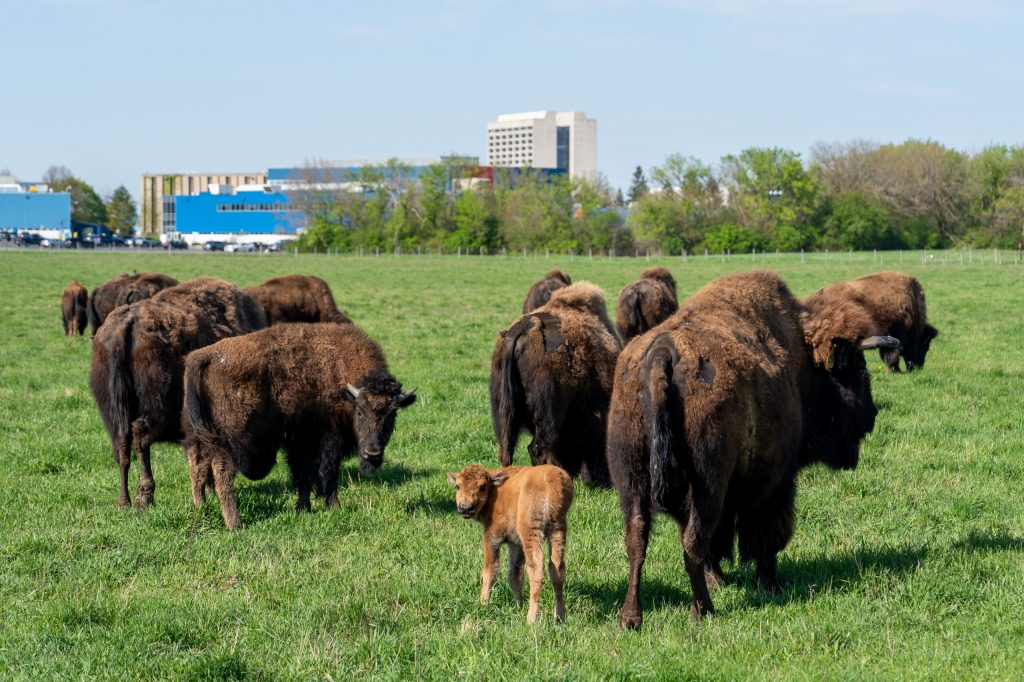
The current herd consists of two bulls and 23 female cows. Bison calving season at the lab usually starts in the middle of April and continues until June. Each spring, the lab’s herdsman Cleo Garcia, expects approximately 20 new calves. Last year, 20 babies were born, with four calves arriving by surprise in late summer.
During calving season, Garcia feeds the bison and checks on them daily, studying the cows for hints that they may soon give birth. He also monitors the young calves to make sure that they are healthy and adapting well to their new environment. In the winter, the herd’s food is supplemented with hay and grain when grass is not as plentiful.
Fermilab refreshes the bulls in the herd every five to seven years. The bulls are pure-bred American bison and have been genetically tested. This is important in maintaining the health of the herd. Eleven years ago, Fermilab tested the entire herd and determined that there were no domesticated cattle genes present.
To the staff members, the arrival of the calves is more than just a charming sight — it is a reminder of the lab’s commitment to blending world‑class scientific research with an appreciation of nature. The calves grow up alongside the lab’s ongoing ecology and restoration efforts, including conservation of wildlife throughout the 6,800 acres of land by maintaining a healthy, biodiverse ecosystem.
The bison stand as a bridge between past and future, linking a modern particle physics laboratory with the natural landscapes that once dominated northern Illinois. And as the new calves take their first steps, they continue a legacy that has become a part of Fermilab’s identity since 1969.
The public is welcome to view the herd anytime on the web 24-7 with the bison camera or by visiting Fermilab’s outdoor public areas from dawn to dusk every day of the week. Please visit the hours and public access webpage for information and requirements for visiting the lab, and celebrate the arrival of spring along with Fermilab’s newest additions.
The Fermilab site has been designated a National Environmental Research Park by the U.S. Department of Energy. The lab’s environmental stewardship efforts are supported by the Department of Energy Office of Science and by Fermilab Natural Areas.
Fermi National Accelerator Laboratory is America’s premier national laboratory for particle physics and accelerator research. Fermi Forward Discovery Group manages Fermilab for the U.S. Department of Energy Office of Science. Visit Fermilab’s website at www.fnal.gov and follow us on social media.
Recommended reading
Science meets soil in Fermilab’s prairie land
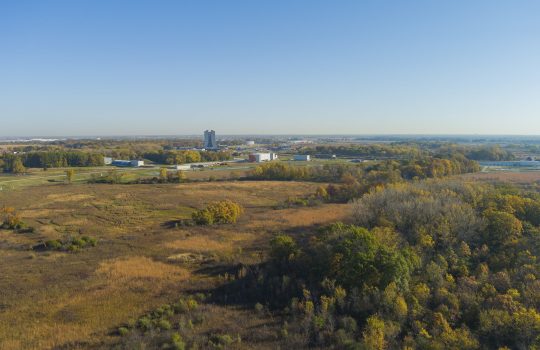
Since its inception 50 years ago, the prairie restoration success at Fermilab has become a living laboratory — supporting scientific research, fostering biodiversity and providing essential ecosystem services like erosion control and enhanced soil health.
Spring at Fermilab welcomes the arrival of two baby bison
Fermilab welcomed two baby bison today, marking the start of calving season at the Department of Energy’s particle physics laboratory in Batavia, Illinois. With 23 cows and two bulls in the herd, visitors can witness these iconic animals in their natural habitat, either in person or via the Fermilab bison camera.
Double delivery of baby bison at Fermilab today
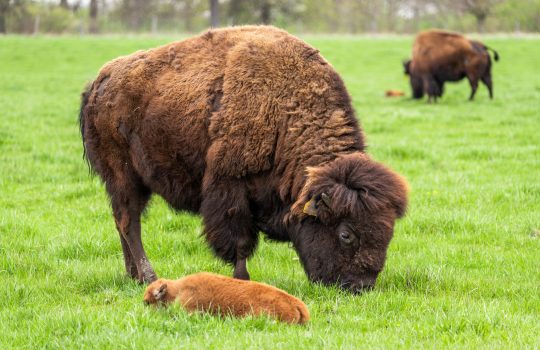
Spring brings new life to Fermi National Accelerator Laboratory as calving season begins for the lab’s herd of American bison. Today, two bison calves were born at Fermilab. The lab has a long tradition of providing habitat for bison, connecting particle physics research to the Midwestern prairie. This season, 20 baby bison are expected.