The Underground Construction Association has awarded the Long-Baseline Neutrino Facility/Deep Underground Neutrino Experiment at the Sanford Underground Research Facility located in South Dakota, the prestigious 2026 Project of the Year Award. Hosted by the U.S. Department of Energy’s Fermi National Accelerator Laboratory, DUNE is a cutting-edge neutrino experiment comprised of three massive caverns located a mile below the surface. The underground space will house massive detectors and an entire laboratory system dedicated to neutrino research.
“The dedicated engineering teams who designed, excavated and constructed the colossal caverns in South Dakota, completed the project successfully and with an impeccable safety record,” said Fermilab Director Norbert Holtkamp. “Congratulations to the design and construction teams who achieved this important milestone. Construction of a project like this has never been done before in the U.S. They have my deep appreciation as we move to the next phase of making the underground laboratory a reality.”
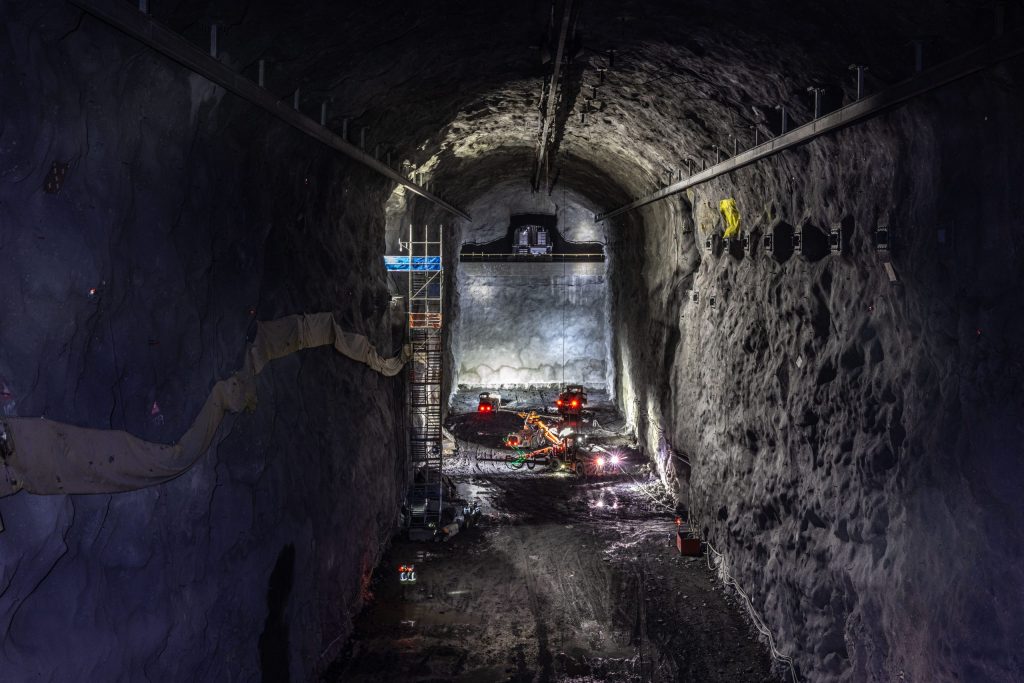
LBNF won the award for a project in the $100M – $500M category. The construction teams of the LBNF/DUNE project included engineers from Arup, Delve Underground, Fermilab, Kiewit-Alberici Joint Venture, SURF and Thyssen Mining, Inc. Together, they pushed the limits of geotechnical engineering with the formation of two massive caverns, each measuring 65-feet wide, 92-feet tall, and 495-feet long (20 meters x 28 meters x 150 meters). The three caverns of the new research facility span an underground area close to the size of eight soccer fields.
“The dedicated engineering teams who designed, excavated and constructed the colossal caverns in South Dakota, completed the project successfully and with an impeccable safety record.”
Fermilab Director Norbert Holtkamp
For Mike Headley, the executive director of the South Dakota Science and Technology Authority and laboratory director at SURF, this award was made possible thanks to more than two decades of visionary leadership, generous philanthropy and dedicated labor.
“I think this UCA award is tremendous in that it recognizes the monumental scale of this project,” Headley said. “Building something like this on the surface would be challenging enough; it’s so impressive that through the cooperation of multiple partners, we have this enormous accomplishment nearly a mile underground,” Headley said of the project’s safety record; SURF logged more than one million hours during construction without a lost-time incident.
“The UCA Project of the Year Awards are presented to a project team or group that demonstrates insight and understanding of underground construction or a significant project, which may include practices, developing concepts, theories or technologies to overcome unusual problems within a project, resulting in little to no outstanding issues.”
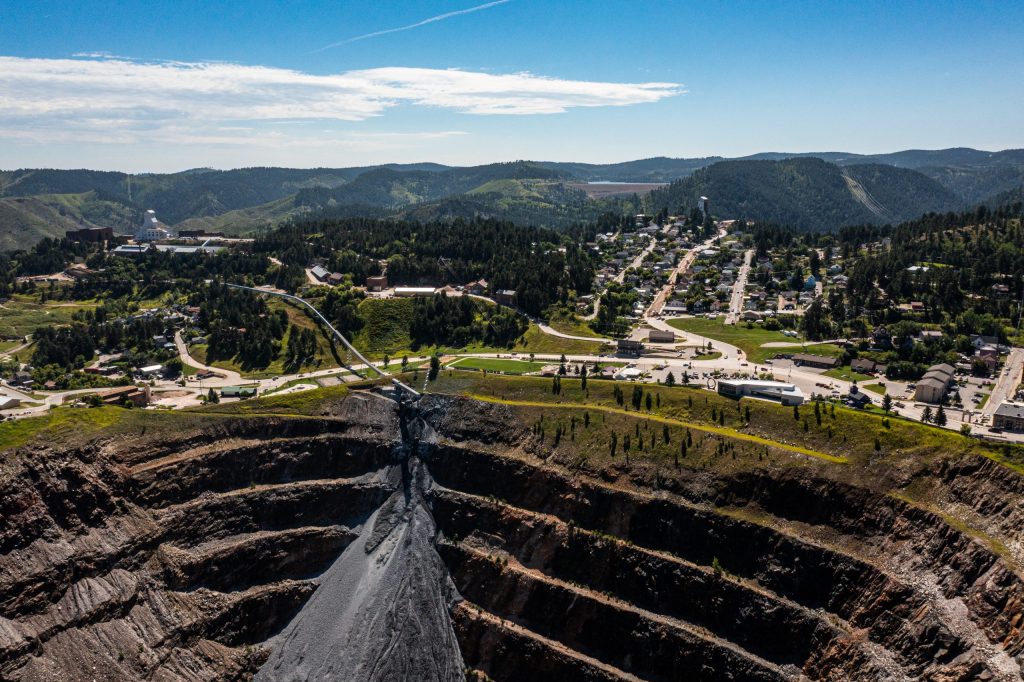
Excavation work at the far site began in early 2019 and was completed in February 2024. During that time, the underground spaces were prepared for the DUNE project with the restoration and expansion of historic rock-handling systems that removed over 800,000 tons of rock from approximately 5,000 feet (1,520 meters) below ground. The rock traveled up the renovated mile-deep Ross shaft at SURF, continuing along an above-ground three-quarter-mile-long conveyor to a large former mining area called the Open Cut. LBNF consists of three long cut-out caverns; two of the caverns will house two far detector modules each, placed end-to-end, while the third will house cryogenics equipment and other utilities that keep the powerful detectors running.
Excavation successfully concluded with the stellar safety record of 1,135,105 hours worked without any lost-time injury.
DUNE scientists will study the behavior of mysterious particles known as neutrinos to solve some of the biggest questions about our universe. Why is our universe composed of matter? How does an exploding star create a black hole? Are neutrinos connected to dark matter or other undiscovered particles? The project is the largest neutrino collaboration in history and consists of more than 1,500 scientists and engineers from over 35 countries.
Fermi National Accelerator Laboratory is America’s premier national laboratory for particle physics and accelerator research. Fermi Forward Discovery Group manages Fermilab for the U.S. Department of Energy Office of Science. Visit Fermilab’s website at www.fnal.gov and follow us on social media.
Recommended reading
Fermilab marks major milestone for world-leading DUNE experiment
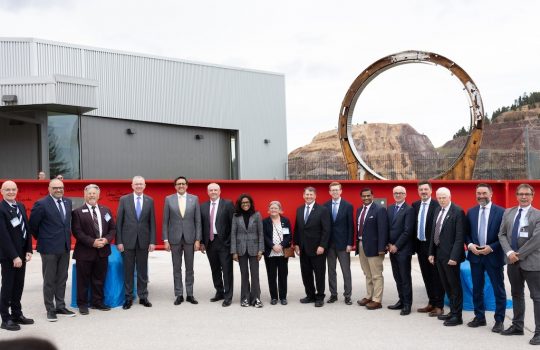
An event at the far site of the Deep Underground Neutrino Experiment at the Sanford Underground Research Facility in South Dakota marked the start of steel beams being lowered underground to house DUNE’s massive particle detectors. The event was attended by senior leaders from the Department of Energy; members of Congress; Fermilab, CERN and SURF leadership; and members of the local community, all of whom had the chance to sign one of the steel beams being installed.
A minute with Jacopo Bernardini
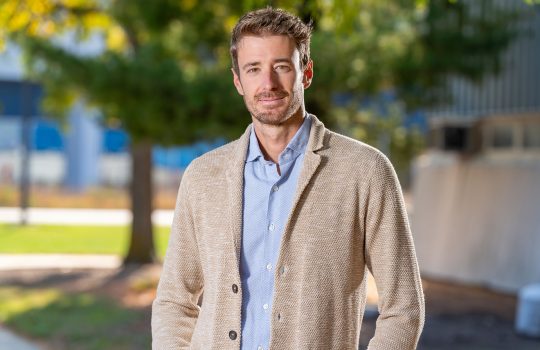
After joining Fermilab in 2020, Jacopo Bernardini was recently appointed level-3 manager for the 650-MHz cryomodules for the Proton Improvement Plan-II project. PIP-II is building a new, powerful linear accelerator that will create the world’s most intense beam of neutrinos for the Deep Underground Neutrino Experiment. An amateur triathlete outside of work, Bernardini enjoys working with collaborators around the world as well as watching a design become reality.
Fermilab’s PIP-II accelerator project recognized at UK-US research showcase
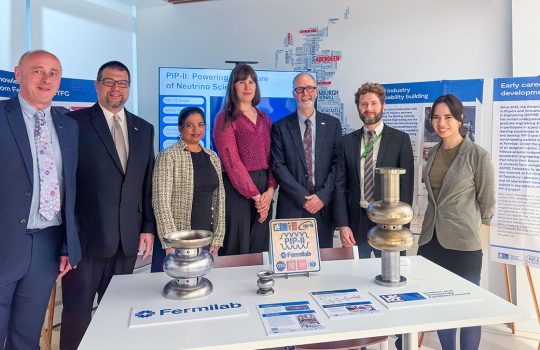
During an event at the British Embassy in Washington, D.C., officials honored the successful collaboration between the United States and United Kingdom for building the PIP-II particle accelerator at Fermilab. The powerful new accelerator will be used to send a beam of neutrinos through the Earth for the Deep Underground Neutrino Experiment.