The U.S. Department of Energy’s Fermi National Accelerator Laboratory, host lab for the international Deep Underground Neutrino Experiment at the Long-Baseline Neutrino Facility, recently welcomed about 50 DUNE early-career researchers, facilitators and instructors for the first-ever Neutrino Physics Center-hosted DUNE Data Analysis School. The school is a major new initiative designed to prepare the next generations of scientists for the upcoming flagship experiment.
“DUNE has officially moved from vision to reality as installation at the underground site in South Dakota kicks off, and a critical parallel focus for the collaboration is ensuring we are absolutely ready to analyze our very first data.”
Sowjanya Gollapinni, DUNE co-spokesperson
“DUNE has officially moved from vision to reality as installation at the underground site in South Dakota kicks off, and a critical parallel focus for the collaboration is ensuring we are absolutely ready to analyze our very first data,” said DUNE co-spokesperson Sowjanya Gollapinni. “This inaugural DUNE Data Analysis School hosted by NPC plays a key role in training our early-career members in the software and analysis tools needed to handle that initial data head on. Plus, a fantastic bonus outcome is that we now have our first-ever official curriculum that future schools can build upon!”
Modeled on Fermilab’s long-running CMS Data Analysis School, which is hosted by the LHC Physics Center at Fermilab, the weeklong program marked an important milestone in building the future scientific expertise needed as DUNE takes shape.
The school curriculum focuses on data analysis training tailored specifically for DUNE. Graduate students and postdoctoral researchers in DUNE, including new collaborators, are provided with hands-on training in the experiment’s software, including artificial intelligence and machine learning techniques, computing infrastructure and modern analysis workflows. Through lectures, tutorials and collaborative team projects, participants gain practical experience in simulation, reconstruction, event selection and the core tools essential for DUNE physics analyses.
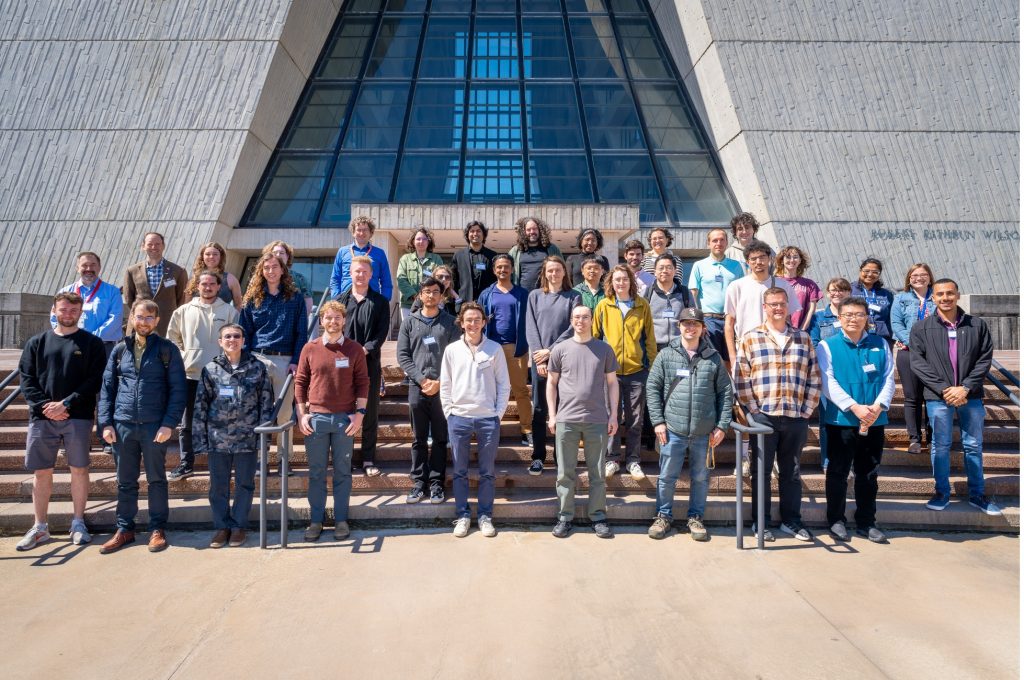
Participants received intensive instruction from DUNE software, computing and analysis experts with preparatory computing sessions offered in advance. The program of practical, structured lessons allowed early-career DUNE scientists to get up to speed faster so that they can rapidly begin preparing impactful analyses within the collaboration.
“Developments in computing continue to move at an incredible speed, and it is essential to have opportunities for new DUNE members to quickly learn the computing and software concepts of DUNE software,” said Mike Kirby of Brookhaven National Laboratory, who serves as Core Software and Computing Consortium lead in DUNE and lectured during the school. “The DUNE Data Analysis School hosted by the Neutrino Physics Center brought together experts from across the collaboration to help young DUNE members establish a foundation in computing, software and analysis, and accelerate their contributions to the exciting science that DUNE will deliver in the coming years.”
Neutrino Physics Center coordinators, organizers and the DUNE collaboration envision the school becoming an annual program and a cornerstone of software and analysis workforce development and training for DUNE — helping ensure that the next generation of DUNE physicists is equipped to maximize the experiment’s unprecedented scientific potential.
“None of this would have been possible without the tireless work of the NPC, the local organizing committee and the program committee,” added Gollapinni. “Building a brand-new curriculum from scratch and keeping the whole event running smoothly is no small feat.”
Fermi National Accelerator Laboratory is America’s national laboratory for particle physics and accelerator research. Fermi Forward Discovery Group manages Fermilab for the U.S. Department of Energy Office of Science. Visit Fermilab’s website at www.fnal.gov and follow us on social media.
Recommended reading

Nobel Prize in physics awarded to Francis Halzen for groundbreaking neutrino research
The Royal Swedish Academy of Sciences has awarded the 2026 Nobel Prize in physics to Francis Halzen of the University of Wisconsin–Madison.
URA honors Fermilab researchers advancing laboratory’s top priorities
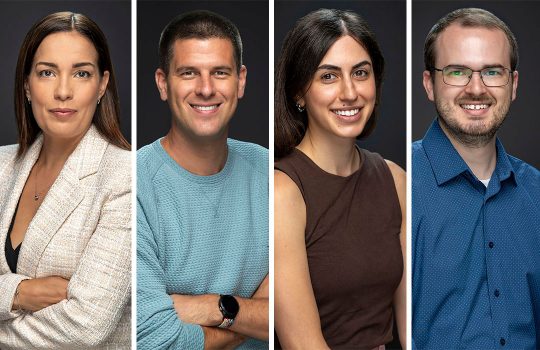
Tyler Barrett, Charis-Kleio Koraka, Kevin Kelly and Silvia Zorzetti are the recipients of the 2026 URA Honorary Awards. The awards are presented each year by Universities Research Association to recognize significant contributions to research at Fermilab.
Associate lab directors help shape future of Fermilab
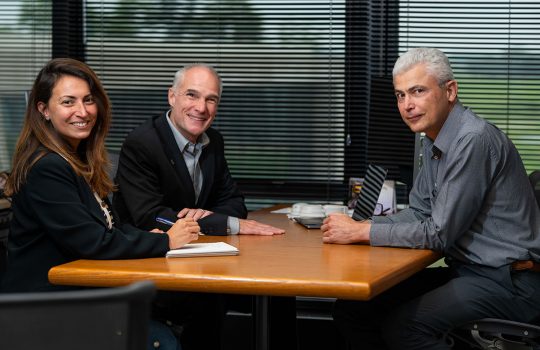
Fermilab’s recent reorganization brings its accelerator, physics and technology programs under three unified directorates, each charged with advancing the laboratory’s most important scientific priorities. Together, these directorates form a coordinated leadership structure designed to deliver world class research and guide Fermilab’s future.