The international ICARUS collaboration announced its first physics results on neutrino oscillation searches in a paper recently posted to the preprint server arXiv. They did not observe muon-neutrino disappearance in the data collected with the neutrino beam at Fermilab. The analysis is unique for its rigorous treatment of uncertainties around detector performance. It also demonstrates the quality of the ICARUS data and advances the development of analysis techniques and software tools.
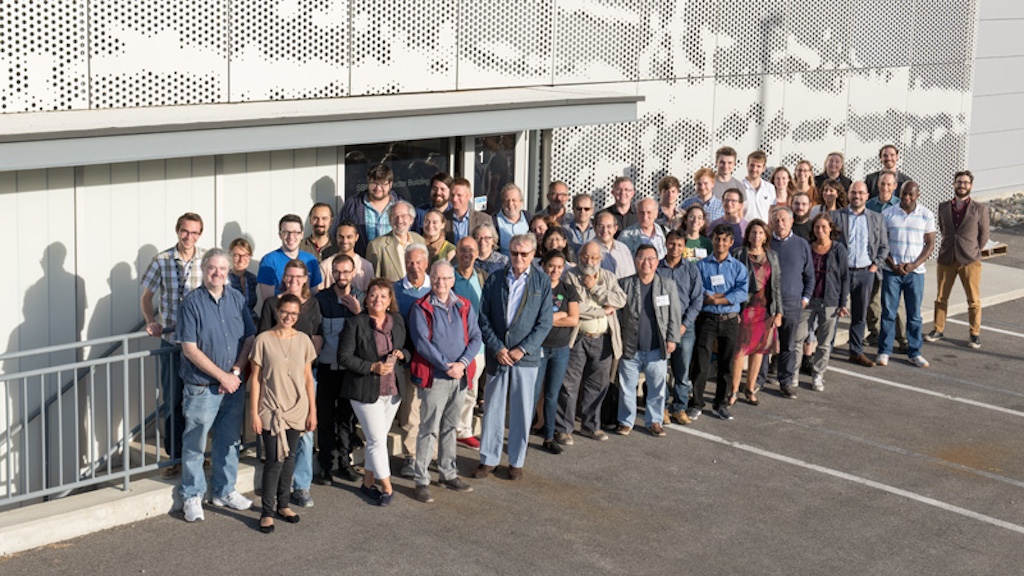
ICARUS is located at the U.S. Department of Energy’s Fermi National Accelerator Laboratory near Chicago and is the world’s first large liquid-argon neutrino detector. It began operating in 2010 at Italy’s Gran Sasso National Laboratory, governed by INFN, the Italian Institute for Nuclear Physics. In 2014, the detector was moved to CERN to be refurbished and improved and, three years later, it journeyed to its new home at Fermilab to become part of the Short Baseline Neutrino (SBN) Program.
The search for neutrino oscillations
The SBN Program consists of three experiments situated along the lab’s neutrino beam: The Short Baseline Near Detector (SBND) is the closest to the neutrino source at just 110 meters away, followed by MicroBooNE at 470 meters, and finally ICARUS at 600 meters. All three SBN experiments study how mysterious, ultra-lightweight particles called neutrinos change as they move through space and matter.
“With ICARUS fully validated and operating we are entering, in concert with SBND, a new era of neutrino physics in which definitive, world‑leading measurements are finally within reach.”
Carlo Rubbia, 1984 Physics Nobel laureate and ICARUS spokesperson
Neutrinos come in three types, called flavors: electron, muon and tau. In a phenomenon called neutrino oscillation, neutrinos change flavor as they travel. To fully understand this behavior, physicists designed baseline experiments — in which particle detectors are placed at various distances along a neutrino beam, like in the SBN Program — to study it.
One specific phenomenon ICARUS is looking for could be evidence of a postulated fourth flavor of neutrino, the sterile neutrino. In the so-called 3+1 model of neutrino behavior, the sterile neutrino could mix with the three known flavors and cause oscillations that appear as muon‑neutrino disappearance over short distances. So, if ICARUS were to observe muon-neutrino disappearance, it would be evidence supporting the 3+1 sterile-neutrino hypothesis; if not, the collaboration could set limits on the model parameters.
First results from ICARUS
In this first analysis, which used data taken from 2022 to 2023, the collaboration did not observe evidence of muon-neutrino disappearance in ICARUS. But the result represents a first important milestone for the SBN Program. The collaboration demonstrated the ICARUS data’s excellent quality and its suitability for physics analyses, as well as the maturity of the software tools for event selection, fitting and detector simulation.
“These first disappearance results mark a major milestone for ICARUS and the broader Short Baseline Neutrino Program at Fermilab,” said Carlo Rubbia, 1984 Physics Nobel laureate and ICARUS spokesperson. “They demonstrate the exceptional performance and stability of the detector and confirm that we now have the precision analysis tools in place to rigorously explore the sterile‑neutrino hypothesis.”
These results were also vital for developing construction and analysis techniques. The collaboration thoroughly examined uncertainties that arose from the collected data sample itself, which allowed them to properly describe the neutrino flux in the neutrino beam, the neutrino interactions in the liquid argon and the detector performance. They were able to place exclusion limits on the 3+1 sterile-neutrino model with 90% confidence.
Future combined analyses with other SBN detectors will be vital to reduce the uncertainties further. Collaborators say it will be essential to work with SBND to reduce uncertainties and conduct a robust two-detector analysis.
“With ICARUS fully validated and operating we are entering, in concert with SBND, a new era of neutrino physics in which definitive, world‑leading measurements are finally within reach,” said Rubbia.
Preparing for DUNE
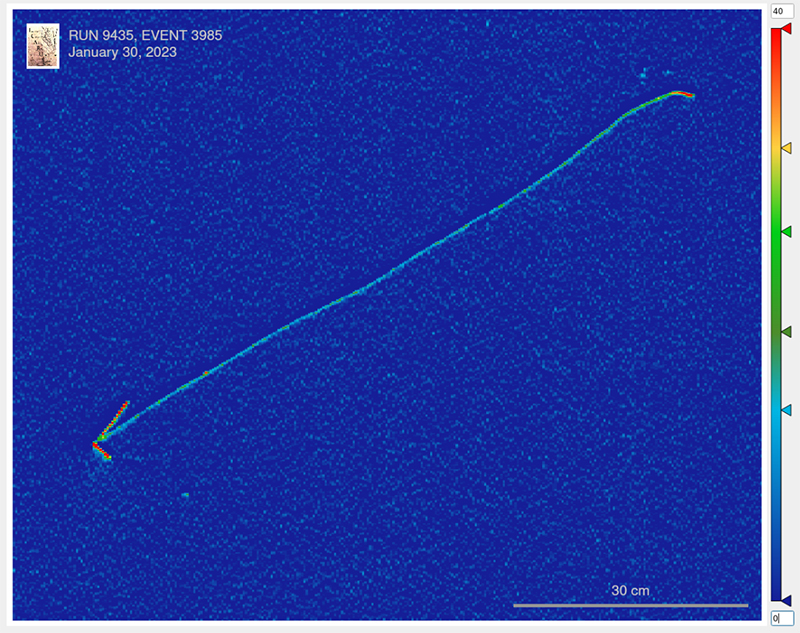
ICARUS, as well as SBND and MicroBooNE, is a liquid‑argon time projection chamber detector. Neutrinos are notoriously hard to detect, but when they occasionally interact with argon atoms in a liquid-argon TPC, they cause ionization, creating electrons. A high voltage drifts the electrons to wire planes inside the tank, resulting in a distinctive, precise signal that yields important information about the neutrino interaction and allows for a 3D reconstruction of the particles’ trajectories.
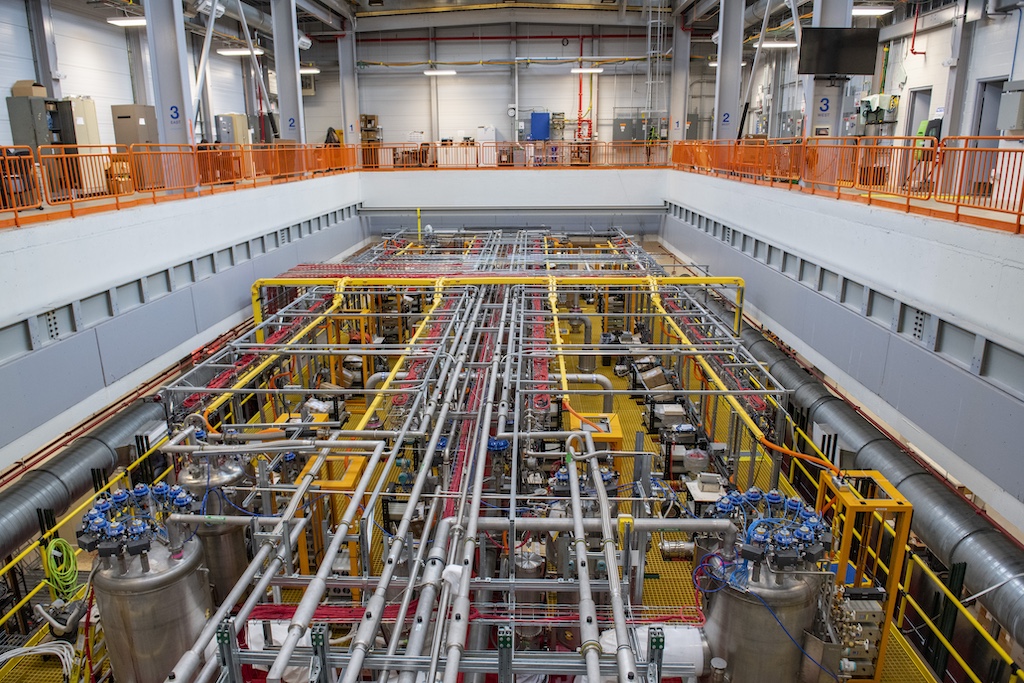
This same technology will be used for the forthcoming Deep Underground Neutrino Experiment, DUNE, led by Fermilab. Currently under construction at the Long Baseline Neutrino Facility at Fermilab in Batavia, Illinois, and in Lead, South Dakota, DUNE will be the world’s most comprehensive neutrino experiment. It will consist of liquid-argon TPC detectors that use technology pioneered by ICARUS — but more than 20 times larger.
ICARUS is supported by the U.S. Department of Energy Office of Science, the Italian National Institute for Nuclear Physics (INFN) and CERN, the European Organization for Nuclear Research.
Fermi National Accelerator Laboratory is America’s premier national laboratory for particle physics and accelerator research. Fermi Forward Discovery Group manages Fermilab for the U.S. Department of Energy Office of Science. Visit Fermilab’s website at www.fnal.gov and follow us on social media.
Recommended reading
Fermilab marks 70 years of neutrino science and leads next-generation experiment
As Fermilab commemorates 70 years since the discovery of the neutrino at the Savannah River Site in the United States, the lab also celebrates its multiple generations of pioneering neutrino research. Today, Fermilab is building the next era of neutrino discovery through the development of the world-leading Deep Underground Neutrino Experiment.

Fermilab’s Vishvas Pandey elected to co-lead international neutrino research collaboration
Pandey’s term as co-spokesperson of NuSTEC will focus on advancing higher levels of precision for the next generation of neutrino experiments, including the Deep Underground Neutrino Experiment, an international collaboration hosted by Fermilab.
Mark Ross‑Lonergan elected co-spokesperson for MicroBooNE collaboration
MicroBooNE, with its large neutrino detector at Fermilab, has wrapped up the data-collecting phase and will continue to conduct analysis under fresh leadership.