
Is there a dark energy particle?
A theoretical particle that adapts to its surroundings could explain the accelerating expansion of our universe.

91 - 100 of 101 results
A theoretical particle that adapts to its surroundings could explain the accelerating expansion of our universe.
From Berkeley Lab, Aug. 9, 2016: DESI, the Dark Energy Spectroscopic Instrument, will measure light from 35 million galaxies to provide new clues about dark energy. Fermilab is a collaborator on the Berkeley Lab project.

How do scientists know what percentages of the universe are made up of dark matter and dark energy? Cosmologist Risa Wechsler of the Kavli Institute for Particle Astrophysics and Cosmology explains. Watch the 3-minute video.
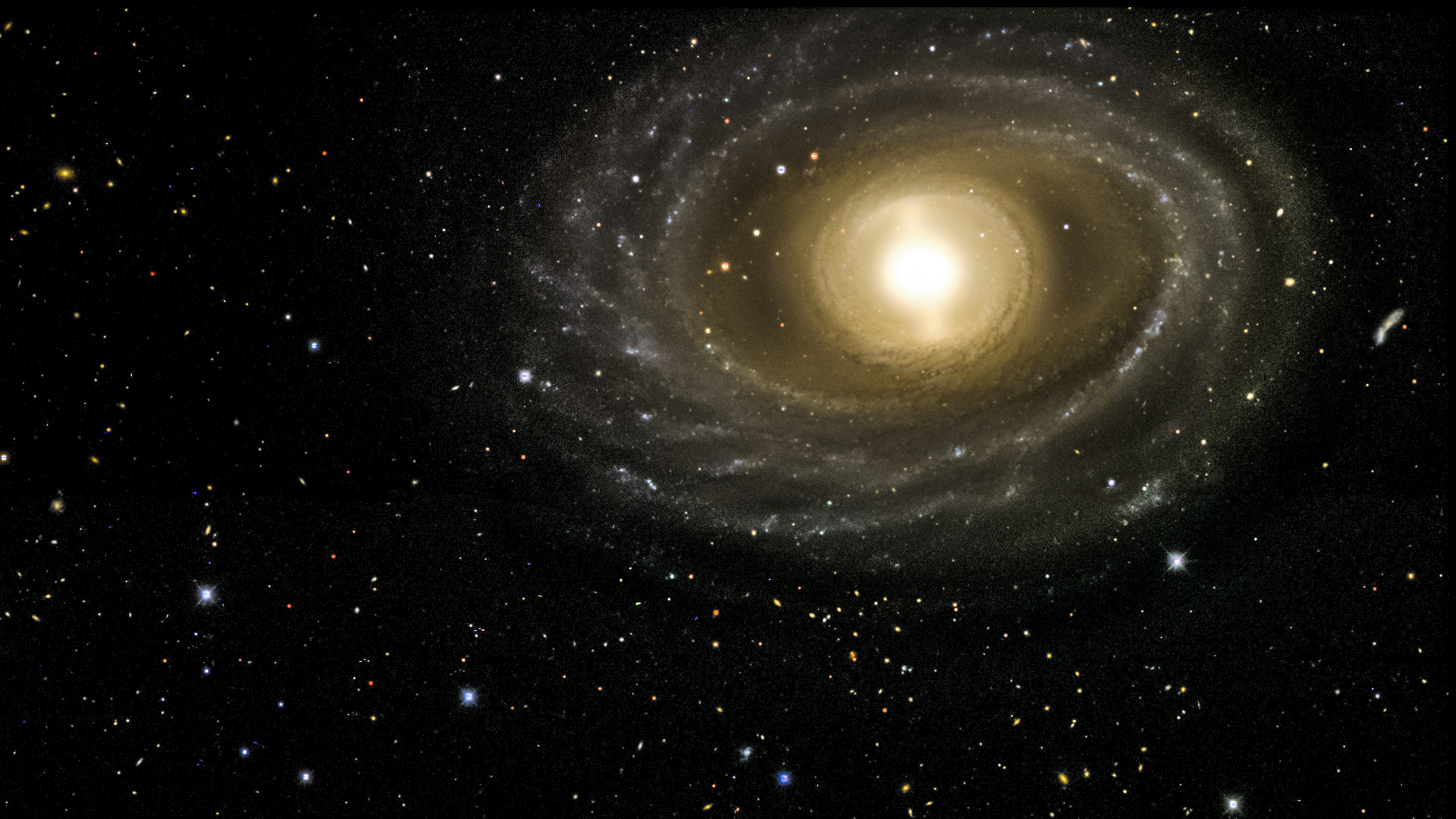
The Fermilab Art Gallery welcomes “Art of Darkness,” a new exhibit of images from the Dark Energy Survey, including dazzling pictures of the cosmos captured with the Dark Energy Camera.

Scientist Marcelle Soares-Santos talks about Brazil, neutron stars and a love of discovery.
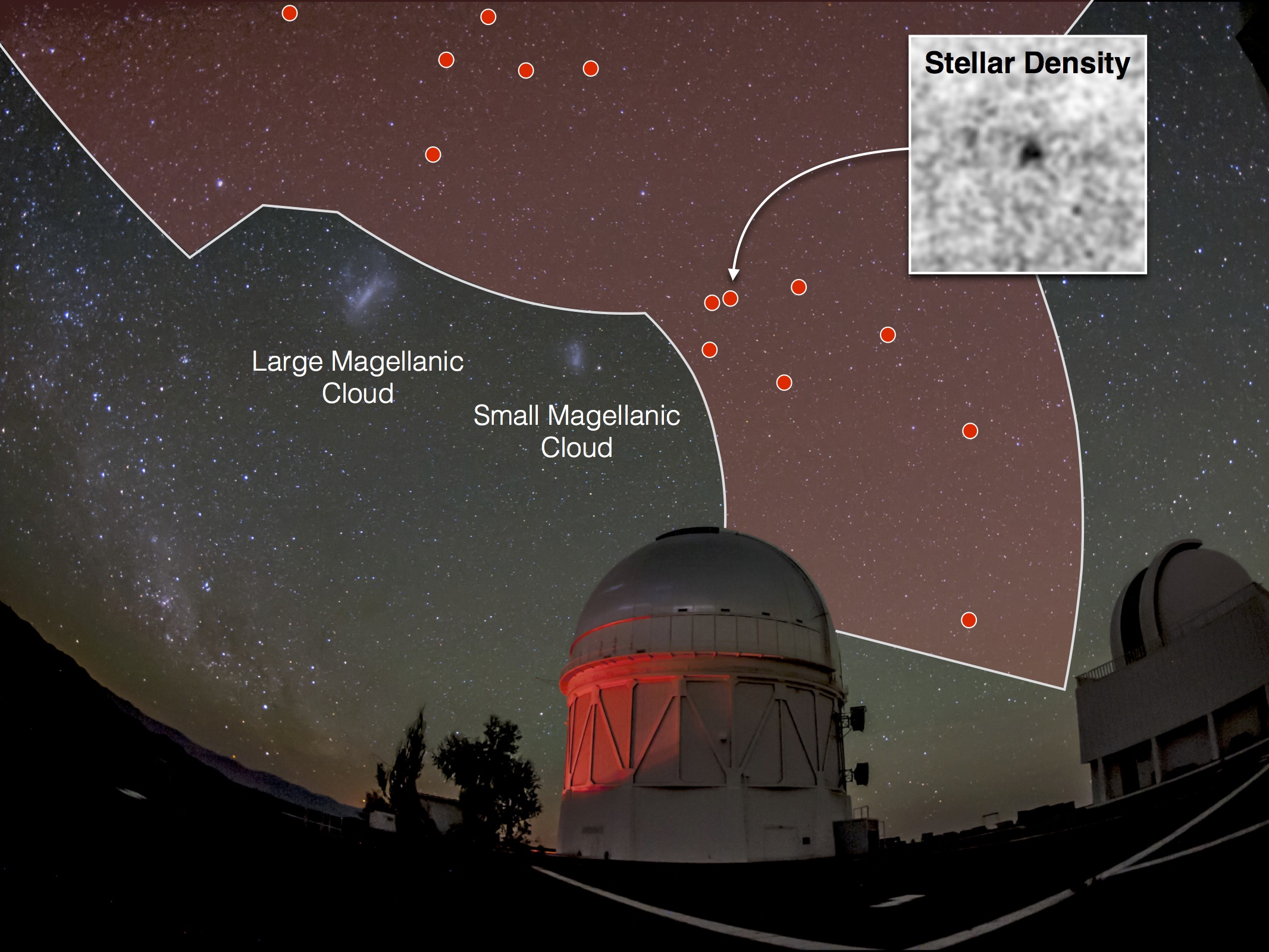
Scientists on the Dark Energy Survey, using one of the world’s most powerful digital cameras, have discovered eight more faint celestial objects hovering near our Milky Way galaxy. Signs indicate that they, like the objects found by the same team earlier this year, are likely dwarf satellite galaxies, the smallest and closest known form of galaxies.
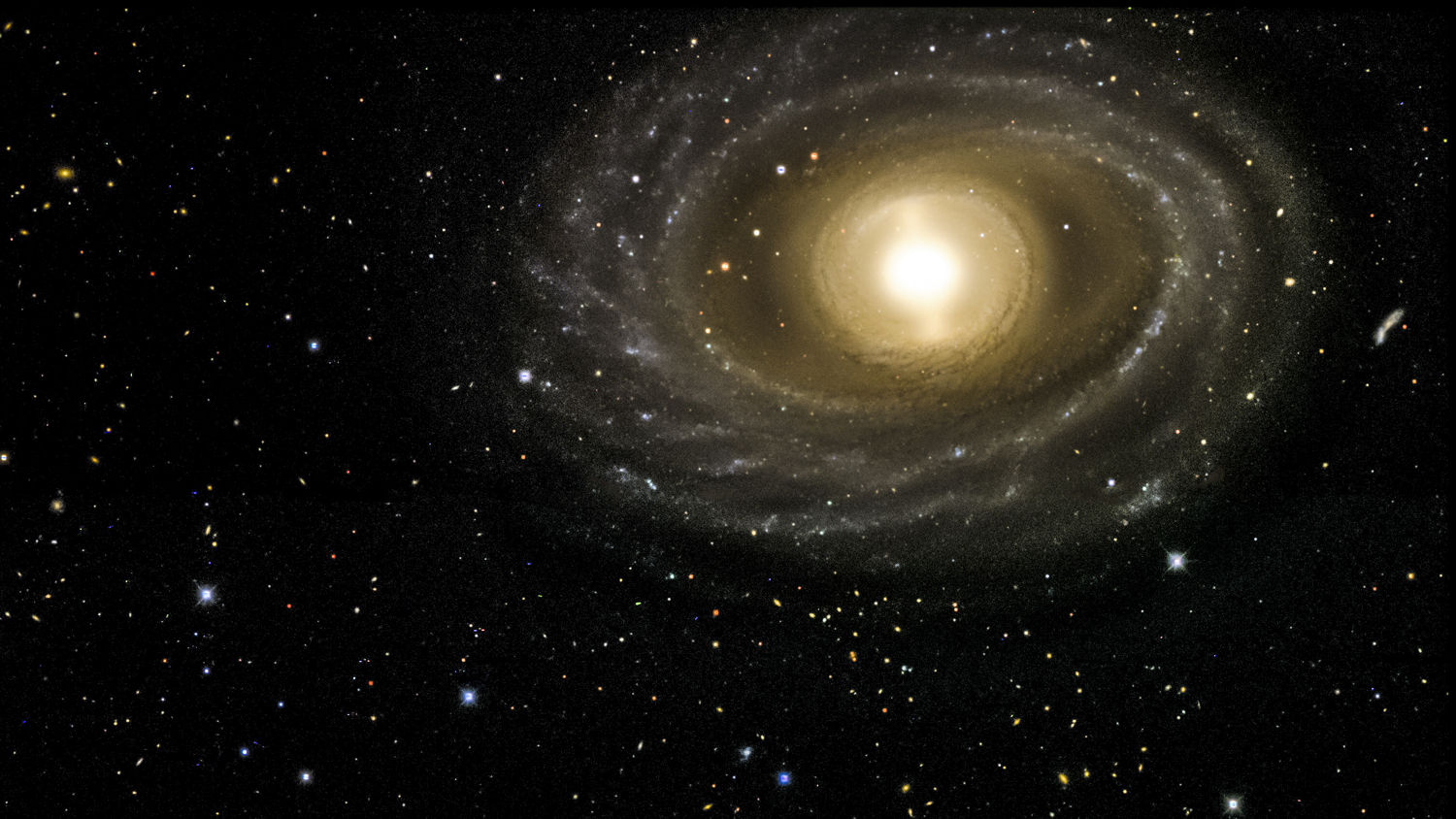
With its second year under way, the Dark Energy Survey team posts highlights and prepares to release images from its first year
On Aug. 31, the Dark Energy Survey (DES) officially began. Scientists on the survey team will systematically map one-eighth of the sky (5000 square degrees) in unprecedented detail. The start of the survey is the culmination of 10 years of planning, building and testing by scientists from 25 institutions in six countries.
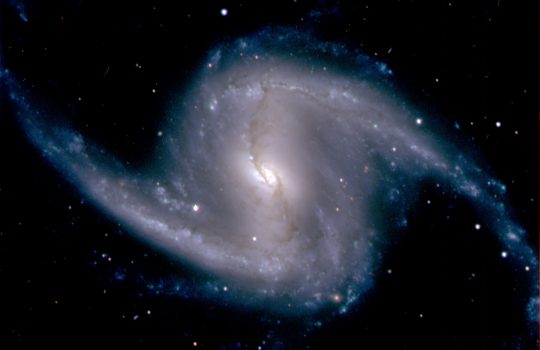
Eight billion years ago, rays of light from distant galaxies began their long journey to Earth. That ancient starlight has now found its way to a mountaintop in Chile, where the newly constructed Dark Energy Camera, the most powerful sky-mapping machine ever created, has captured and recorded it for the first time.
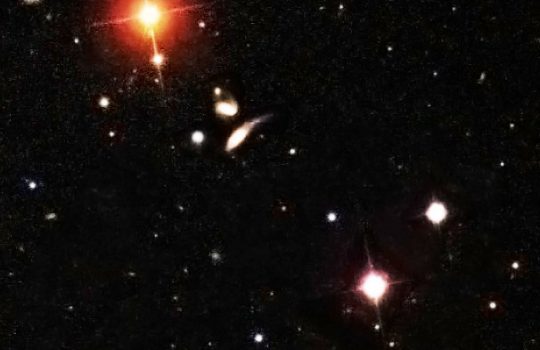
Two teams of physicists at the U.S. Department of Energy’s Fermilab and Lawrence Berkeley National Laboratory (Berkeley Lab) have independently made the largest direct measurements of the invisible scaffolding of the universe, building maps of dark matter using new methods that, in turn, will remove key hurdles for understanding dark energy with ground-based telescopes.