Researchers whose work has advanced the top priorities of the U.S. Department of Energy’s Fermi National Accelerator Laboratory were recognized by Universities Research Association during the 59th Fermilab Users and Affiliates Meeting on July 24.
The annual URA Honorary Awards recognize outstanding scientific and engineering contributions to Fermilab and its mission of driving pioneering scientific discovery. URA is a consortium of more than 90 universities in the United States and abroad and is a core partner of the Fermi Forward Discovery Group, the team responsible for the management and operation of Fermilab.
“The URA Honorary Awards recognize the scientists, engineers and technical leaders whose ingenuity continues to advance Fermilab’s scientific mission,” said John Mester, president and CEO of Universities Research Association. “Their achievements strengthen the laboratory’s scientific capabilities today and lay the foundation for the discoveries of tomorrow.”
Award recipients reflect Fermilab’s scientific mission
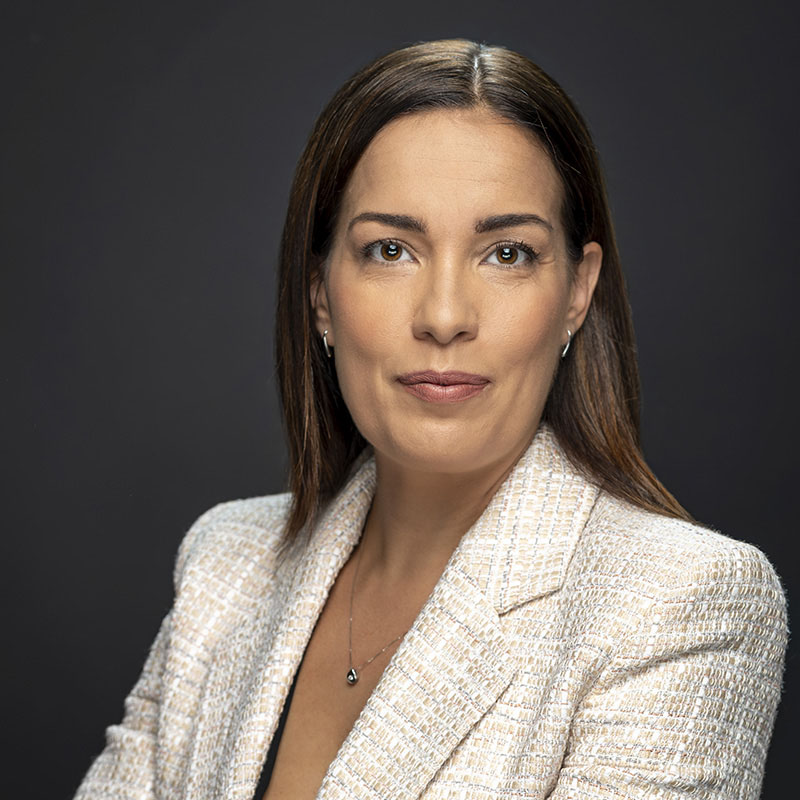
Silvia Zorzetti won URA’s Engineering Award for her leadership at Fermilab’s Superconducting Quantum Materials and Systems Center, which is one of five DOE-funded research centers working to develop and deploy advanced quantum computers and sensors. Zorzetti, a principal engineer at Fermilab, was also recognized for what URA described as “pioneering research” on a novel superconducting radio-frequency cavity-based high-efficiency microwave-to-optical quantum transducer.
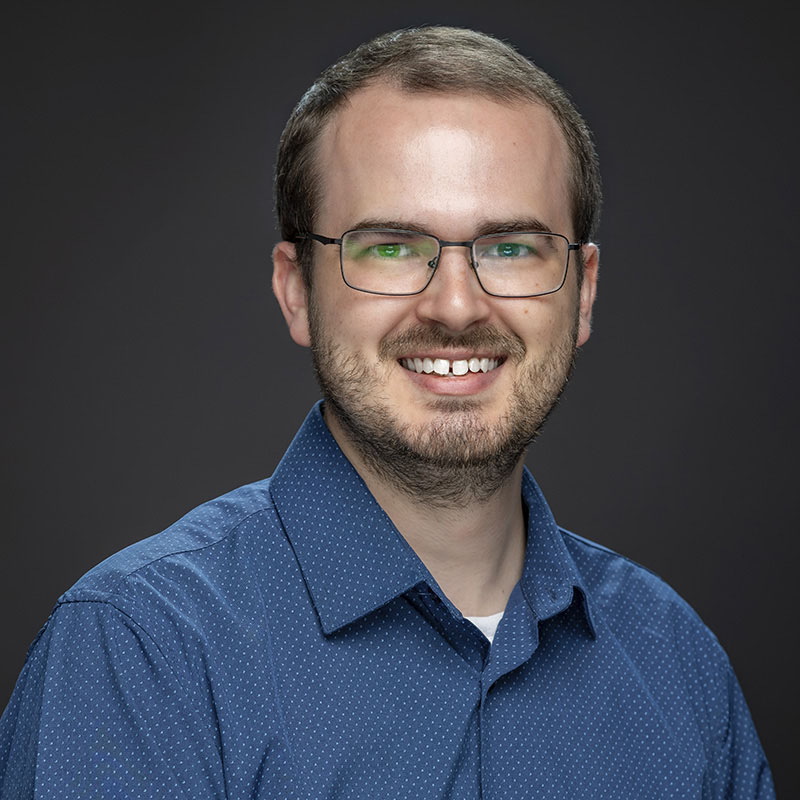
Kevin Kelly from Texas A&M University received URA’s Early Career Award. In its award citation, URA recognized Kelly for “extraordinary contributions to our understanding of neutrinos and how their properties will be further elucidated in the current and next generation of neutrino experiments.” He was also praised for “the development of novel techniques and analyses that allow one to use the current and next generation of neutrino experiments to look for new physics, including the elusive dark matter.” His work supports the scientific goals of the Deep Underground Neutrino Experiment at the Long Base Neutrino Facility, one of Fermilab’s highest strategic priorities.

Charis-Kleio Koraka from the University of Wisconsin-Madison received URA’s Tollestrup Award for Postdoctoral Research for “transformative contributions” to event reconstruction for the CMS particle detector at CERN and offline computing that will enable the Hi-Luminosity Large Hadron Collider physics program. Fermilab is the host laboratory for U.S. participation in CMS that includes hundreds of physicists from more than 50 institutions. Koraka’s work positions CMS to fully realize the scientific potential of the HL-LHC, another of Fermilab’s top strategic priorities as it contributes technology and expertise to the upgrade.

Tyler Barrett of Cornell University won URA’s Doctoral Thesis Award for his thesis on beam dynamics in the Muon g-2 experiment and analyzing their impact on a measurement of the anomalous muon spin precession frequency. Hosted at Fermilab, the Muon g-2 experiment has led to the world’s most precise measurement yet of the magnetic moment of the muon subatomic particle. In its award citation, URA praised Barrett’s thesis as “a masterpiece of clarity, combining the depth and insight required for a high-precision measurement with the intuition and patience of a well-written textbook.”
“Fermilab’s success depends on exceptional people tackling some of the world’s most ambitious scientific and technical challenges,” said Patricia McBride, Fermilab deputy director for science and chief research officer. “The accomplishments recognized by URA demonstrate the innovation and technical excellence that are helping us deliver on our science today while building the capabilities that will define the future of particle physics.”
Fermi National Accelerator Laboratory is America’s national laboratory for particle physics and accelerator research. Fermi Forward Discovery Group manages Fermilab for the U.S. Department of Energy Office of Science. Visit Fermilab’s website at www.fnal.gov and follow us on social media.
Recommended reading
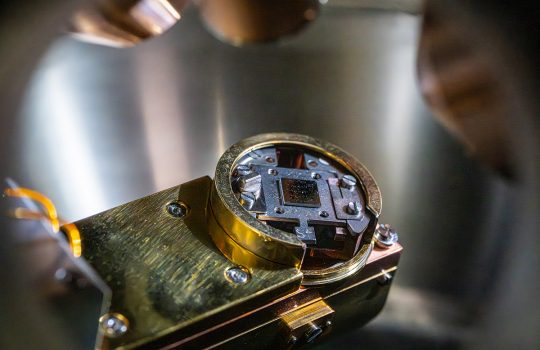
SQMS Center uncovers material origins of variations in qubit performance through landmark study
A first-of-its-kind blinded materials characterization study spanning 22 superconducting quantum devices, seven characterization techniques and six leading institutions helps build the scientific foundations of scalable quantum computing.
Associate lab directors help shape future of Fermilab
Fermilab’s recent reorganization brings its accelerator, physics and technology programs under three unified directorates, each charged with advancing the laboratory’s most important scientific priorities. Together, these directorates form a coordinated leadership structure designed to deliver world class research and guide Fermilab’s future.
Scientists travel to Fermilab to discuss future of high-energy physics
Fermilab recently hosted over 500 physicists for the American Physical Society’s biennial Division of Particles and Fields meeting. With presentations by Fermilab Director Norbert Holtkamp and CERN Director-General Mark Thomson, the meeting provided particle physicists the opportunity to come together and consider the future of high-energy physics research.