The United States is entering a new era of scientific discovery defined by world-class computing power, rapid advances in artificial intelligence and seamless integration of scientific data. At the center of this transformation is the Genesis Mission, a national effort to double the productivity and overall impact of American science within the next decade by leveraging the combined strengths of the U.S. Department of Energy’s 17 national laboratories. Fermi National Accelerator Laboratory is poised to play a critical role.
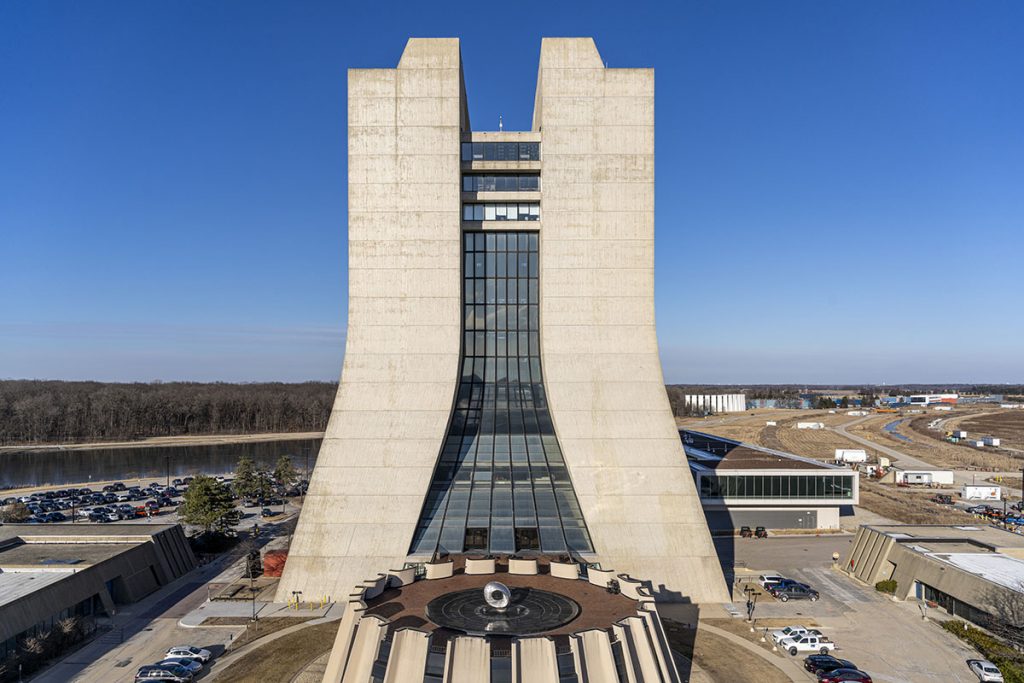
With expertise in high-energy physics, advanced computing, accelerator and quantum technologies, and microelectronics design, Fermilab is well-equipped to be a central contributor to the Genesis Mission’s goals. Deploying AI to make particle accelerators adaptive and autonomous will propel innovations in medicine, materials and energy. Simultaneously, advancing next-generation microelectronics will serve to secure U.S. technological leadership, economic prosperity and national security.
“The Genesis Mission represents a once-in-a-generation opportunity to transform how America does science,” Fermilab Director Norbert Holtkamp said. “By combining AI, advanced computing and the capabilities of the national laboratories, we can accelerate discovery while strengthening the scientific infrastructure that underpins U.S. leadership in particle physics and beyond. Fermilab is proud to help drive this national effort.”
“The Genesis Mission represents a once-in-a-generation opportunity to transform how America does science.”
Fermilab Director Norbert Holtkamp
Through these initiatives and more, Fermilab will help tackle ambitious, world-shaping challenges — and it comes to this work prepared. The lab brings decades of experience navigating complex challenges through large-scale collaborations with national laboratory partners, academia and industry.
“We’re also excited for what AI can mean for our operations at Fermilab,” Holtkamp added. “I believe AI can dramatically enhance the quality and efficiency for work across the laboratory. Not only will Fermilab help drive DOE’s Genesis Mission, but I believe Fermilab can also serve as a strong example in how AI can benefit the operations of the full U.S. national lab complex.”
Advancing accelerator science
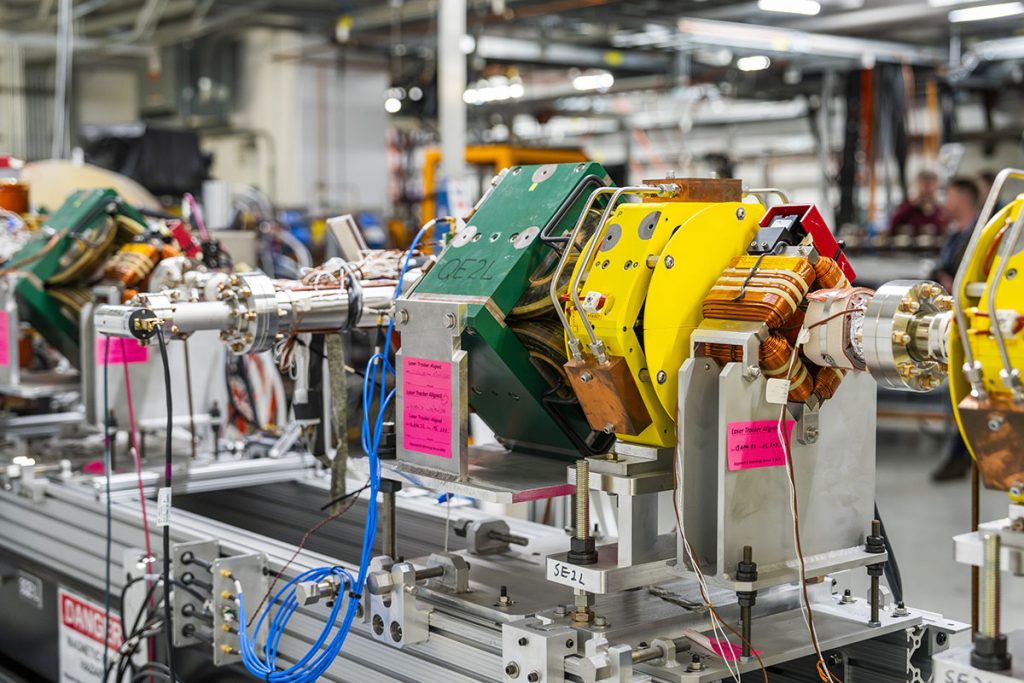
Fermilab will contribute to a seven-lab collaboration known as the Multi-Office particle Accelerator Team, or MOAT. The initiative focuses on using AI to advance accelerator science by supporting more efficient operations and streamlined accelerator research and development. These efforts are expected to shorten commissioning timelines and reduce operating costs while extending the benefits of accelerator technology to a wider range of industry partners.
Speeding up chip design
One of Fermilab’s flagship contributions is AXESS, shorthand for Accelerating eXtreme Environment Specs-to-Silicon. This ambitious project aims to revolutionize custom microelectronics chip design for specialized scientific applications. Fermilab already has deep experience in creating chips that can function in extreme environments, such as cryogenic temperatures or intense radiation. By using AI to compress the design process from months to minutes, AXESS will significantly boost national competitiveness and speed up the pace of innovation.
Supporting American Science Cloud
The lab is also providing the Fermi Data Platform to support the emerging American Science Cloud. Fermilab is leveraging its extensive experience in handling the massive amounts of data created by particle collisions to provide large-scale data storage to the Genesis Mission. This infrastructure will enable researchers from across scientific disciplines to access the datasets needed to accelerate their own discoveries, effectively turning decades of physics data into a national resource.
Quickening theoretical calculations
Fermilab’s work in Lattice Quantum Chromodynamics, or Lattice QCD, will strengthen a multi-lab effort called FemtoMind. Lattice QCD is the framework physicists use to understand the strong force that binds subatomic quarks together to form protons. By applying agentic AI to quicken these complex calculations and uncover new patterns in computer simulations that probe physics at the proton scale, FemtoMind will deepen our understanding of the matter that makes up everything we see around us.
Creating AI-ready data representations
Fermilab will also contribute to the TREASURE initiative, which aims to make vast datasets more accessible for groundbreaking research. This program standardizes data from both current and retired particle colliders, including the Large Hadron Collider at CERN and the Tevatron at Fermilab, to create AI-ready representations of physics data for cross-experiment analysis. TREASURE will also convert research papers, datasets and code into user-friendly forms that can be trusted by scientists as they search for physics beyond the Standard Model.
Applying AI to astronomy
Fermilab’s contributions to the Genesis Mission will extend to astrophysics through the AI Universe effort. Researchers plan to apply advanced uncertainty-quantification methods to a state-of-the-art AI model trained on more than 200 million astronomical observations. This work provides astrophysicists with the tools necessary to make more precise predictions and identify meaningful patterns within large-scale astronomy datasets.
Connecting expertise
“AI is most powerful when it connects expertise across domains and institutions,” said Nhan Tran, head of AI coordination at Fermilab. “Through the Genesis Mission, we can integrate data, tools and expertise from all 17 national labs, creating a unified AI ecosystem that accelerates breakthroughs far beyond what any single lab could achieve.”
As the Genesis Mission mobilizes the full power of the Department of Energy’s national laboratories, Fermilab is uniquely positioned to make vital contributions toward solving the nation’s most pressing scientific challenges. From supercharging microelectronics design and enhancing particle accelerator R&D to transforming data analysis, the lab is helping drive the next wave of American innovation and discovery science.
Fermi National Accelerator Laboratory is America’s premier national laboratory for particle physics and accelerator research. Fermi Forward Discovery Group manages Fermilab for the U.S. Department of Energy Office of Science. Visit Fermilab’s website at www.fnal.gov and follow us on social media.
Recommended reading
Associate lab directors help shape future of Fermilab
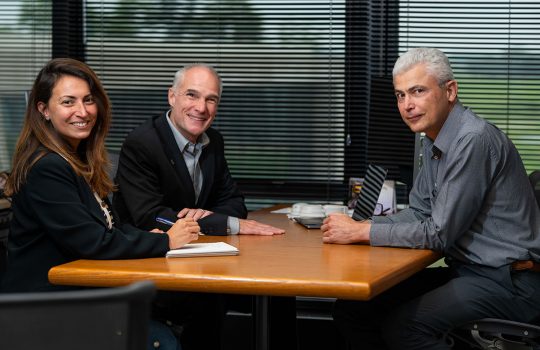
Fermilab’s recent reorganization brings its accelerator, physics and technology programs under three unified directorates, each charged with advancing the laboratory’s most important scientific priorities. Together, these directorates form a coordinated leadership structure designed to deliver world class research and guide Fermilab’s future.
DOE selects Fermilab-led AI initiative to advance particle accelerator performance
In a project selected for funding by the Department of Energy’s Genesis Mission, Fermi National Accelerator Laboratory and partners from other national laboratories, universities and industry will apply artificial intelligence and machine learning to enable precise and adaptive resonance control in particle accelerators. Their work aims to lower operating costs by millions of dollars each year and improve accelerator performance, driving scientific discovery.

DUNE uses AI to transform the future of neutrino research
DUNE is pioneering the future of neutrino research by integrating artificial intelligence into its experiment, drawing on decades of machine learning work at Fermilab.