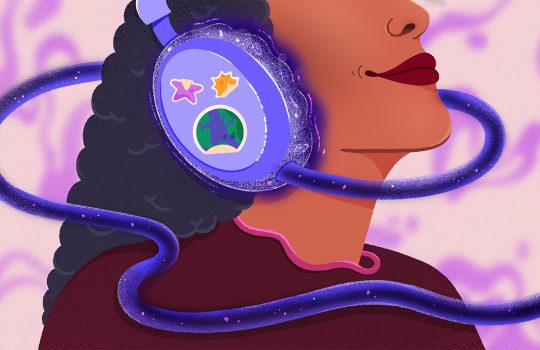
Ears around the world are on The Coldest Case
Particle Mysteries, a podcast released by the Interactions Collaboration, illuminates the international search for dark matter through conversations with its inquirers.
321 - 330 of 2268 results
Particle Mysteries, a podcast released by the Interactions Collaboration, illuminates the international search for dark matter through conversations with its inquirers.
Cleanroom Technology, Feb. 29, 2024
The Science and Technology Facilities Council has built an ISO Class 4 cleanroom at the Fermilab to accommodate cryomodules for the PIP-II particle accelerator.
Black Hills Pioneer, March 5, 2024
Fermilab looking for Lead area and southwest SD people who would like to join the Long Baseline Neutrino Facility/Deep Underground Neutrino Experiment team. There are a series of hiring events planned to meet with those interested in being part of DUNE including the Lead Employment Expo, which will be held at the Sanford Lab Homestake Visitor’s Center on April 16.
Syracuse University, March 4, 2024
Physicists from Syracuse University are part of the more than 1,400 scientists that make up the DUNE collaboration. The Syracuse team were involved in the development and testing of the first detector’s components, helping finalize the design and testing plans of the anode plane assemblies. The team also researched and developed light sensors for the first detector’s module and investigated how adding small amounts of the element xenon could improve their performance.
WGN-TV, Feb. 28, 2024
WGN honored Tom Skilling’s retirement with a send-off and messages from the community partners he worked with over the years. Fermilab was part of Tom’s career as he hosted severe weather seminars in Ramsey Auditorium for 38 years. See the Fermilab tribute to Tom Skilling for his dedication to science.
BNN News, Feb. 28, 2024
Fermilab scientists are part of a team of global collaborators working on groundbreaking research to unlock the mysteries of the Kukulcán pyramid in Chichén Itzá using advanced X-ray analysis and cosmic ray detection. The research aims to gain insights into the construction techniques and purposes of the pyramid’s inner chambers which could not only confirm the existence of a hidden chamber but also shed light on the architectural and cultural achievements of the Maya civilization.
MSN.com, Feb. 28, 2024
Business Insider reports on the recent completion of cavern excavation in South Dakota and what comes next as engineers and scientists prepare for the next phases of DUNE.
University of Texas at Arlington, Feb. 28, 2024
Physicists from the University of Texas at Arlington will build portions of the first two far detectors to be installed at the South Dakota site fro DUNE. Having been part of the collaboration since its earliest stages, UTA physicists also assisted in the construction of prototype detectors at CERN.
Country Herald,
“Beyond the Visible”, a unique exhibit representing the collaboration between artists and scientists from the Fermilab at the Schingoethe Center of Aurora University. The exhibit aims to spark dialogue and bring a new perspective to the forefront of scientific inquiry and artistic expression and is open to the public until May.
Big Think, Feb. 19, 2024
Recent research on muons reveals inconsistencies between observed magnetic behaviors and theoretical predictions, hinting the potential discovery of new physical phenomena or the need to update quantum mechanics theories.