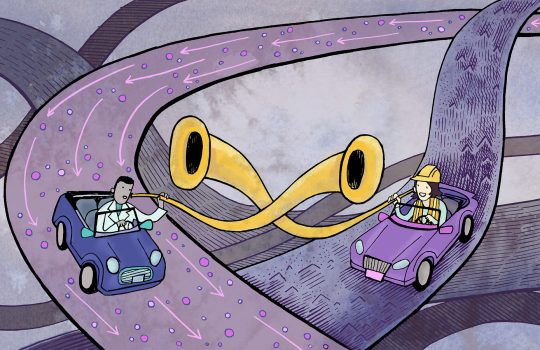
Recruiting team geoneutrino
Physicists and geologists are forming a new partnership to study particles from inside the planet.
2151 - 2160 of 2562 results
Physicists and geologists are forming a new partnership to study particles from inside the planet.
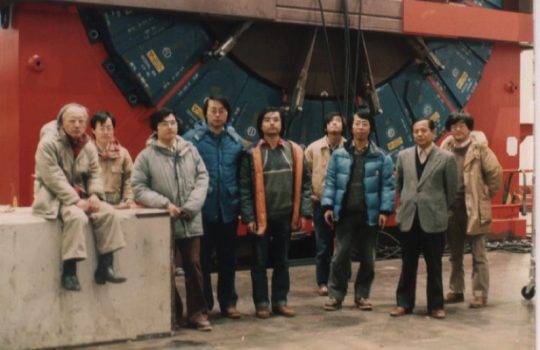
The influence and impact of physicists from Japan on Fermilab research started in the 1970s and is still strong today.
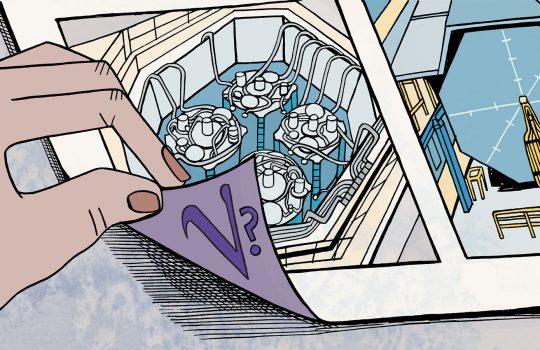
Scientists on two neutrino experiments—the MINOS experiment at Fermilab and the Daya Bay experiment in China—have presented results that limit the places where sterile neutrinos might be hiding.
From FYI: The AIP Bulletin of Science Policy News, Sept. 29, 2016: The bill extends funding for the federal government at last year’s appropriated levels through Dec. 9, or 10 weeks beyond the end of the fiscal year.
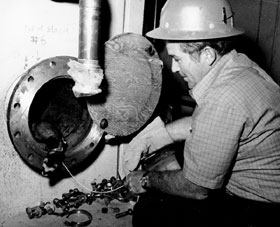
A furry critter and its four-mile trek through an accelerator pipe comes to the lab’s rescue in its early days.
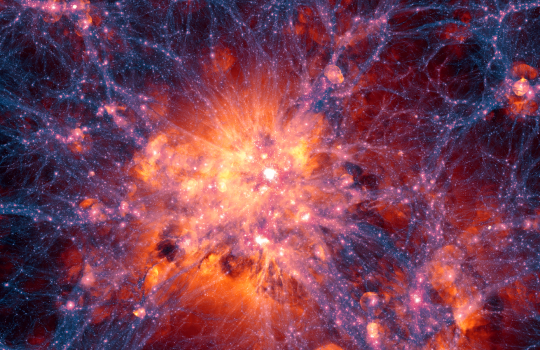
Computer simulations help cosmologists unlock the mystery of how the universe evolved.
From The New York Times, Oct. 4, 2016: Fermilab congratulates scientists David J. Thouless, F. Duncan M. Haldane and J. Michael Kosterlitz for winning the Nobel Prize for their discoveries in condensed-matter physics.
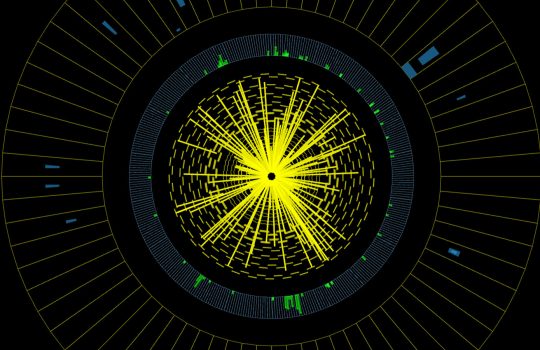
The Large Hadron Collider is now producing about a billion proton-proton collisions per second.
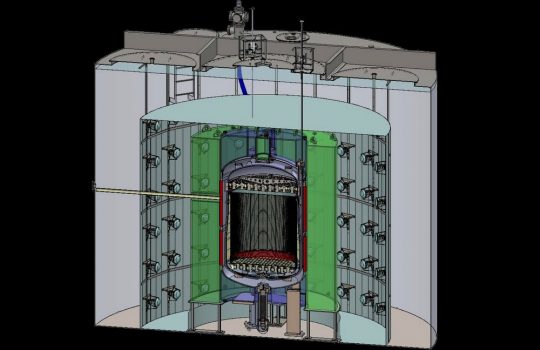
LUX-ZEPLIN (LZ), a next-generation dark matter detector that will be at least 100 times more sensitive than its predecessor, has cleared another approval milestone and is on schedule to begin its deep-underground hunt for theoretical particles, known as weakly interacting massive particles, in 2020.