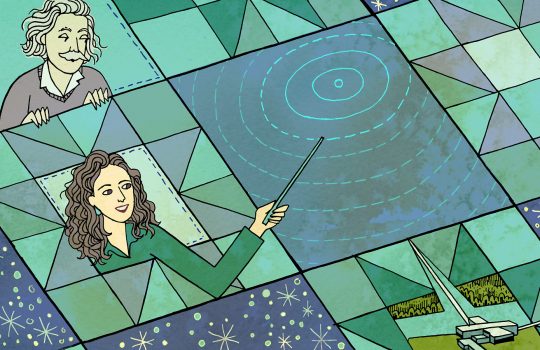
A primer on gravitational-wave detectors
Physicists are searching for gravitational waves all across the spectrum.

61 - 70 of 70 results
Physicists are searching for gravitational waves all across the spectrum.
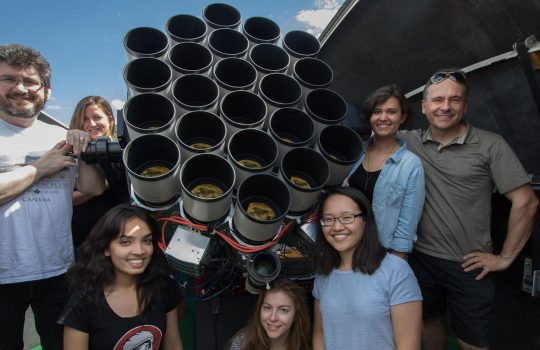
From Clarksville Online, Sept. 23, 2016: Earlier this summer, Austin Peay State University student Jacob Robertson, on a visit to Fermilab, took a look at a celestial object and realized it wasn’t just another star.
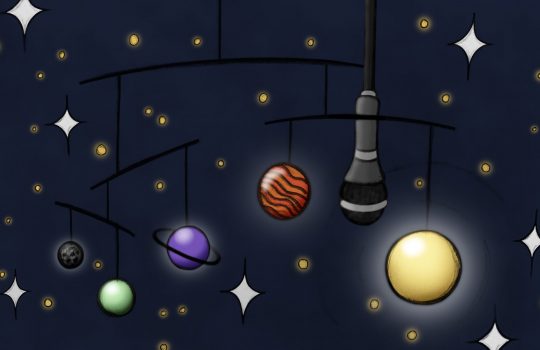
A new tool lets astronomers listen to the universe for the first time.
Before the Dark Energy Survey began in August 2013, scientists spent months testing the Dark Energy Camera, putting it through its paces. Now, catalogs of galaxies and stars derived from the data collected during the Science Verification season have been released to the public.
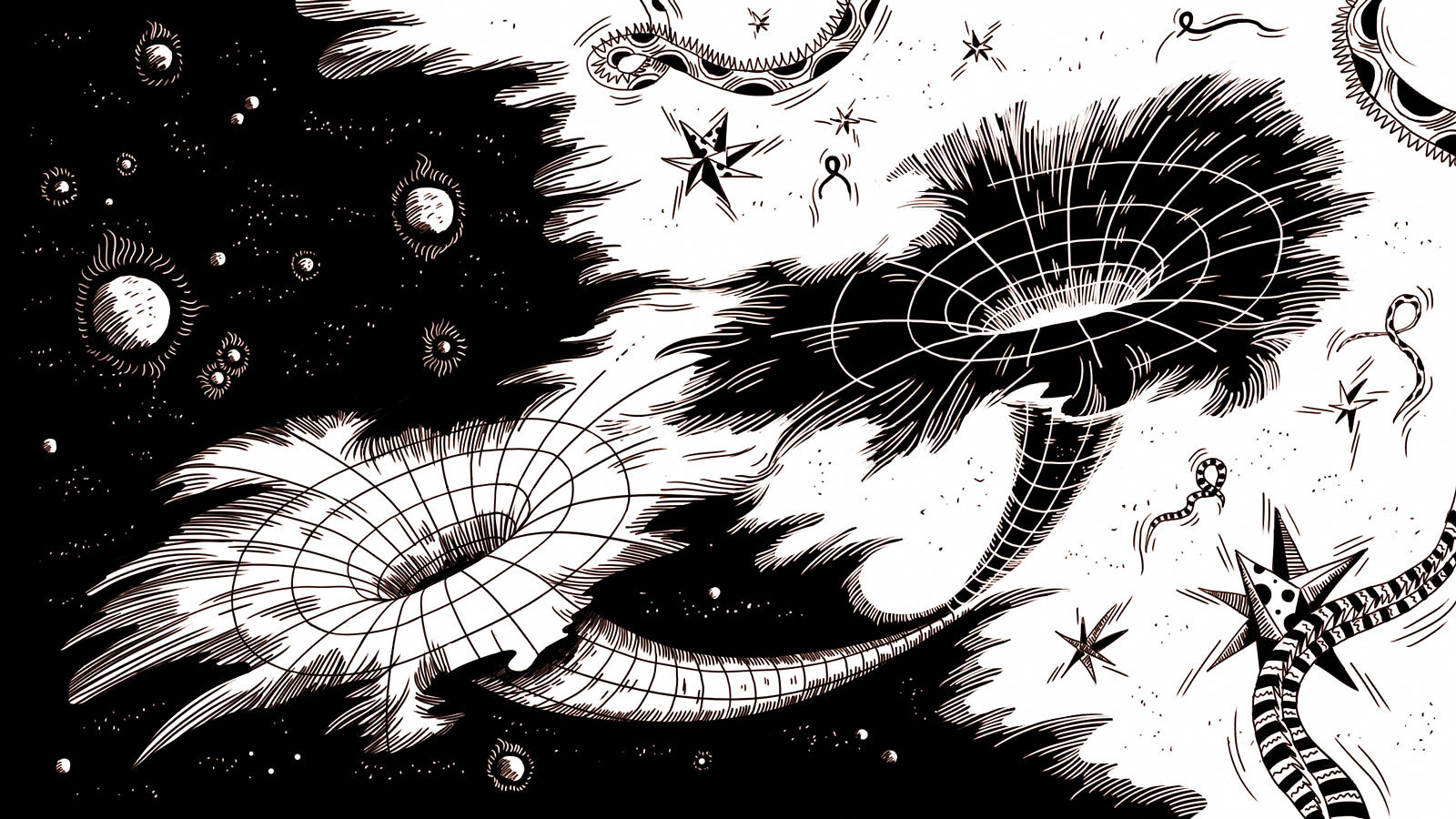
Astronomy Magazine, Dec. 10, 2015: This past year, a sky survey uncovered nine dwarf galaxies within 1 million light-years of the Milky Way. And one of the galaxies from this Dark Energy Survey was a prime dark matter target: Reticulum II.

Pranav Sivakumar, a student at the Illinois Math and Science Academy, was recently recognized by President Barack Obama at White House Astronomy Night. Fermilab Ask-a-Scientist and Saturday Morning Physics talks were significant influences in his decision to pursue science.
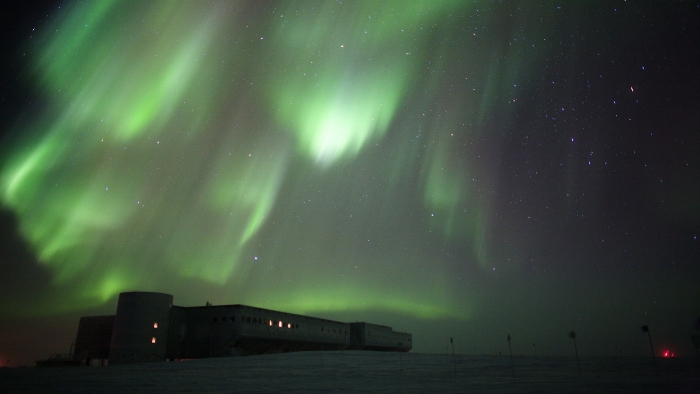
Ghostlike subatomic particles called neutrinos could hold clues to some of the greatest scientific questions about our universe: What extragalactic events create ultra-high-energy cosmic rays? What happened in the first seconds following the big bang? What is dark matter made of?
On Aug. 31, the Dark Energy Survey (DES) officially began. Scientists on the survey team will systematically map one-eighth of the sky (5000 square degrees) in unprecedented detail. The start of the survey is the culmination of 10 years of planning, building and testing by scientists from 25 institutions in six countries.