dark energy

51 - 60 of 100 results

DESI opens its 5,000 eyes to capture the colors of the cosmos

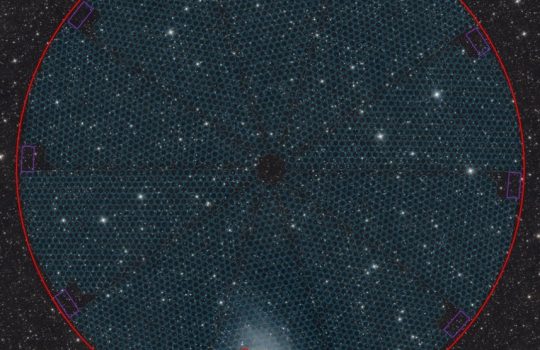
Berkeley Lab’s Dark Energy Spectroscopic Instrument aimed its robotic array of 5,000 fiber-optic “eyes” at the night sky Oct. 22 to capture the first images showing its unique view of galaxy light. It was the first test DESI with its nearly complete complement of components. Fermilab contributed key elements to DESI, including the corrector barrel, hexapod, cage and CCDs. Fermilab also provided the online databases used for data acquisition and the software for the instrument’s robotic positioners.

Three sky surveys completed in preparation for Dark Energy Spectroscopic Instrument

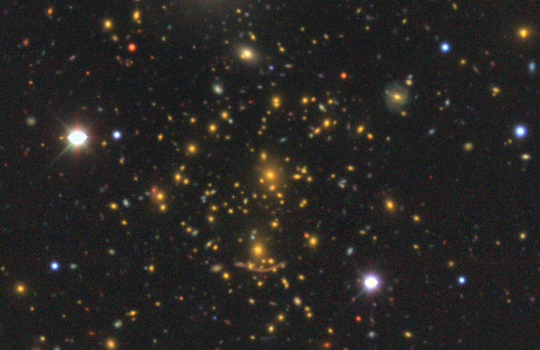
It took three sky surveys to prepare for a new project that will create the largest 3-D map of the universe’s galaxies and glean new insights about the universe’s accelerating expansion. This Dark Energy Spectroscopic Instrument project will explore this expansion, driven by a mysterious property known as dark energy, in great detail. The surveys, which wrapped up in March, have amassed images of more than 1 billion galaxies and are essential in selecting celestial objects to target with DESI, now under construction in Arizona.

Taking a collider to the dark energy problem

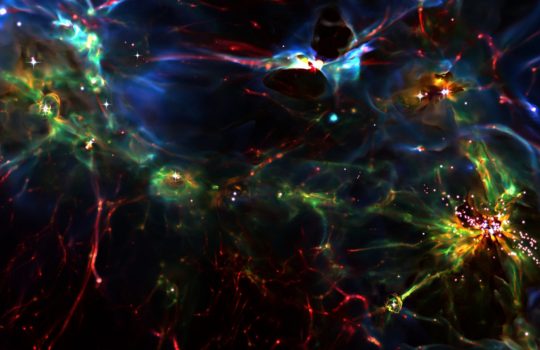
    With the warmth of holiday cheer in the air, some physicists decided to hit the pub after a conference in December 2014 and do what many physicists tend to do after work: keep talking about physics. That evening’s topic of conversation: dark energy particles. The chat would lead to a new line of investigation at the Large Hadron Collider at CERN. Every second, the universe grows a little bigger. Scientists are using the LHC to try to find out why.

    Signing off from southern sky post

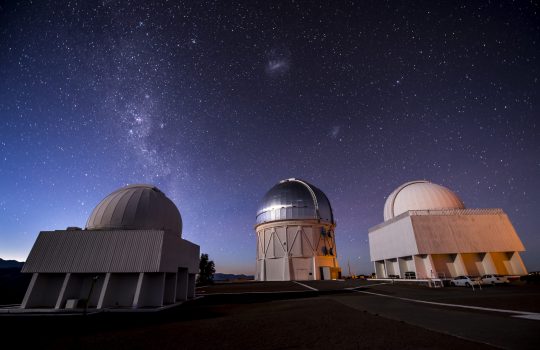
      From APS’s Physics, Jan. 29, 2019: On Jan. 9, a handful of researchers with the Dark Energy Survey — one of the most ambitious attempts to probe the dynamics of the universe’s expansion — headed to the control room of Chile’s Blanco Telescope. For one last time, they opened the white telescope’s dome. From their perch overlooking the red Andean Mountains, they set up for a night of observing the southern sky.