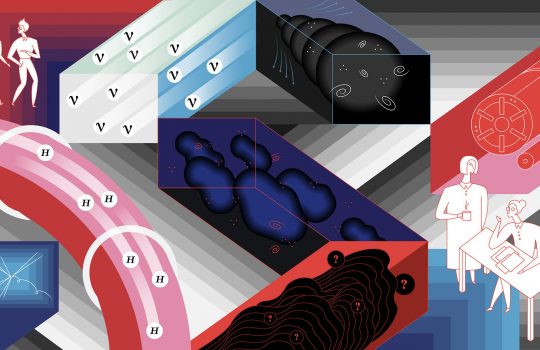
2016 year in particle physics
Scientists furthered studies of the Higgs boson, neutrinos, dark matter, dark energy and cosmic inflation and continued the search for undiscovered particles, forces and principles.

221 - 230 of 240 results
Scientists furthered studies of the Higgs boson, neutrinos, dark matter, dark energy and cosmic inflation and continued the search for undiscovered particles, forces and principles.
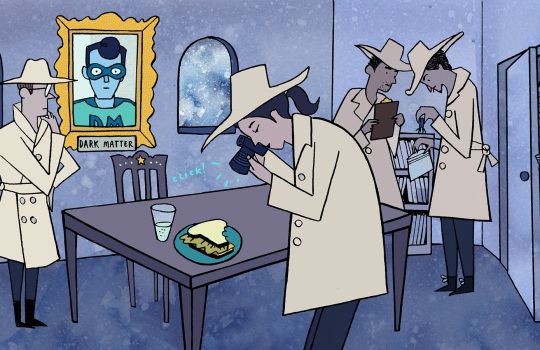
Theorists think dark matter was forged in the hot aftermath of the Big Bang.
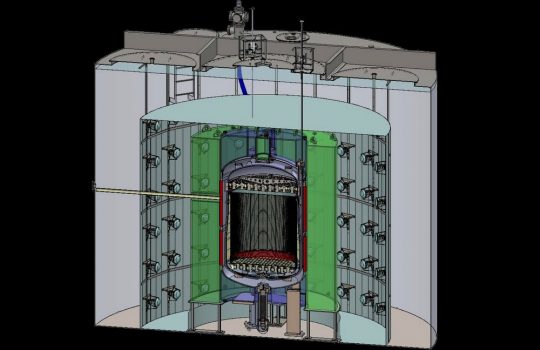
LUX-ZEPLIN (LZ), a next-generation dark matter detector that will be at least 100 times more sensitive than its predecessor, has cleared another approval milestone and is on schedule to begin its deep-underground hunt for theoretical particles, known as weakly interacting massive particles, in 2020.

What can our cosmic neighbors tell us about dark matter and the early universe?

How do scientists know what percentages of the universe are made up of dark matter and dark energy? Cosmologist Risa Wechsler of the Kavli Institute for Particle Astrophysics and Cosmology explains. Watch the 3-minute video.
From SLAC, June 1, 2016: Fermilab is one of the collaborating groups preparing to build an ultrasensitive ‘eye’ for an elusive form of matter.
From PBS Digital Studios’ The Good Stuff: Dark matter makes up 70 percent of the known universe, and we know very little about it. This video on dark matter includes an interview with theorist Patrick Fox and a tour of the MINOS underground area at Fermilab.
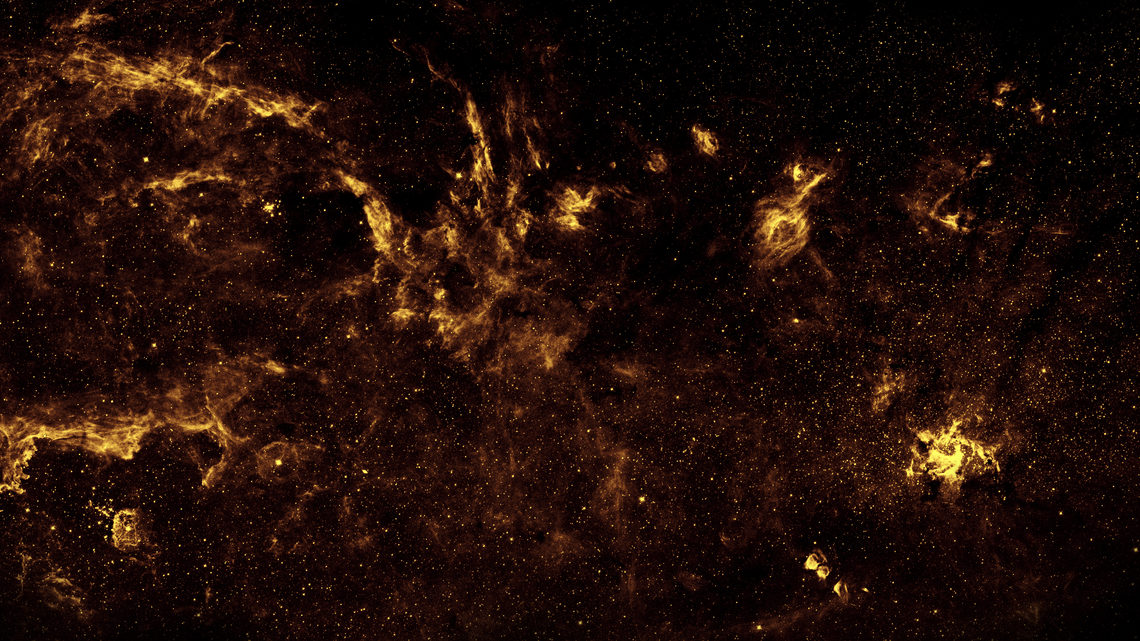
The center of our galaxy is a busy place. But it might be one of the best sites to hunt for dark matter.
IFLScience, Jan. 4, 2016: From the origin of life to the fate of the universe, there’s plenty scientists simply don’t know. But they are making progress. 2015 has been a great year for science. So what will happen in 2016?

A recent uptick in the discovery of the smallest, oldest galaxies benefits studies of dark matter, galaxy formation and the evolution of the universe.