Mystery dark matter may be ordinary neutrons that have decayed
From New Scientist, Jan. 11, 2018: Fermilab scientist Dan Hooper is quoted in this piece about the possible origins of a potential source of dark matter in the cosmos.

1871 - 1880 of 2212 results
From New Scientist, Jan. 11, 2018: Fermilab scientist Dan Hooper is quoted in this piece about the possible origins of a potential source of dark matter in the cosmos.
From The Beacon-News, Jan. 9, 2018: National laboratories should continue to bring in talent from across the world to advance understanding of science and promote global outreach, U.S. Secretary of Energy Rick Perry said Tuesday during a speech to employees at Batavia’s Fermi National Accelerator Laboratory.
From Kane County Chronicle, Jan. 10, 2018: In a folksy, down-home talk at Fermi National Accelerator Laboratory near Batavia Jan. 9, U.S. Energy Secretary Rick Perry presented himself as an advocate for the Department of Energy’s 17 national laboratories and the expansion of science on a global scale.

Local communities named newly discovered stellar streams for bodies of water close to home.
From Daily Herald, Jan. 9, 2018: Secretary of Energy Rick Perry tells scientists at Fermilab that the the particle physics research facility is one of the “jewels” of the United States.
From Physics World, January 2018: Nigel Lockyer talks about the future of particle physics – and why neutrinos hold the key.

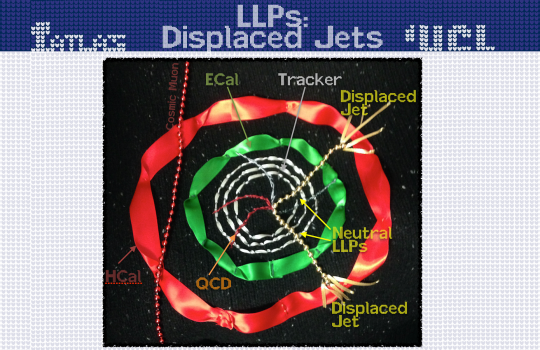
University College London scientists make physics festive with sweaters and songs at their annual holiday gathering.
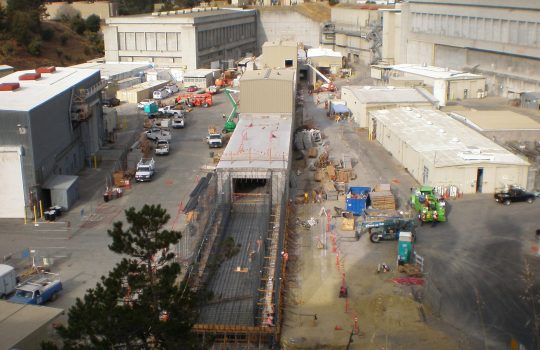
Planning the next big science machine requires consideration of both the current landscape and the distant future.
From Gizmodo, Dec. 18, 2017: Bob Kephart, Jonathan Lewis, John Peoples and other scientists talk about the reuse of steel from warships in particle physics experiments.