DUNE prototype detector ArgonCube crosses the globe
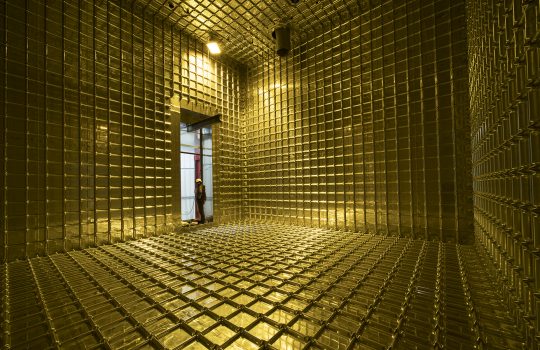
The first module of the prototype pixel-based neutrino catcher developed for the Deep Underground Neutrino Experiment is on its way to Fermilab from the University of Bern.
111 - 120 of 539 results
The first module of the prototype pixel-based neutrino catcher developed for the Deep Underground Neutrino Experiment is on its way to Fermilab from the University of Bern.
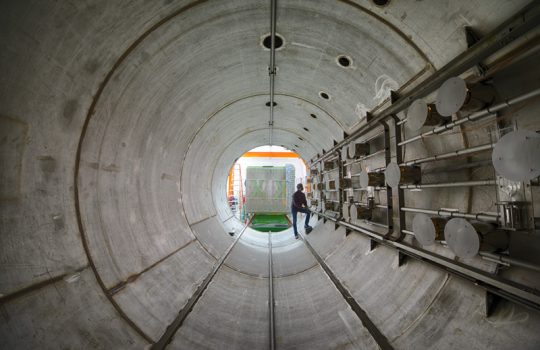
From the Black Hills Pioneer, June 20, 2021: The former Homestake Gold Mine was the largest and deepest in the western hemisphere and today it is the largest science project attempted on U.S. soil. The LBNF/DUNE includes a collaboration of more than 1,300 scientists from 32 countries. Read more about the significant impacts LBNF/DUNE is having on South Dakota.
When studying mysterious subatomic particles, researchers at SURF in South Dakota use a different kind of particle detector, particle counters, to prevent run-of-the-mill dust particles from creating background noise and obscuring results.
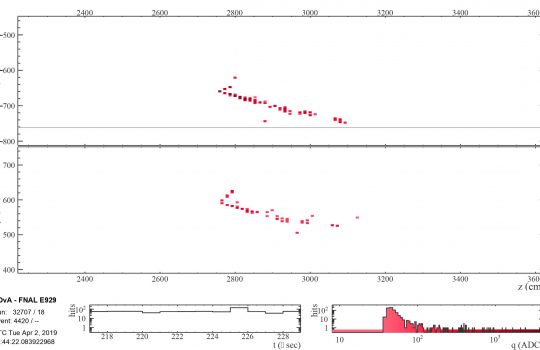
From Science Magazine (UK), June 9, 2021: Brookhaven scientists have developed new ways for the MicroBooNE detector at Fermilab to filter out cosmic ray tracks to pinpoint elusive neutrino interactions with unprecedented clarity.
Ground-breaking image reconstruction and analysis algorithms developed for surface-based MicroBooNE detector filter out cosmic ray tracks to pinpoint elusive neutrino interactions with unprecedented clarity.
Alfons Weber has achieved full professorship teaching Experimental Particle Physics at Johannes Gutenberg University Mainz. His joint appointment at JGU and Fermilab represents the expansion of PRISMA+ neutrino physics research program.
From Forbes, June 1, 2021: Fermilab’s Don Lincoln explains how researchers use observations of high energy particles to better understand rare astronomical phenomena such as black holes, supernovae, colliding stars, and other cosmic calamities.
The ICARUS detector, part of Fermilab’s Short-Baseline Neutrino Program, will officially start its hunt for elusive sterile neutrinos this fall. The international collaboration led by Nobel laureate Carlo Rubbia successfully brought the detector online and is now collecting test data and making final improvements.
From Forbes, May 18, 2021: Fermilab’s Don Lincoln explains the Karlsruhe Tritium Neutrino Experiment, in Germany that has improved our understanding of the mass of this insubstantial denizen of the microcosm.
From the Black Hills Pioneer, May 17, 2021 Activities at the Sanford Lab to have significant benefits for over the next decade as the construction of DUNE continues.