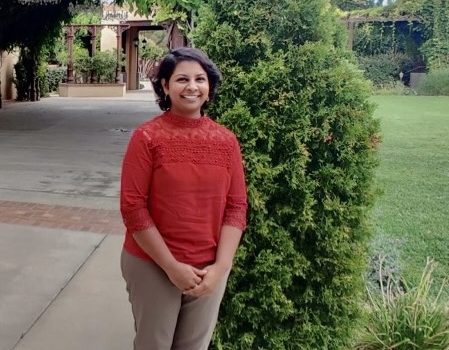
A minute with Sajini Wijethunga, PIP-II postdoctoral researcher
A postdoc on the PIP-II project, Wijethunga is working on investigating the presence of an electron cloud in the Fermilab Booster.
81 - 90 of 235 results
A postdoc on the PIP-II project, Wijethunga is working on investigating the presence of an electron cloud in the Fermilab Booster.
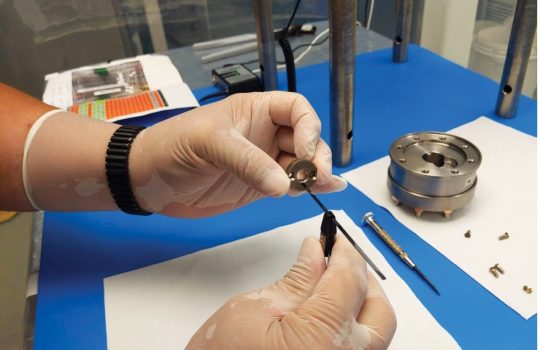
Scientists at the SQMS Center have directly probed silicon’s impact on the lifespan of superconducting qubits. The uniquely sensitive measurement helped researchers quantify how the material impacts qubit performance.
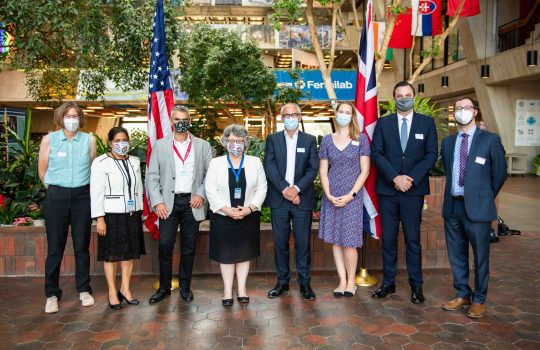
Consul General Alan Gogbashian of the British Consulate in Chicago and U.K. scientific leaders visited the lab on Aug. 24 to discuss ongoing and emerging collaborations as well as tour research facilities.
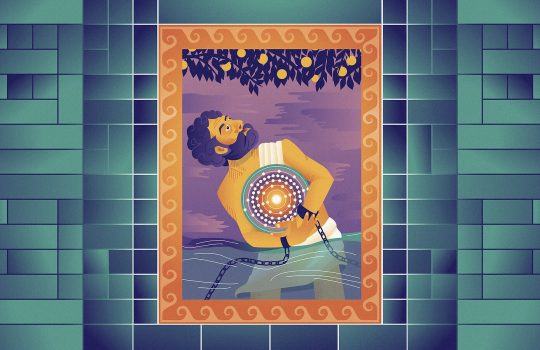
Scientists are using a detector originally designed to study neutrinos to pin down an elusive nuclear physics measurement.
From Electronic Specifier, September 2, 2022: Electronic Specifier’s podcast talks with Gustavo Cancelo, Lead Engineer at Fermilab about a project that is developing new control electronics for quantum computers known as QICK. Developed by a team of engineers at Fermilab in collaboration with the University of Chicago, the Quantum Instrumentation Control Kit provides computing experiments with a new control and readout electronics option that will significantly improve performance while replacing cumbersome and expensive systems.
From SLAC, August 31, 2022: Fermilab researchers worked with a team of 20 operators and engineers at SLAC on cryogenics to build a helium-refrigeration plant to lower the LCLS-II accelerator to superconducting temperatures. Now, it only takes one and a half hours to make a superconducting particle accelerator at SLAC colder than outer space.
From Prospect, August 29, 2022: The LHC is back running now colliding more intense beams, generating more collisions and collecting more data to sift. Fermilab’s Muon g-2 results offered an intriguing hint about muons that the LHC can follow up on by looking for new particles directly and the behavior it should induce in particles we know about.
From msn.com reposting of the El Confidental, August 28, 2022: New data from the James Webb Space Telescope shows inconsistencies between the observed galaxies and the current theory explaining the origin of the universe. Fermilab’s Don Lincoln provides some explanations before questioning astrophysics as we have come to know it.
From Coast to Coast with George Noory, August 17, 2022: Fermilab’s senior scientist Don Lincoln talks about his time working on the Tevatron at Fermilab and the LHC at CERN. Listen to find out more about the restart of the LHC and the big mysteries in astronomy regarding dark matter and how galaxies defy physics.