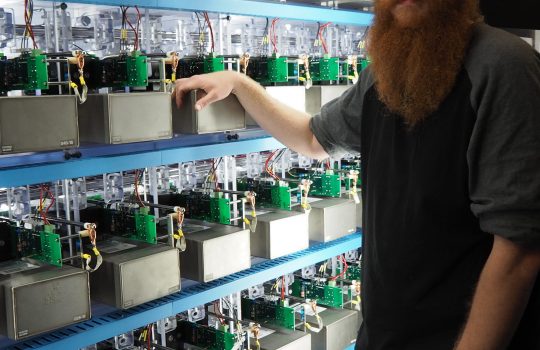
Modern modulators for Fermilab accelerators
New, flexible power modulators give accelerator operators more precise control over particle beams.
911 - 920 of 1785 results
New, flexible power modulators give accelerator operators more precise control over particle beams.
From Noticias CIEMAT, Sept. 18, 2018: La colaboración científica de DUNE, donde participan el CIEMAT, el Institut de Física d’Altes Energies (IFAE), el Instituto de Física Corpuscular (IFIC) y el Instituto de Física Teórica (IFT), cree que los neutrinos pueden tener la respuesta a una de las principales cuestiones de la Física: por qué vivimos en un Universo dominado por la materia.
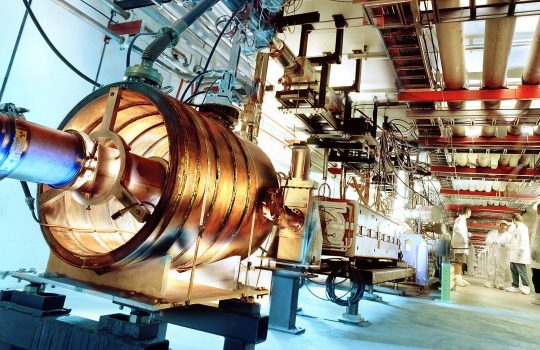
Behind some of the world’s biggest scientific instruments are teams with a set of skills you can’t find anywhere else.
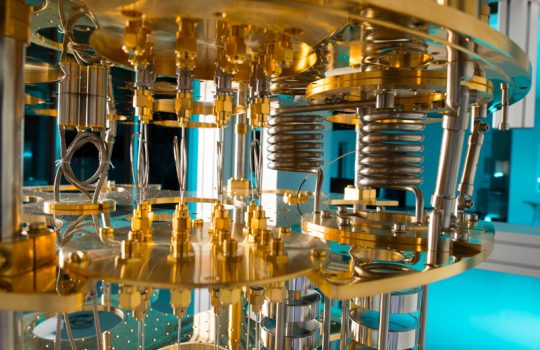
The federal grants will support University of Chicago, Argonne and Fermilab in their explorations of quantum computing, dark matter, and imaging.

Even though the ProtoDUNE time projection chambers are small compared to the planned DUNE far detectors, the data volume that these detectors produce are similar in size to what is coming out of the largest LHC experiments.
From Science News, Sept. 18, 2018: An enormous future particle detector is now within closer reach. The first data from a prototype experiment, ProtoDUNE, hint that scientists may have what it takes to build the planned neutrino detector.
From William & Mary, Sept. 18, 2018: Scientists on the DUNE collaboration think that neutrinos may help answer one of the most pressing questions in physics: why we live in a universe dominated by matter. The project includes a substantial William & Mary contingent.
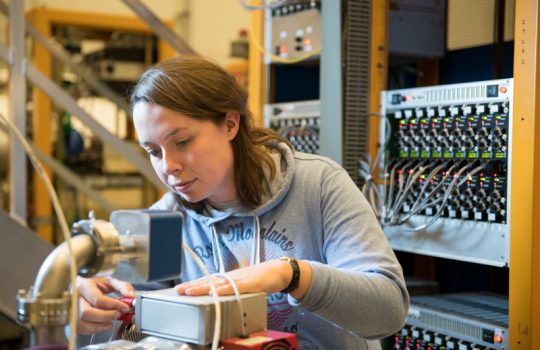
The University of Liverpool graduate works on upgrading part of the Muon g-2 experiment.
From University of Manchester, Sept. 18, 2018: The largest liquid-argon neutrino detector in the world has recorded its first particle tracks, signaling the start of a new chapter in the story of the international Deep Underground Neutrino Experiment. The university is playing a leading role in a £65million flagship global science project.
From CERN, Sept. 18, 2018: The technology of the first ProtoDUNE detector will be the same to be used for the first of the DUNE detector modules in the United States.