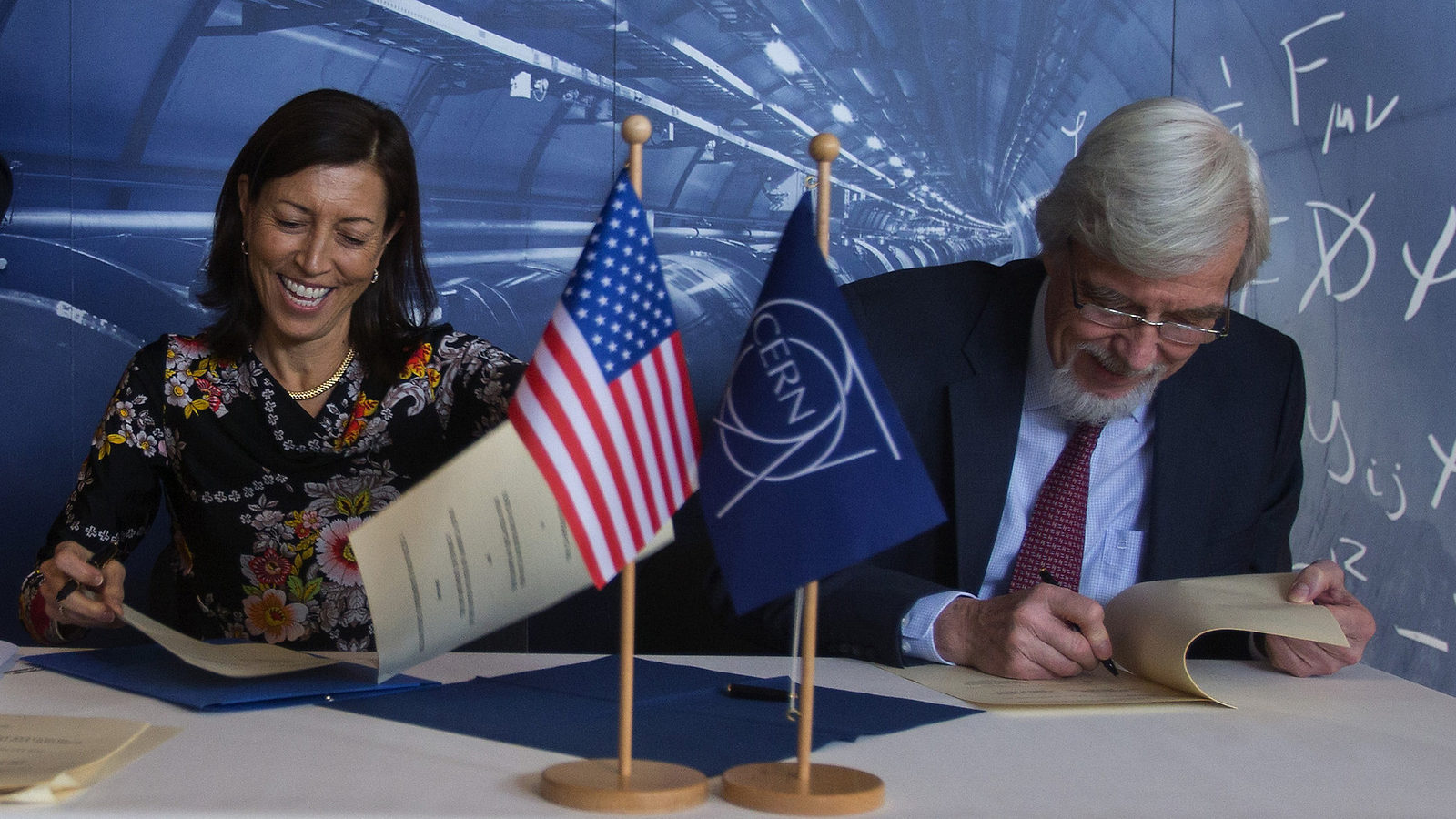
CERN and U.S. increase cooperation
The United States and the European physics laboratory have formally agreed to partner on continued LHC research, upcoming neutrino research and a future collider.

221 - 230 of 238 results
The United States and the European physics laboratory have formally agreed to partner on continued LHC research, upcoming neutrino research and a future collider.
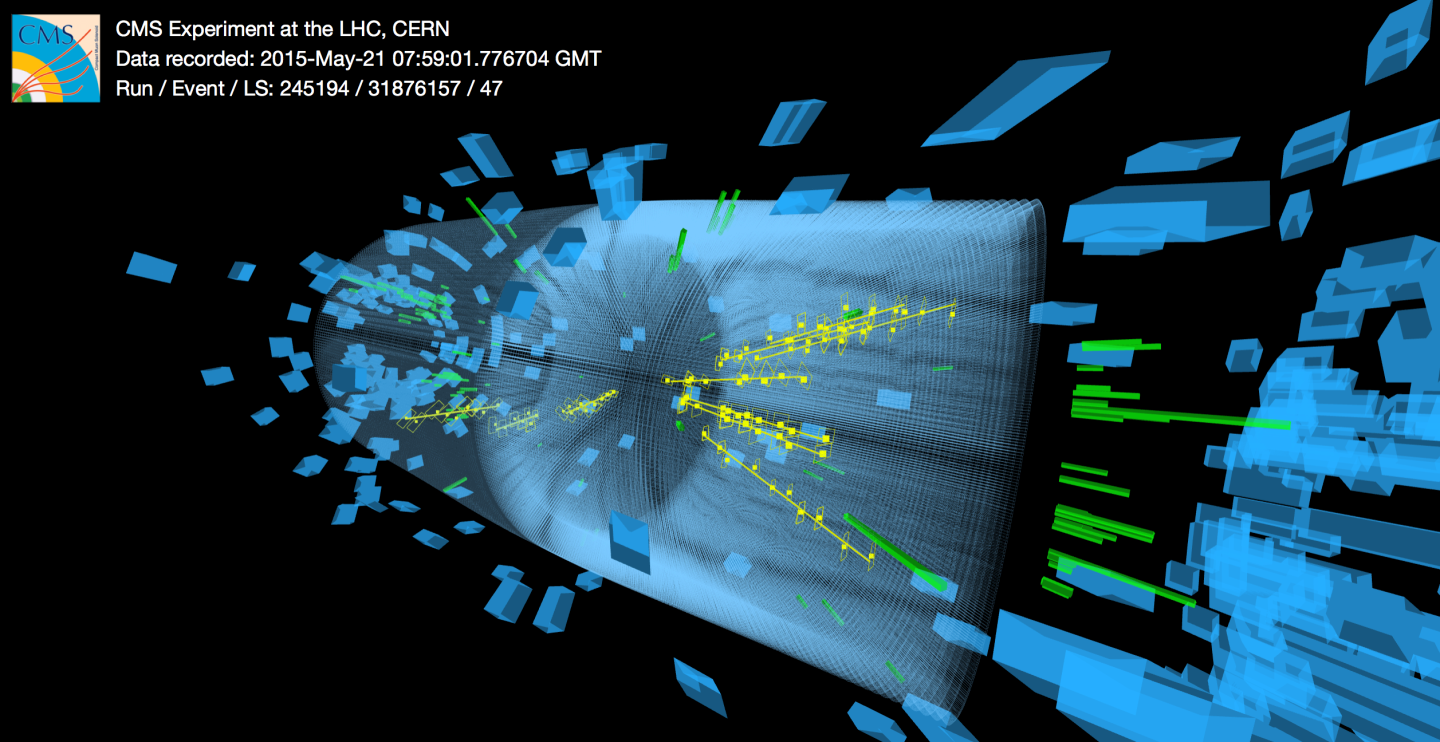
Today scientists at the Large Hadron Collider at CERN, the European research facility, started recording data from the highest-energy particle collisions ever achieved on Earth.
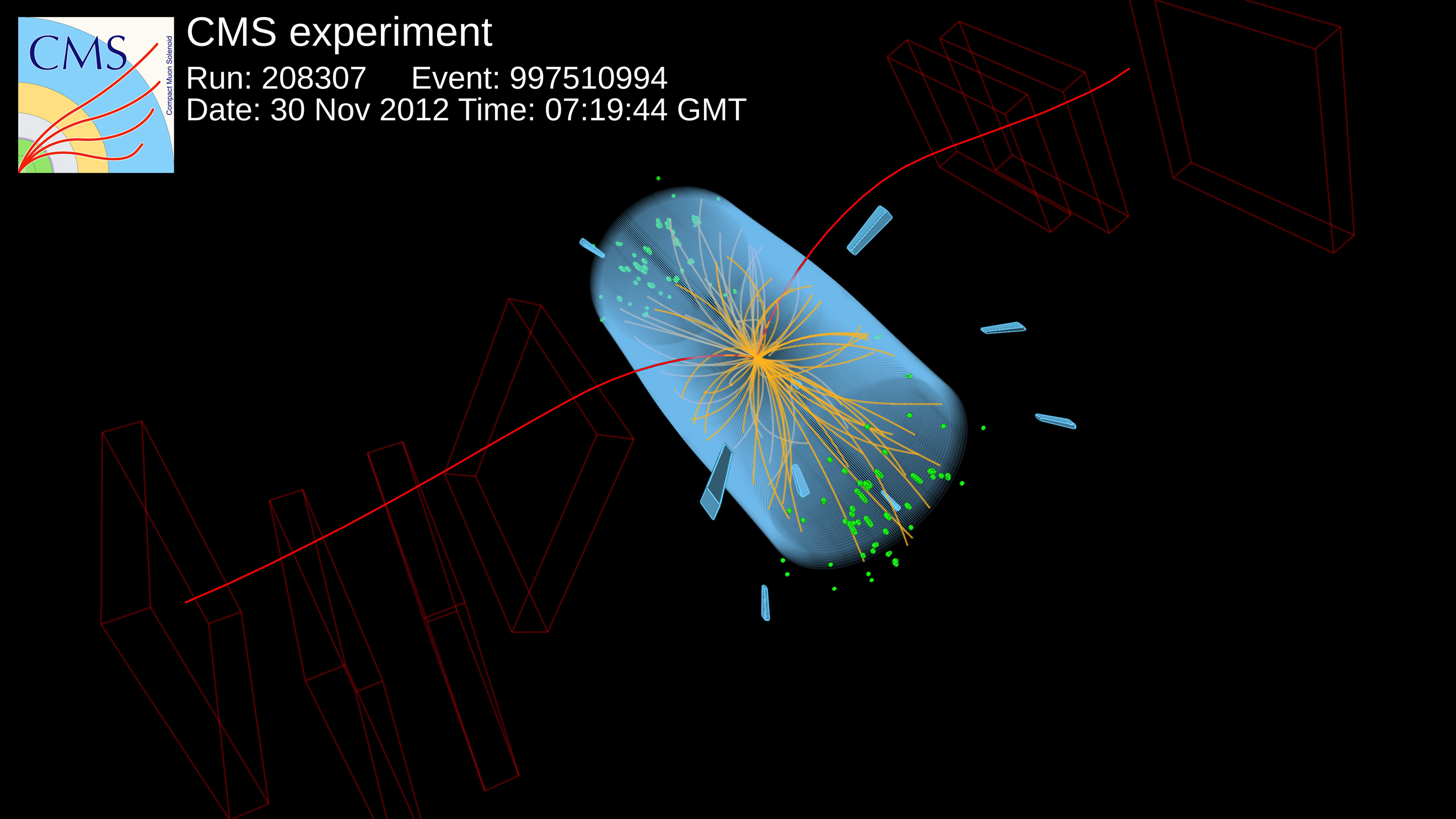
Two experiments at the Large Hadron Collider at the European Organization for Nuclear Research (CERN) in Geneva, Switzerland, have combined their results and observed a previously unseen subatomic process.
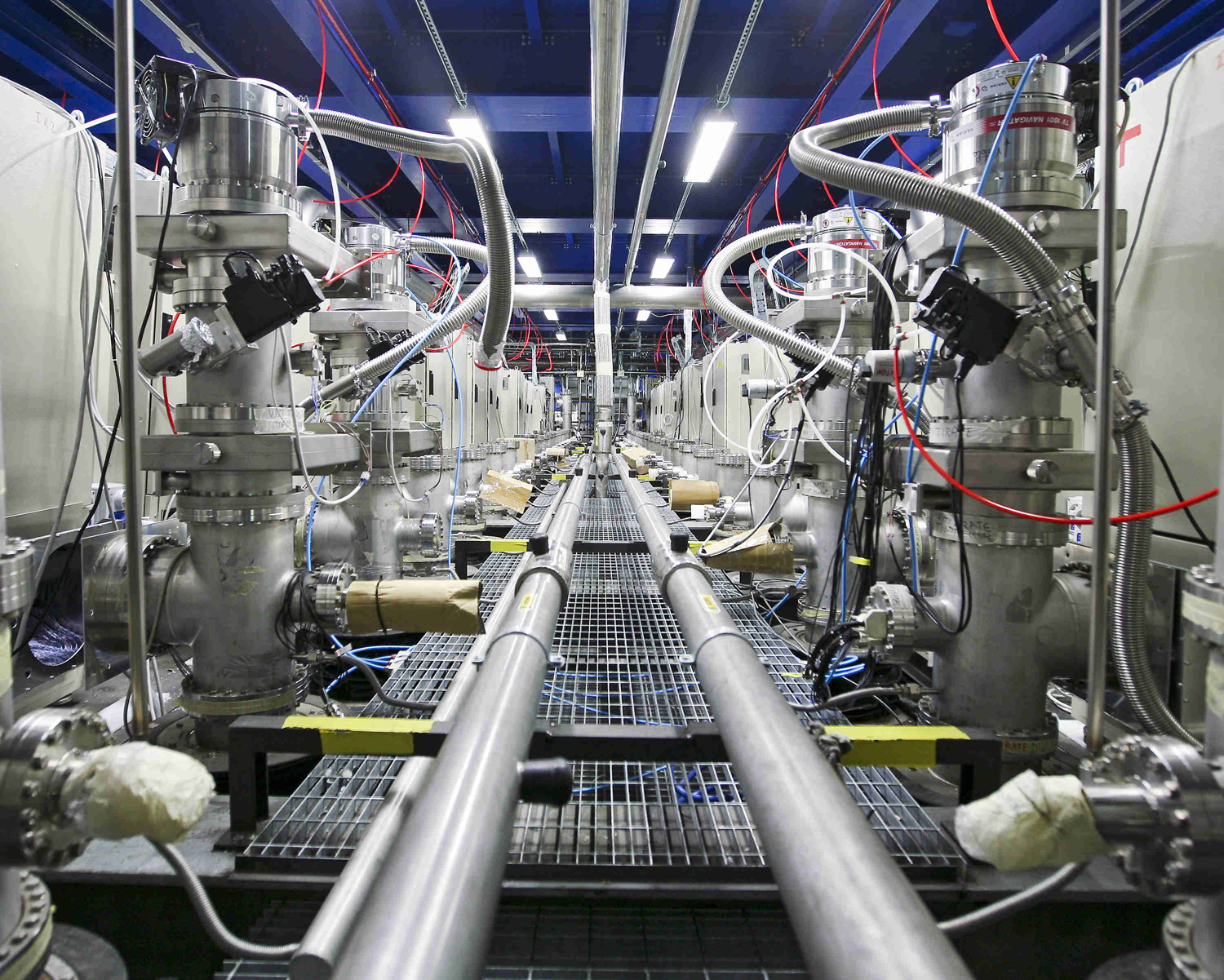
A group of scientists led by Nobel laureate Carlo Rubbia will transport the world’s largest liquid-argon neutrino detector across the Atlantic Ocean to its new home at the U.S. Department of Energy’s Fermi National Accelerator Laboratory.

With the Large Hadron Collider back in action, the more than 1,700 U.S. scientists who work on LHC experiments are prepared to join thousands of their international colleagues to study the highest-energy particle collisions ever achieved in the laboratory.
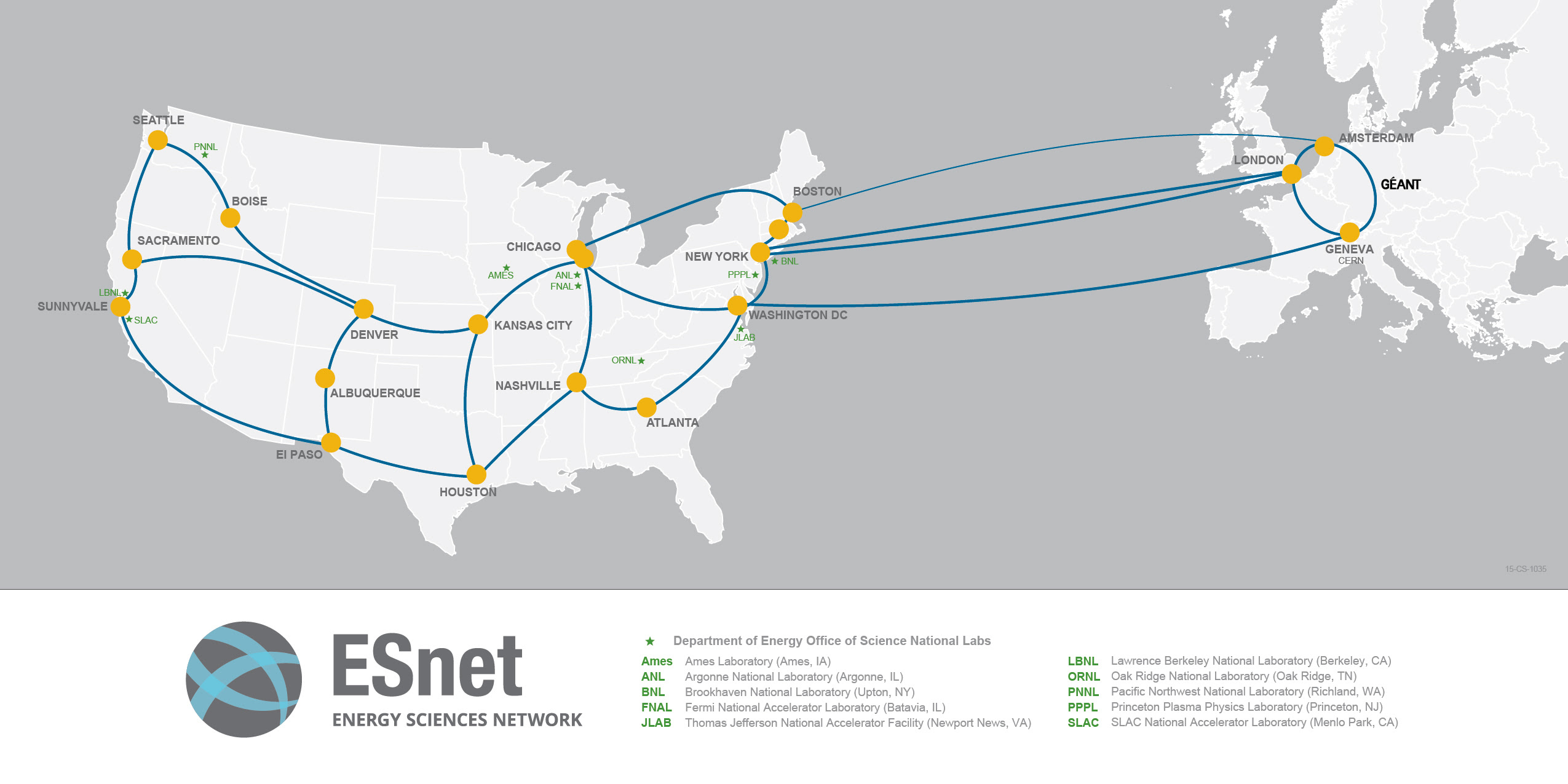
Scientists across the Unit15-CS-1035 ESnet EuropeUS Map_v2_wkeyed States will soon have access to new, ultra-high-speed network links spanning the Atlantic Ocean thanks to a project currently under way to extend ESnet (the U.S. Department of Energy’s Energy Sciences Network) to Amsterdam, Geneva and London.
The new particle discovered at experiments at the Large Hadron Collider last summer is looking more like a Higgs boson than ever before, according to results announced today.
Two experiments at the Large Hadron Collider have nearly eliminated the space in which the Higgs boson could dwell, scientists announced in a seminar held at CERN today.
Two experimental collaborations at the Large Hadron Collider, located at CERN laboratory near Geneva, Switzerland, announced today that they have significantly narrowed the mass region in which the Higgs boson could be hiding.
The Large Hadron Collider has launched a new era for particle physics. Today at 6:06 a.m. CDT (1:06 p.m. Central European Summer Time) at CERN in Geneva, Switzerland, the first particles collided at the record energy of seven trillion electron volts (TeV).