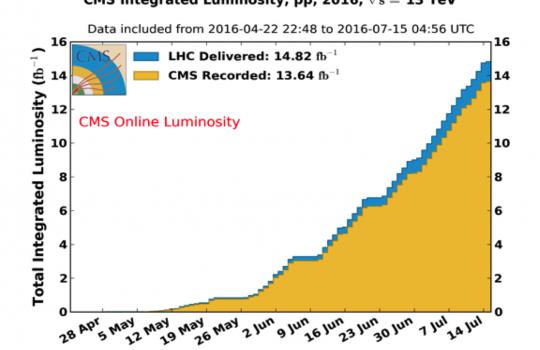
The ICHEP race condition
What’s it like to be part of an experiment collaboration in the weeks and days before a big announcement?
211 - 220 of 238 results
What’s it like to be part of an experiment collaboration in the weeks and days before a big announcement?
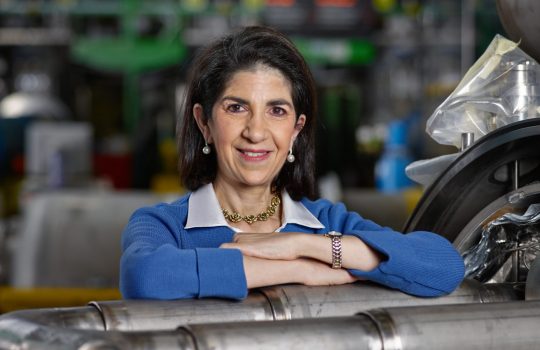
CERN’s Director General is enthusiastic about the progress and prospects of the LHC research program, but it’s not the only thing on her plate.
From CERN Courier, July 8, 2016: Established in 2013 following recommendations from the European Strategy document, the CERN Neutrino Platform ensures Europe’s participation in next-generation long- and short-baseline neutrino experiments in Japan and the United States
Researchers found four new particles made of the same four building blocks.
The 27th International Conference on Neutrino Physics and Astrophysics, commonly called Neutrino 2016, will bring together scientists from experiments around the world. Scientists working with the U.S. Department of Energy’s Fermi National Accelerator Laboratory will give numerous presentations at Neutrino 2016 and unveil some significant results.
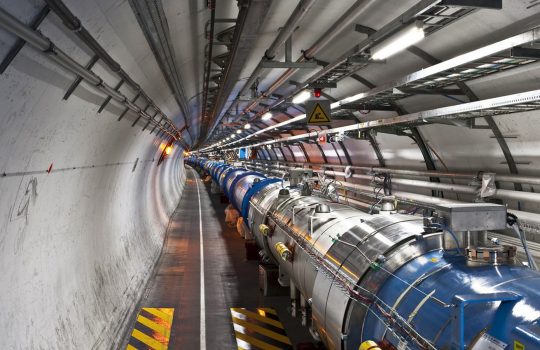
Higgs bosons should mass-produce bottom quarks. So why is it so hard to see it happening?
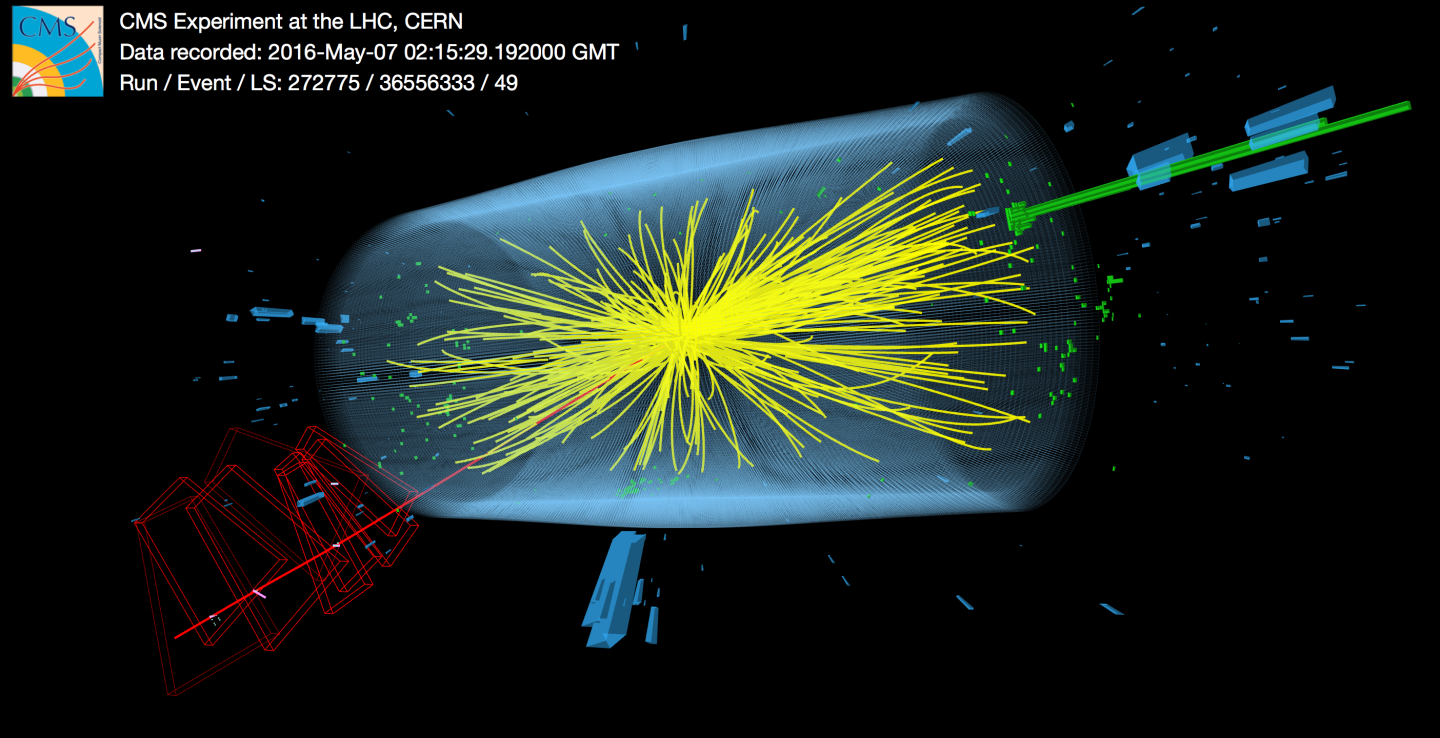
After months of winter hibernation, the Large Hadron Collider is once again smashing protons and taking data. The LHC will run around the clock for the next six months and produce six times more collisions than in 2015.

Physicists up and down the Western Hemisphere are fans of neutrinos, and experiments to study the subtle particle are flourishing at Fermilab and throughout Latin America.

On April 27, Fermilab broke ground on the building that will house the future Short-Baseline Near Detector. The particle detector is one of three that, together, Fermilab scientists and collaborators will use to search for the sterile neutrino.
From BBC News, March 11, 2016: You can look in any direction inside this video of CERN’s Large Hadron Collider, including a view of the CMS detector.