Expanding universe mystery deepens
From Gizmodo, Nov. 27, 2018: University of Portsmouth measure the Hubble constant using Dark Energy Survey data.
81 - 90 of 117 results
From Gizmodo, Nov. 27, 2018: University of Portsmouth measure the Hubble constant using Dark Energy Survey data.
From Wired, Nov. 20, 2018: Scientists use Dark Energy Survey data to recalculate the Hubble constant.
From Physics World, Nov. 21, 2018: University of Portsmouth scientists used data from the Dark Energy Survey to remeasure the Hubble constant.
From The Archaeology News Network, Nov. 12, 2018: Using Dark Energy Survey data, researchers from the University of Portsmouth have come up with a new measurement of one of the most debated topics in cosmology.
From University of Portsmouth Institute of Cosmology and Gravitation, Nov. 10, 2018: Researchers have analyzed new Dark Energy Survey data to provide one of the most accurate measurements of the Hubble constant to date.
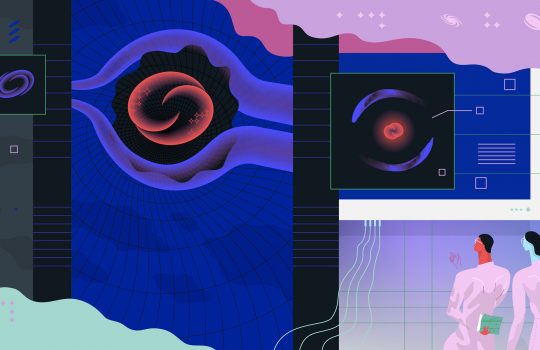
Predicted by Einstein and discovered in 1979, gravitational lensing helps astrophysicists understand the evolving shape of the universe.
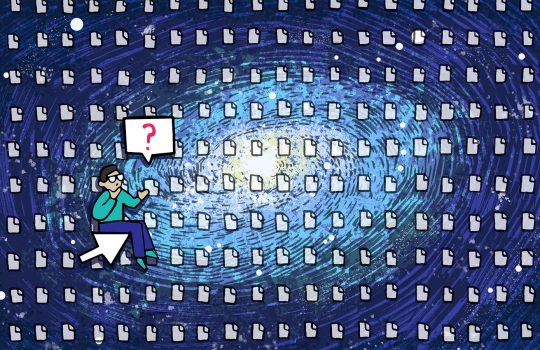
To keep up with an impending astronomical increase in data about our universe, astrophysicists turn to machine learning.
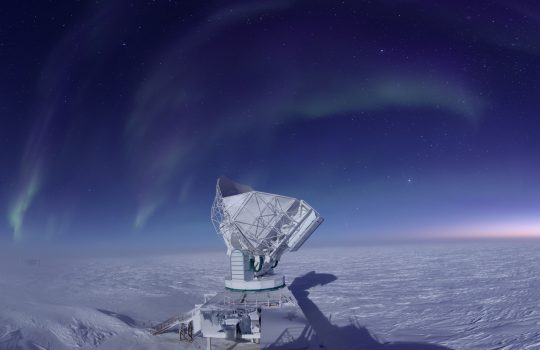
The South Pole Telescope, specially designed to measure the cosmic microwave background, has recently opened its third-generation camera for a multiyear survey to observe the earliest instants of the universe.

The Laser Interferometer Gravitational-Wave Observatory has a new digital assistant.
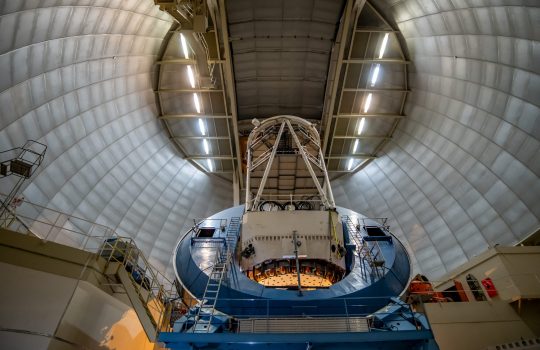
DESI, an instrument to help scientists get to the bottom of the dark energy mystery, is getting a little help from Fermilab.