
LBNF

1 - 10 of 149 results

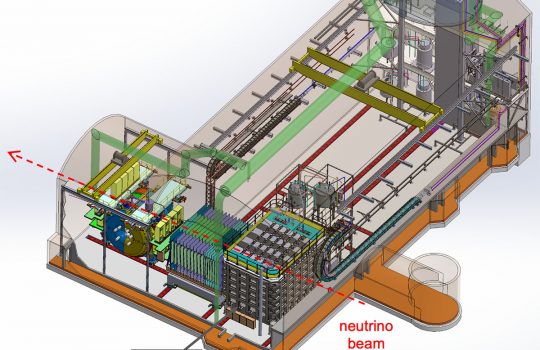
This graphic shows the engineering design model of the underground DUNE near detector hall. The neutrino beam enters from the right. The liquid-argon time projection chamber (labeled ND-LAr) is the first to encounter the neutrino beam. Directly behind it sits the muon spectrometer, shown in blue and green. Both can move off the beam axis (toward the upper right) to sample different neutrino energies. The third component, the beam monitor at the farthest end of the hall, depicted in yellow and blue, stays in place on axis in the beam. Credit: DUNE Collaboration

DUNE will use liquid-argon time projection chamber technology both near and far

The Deep Underground Neutrino Experiment’s innovative hybrid near detector will be a game changer. An active prototyping program over the last few years has been refining and validating the design of this smaller detector’s key element, a liquid-argon time projection chamber, and the data analysis tools and methods that go with it.

Construction work at Fermilab near Kirk and Giese Roads

    Fermilab representatives provided an update about the upcoming LBNF site preparation work to members of the Batavia City Council on Nov.6. Starting this month, crews will prepare an area on the Fermilab site close to Kirk and Giese roads for the construction of the new facility for the Deep Underground Neutrino Experiment.

    UK engineers build critical link for global neutrino experiment

      From UK Research and Innovation, July 26, 2022: UK engineers have started producing what is perhaps the most critical link in a complex and powerful accelerator chain, the neutrino production target for LBNF at Fermilab. Together, STFC engineers and Fermilab have started an international collaboration known as RaDIATE in which the collaboration applies the expertise and facilities of nuclear materials scientists to the challenging environment.

      The conveyor belt taking the rocks from the crusher to the Open Cut passes close to the town of Lead, South Dakota. Image: Fermilab

      Rock transportation system is ready for excavation of DUNE caverns

      Fermilab contractors have successfully commissioned a system that will move 800,000 tons of rock to create space for the international Deep Underground Neutrino Experiment’s detectors in South Dakota. Excavation crews will transport the rock from a mile underground to the surface using refurbished mining infrastructure and the newly constructed conveyor system.