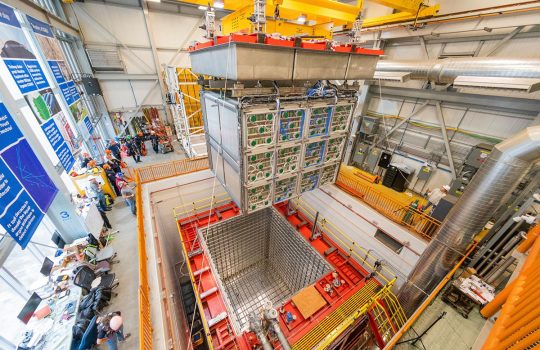
The SBND collaboration releases first neutrino results
Following years of preparation, the new result from the Short-Baseline Near Detector improves neutrino interaction modeling, paving the way for the Deep Underground Neutrino Experiment.
1 - 10 of 818 results
Following years of preparation, the new result from the Short-Baseline Near Detector improves neutrino interaction modeling, paving the way for the Deep Underground Neutrino Experiment.
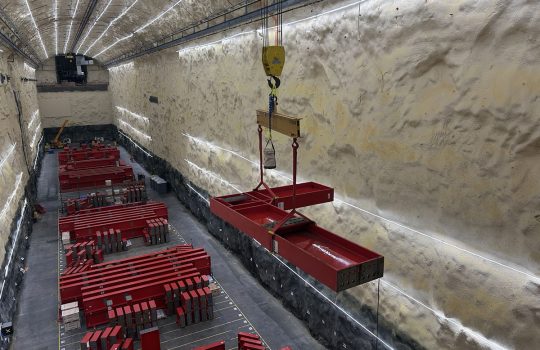
Construction of the Long-Baseline Neutrino Facility is entering its next phase, marking a major step forward for the international Deep Underground Neutrino Experiment hosted by Fermilab. With the arrival of critical components and growing momentum across partner institutions, DUNE is moving closer to unlocking long standing mysteries in particle physics and the origins of the universe.
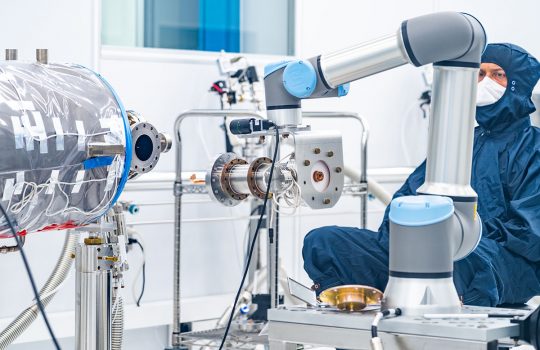
As America’s particle physics laboratory builds components for its powerful new linear accelerator, engineers are driving innovation by using a collaborative robot to automate the assembly of superconducting cavities, sharply reducing the risk of errors in a cleanroom environment.
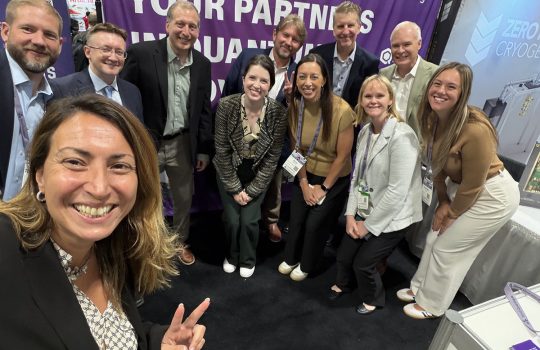
The founding director provides perspective on the first six years of a DOE National Quantum Information Science Research Center — the Superconducting Quantum Materials and Systems Center, led by Fermi National Accelerator Laboratory.
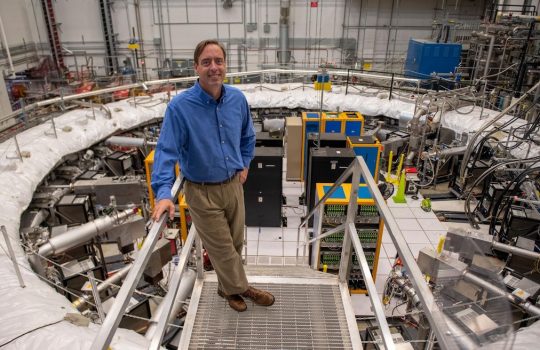
U.S. Secretary of Energy Chris Wright announced that Fermilab’s Chris Polly was one of nine recipients of the prestigious Ernest Orlando Lawrence Award for exceptional contributions to research and development supporting the U.S. Department of Energy’s (DOE) missions in science, energy and national security.
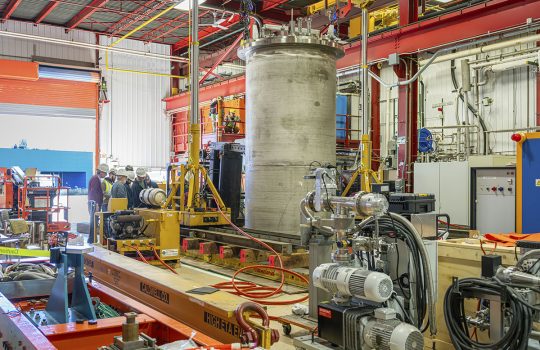
Fermilab’s long legacy of pioneering superconducting magnet technology is entering a new chapter with the launch of the MAGNet Environment Simulator. The test platform will support cutting-edge research aimed at enabling the powerful magnets needed for future fusion energy systems.
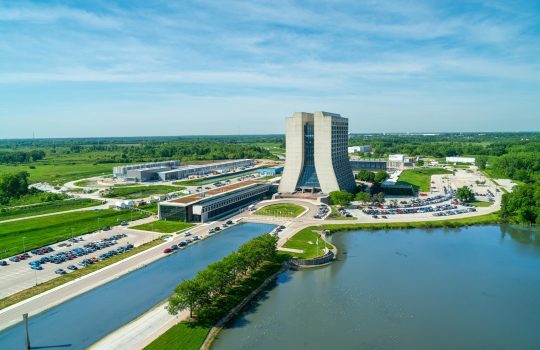
Two new awards will expand Fermilab’s critical role in the Genesis Mission by developing custom microelectronics and advancing quantum information science.

The Royal Swedish Academy of Sciences has awarded the 2026 Nobel Prize in physics to Francis Halzen of the University of Wisconsin–Madison.
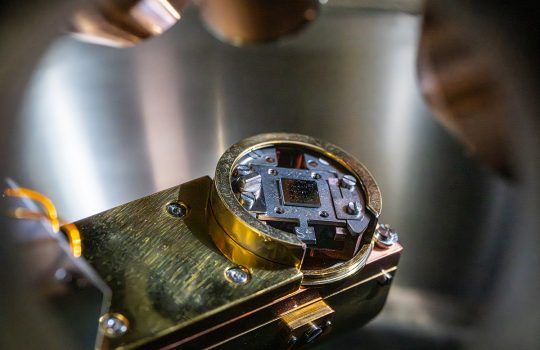
A first-of-its-kind blinded materials characterization study spanning 22 superconducting quantum devices, seven characterization techniques and six leading institutions helps build the scientific foundations of scalable quantum computing.
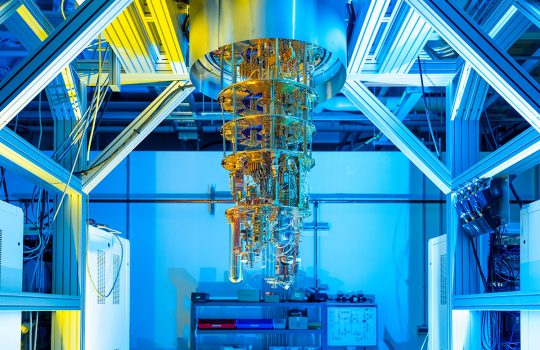
Quantum computing is becoming a revolutionary tool for scientific discovery.