Dark Energy Survey scientists release new analysis of how the universe expands
The latest results combined weak lensing and galaxy clustering and incorporated four dark energy probes from a single experiment for the first time.
1 - 10 of 1271 results
The latest results combined weak lensing and galaxy clustering and incorporated four dark energy probes from a single experiment for the first time.
Fermilab researchers have provided expertise and leadership in developing an open-source framework that enables the design of hardware capable of making split-second decisions. These advances aim to prioritize the enormous volumes of data produced by some of humanity’s most ambitious physics experiments.
Deep inside a converted gold mine in South Dakota, researchers are tackling a colossal engineering challenge — building massive, super-cooled containers to hold liquid argon for a flagship physics experiment hosted by Fermilab for the international DUNE collaboration.
Construction of a laser laboratory that will house state-of-the-art lasers necessary to run the experiment’s 100-meter atom interferometer is complete. This is an important step in building a quantum sensing device capable of seeing tiniest of signals emanating from the farthest reaches of the universe to discover new physics phenomena.
Magnetic resonance imaging, commonly known as MRI, is a cornerstone of modern medical diagnostics. Now, a collaboration from Fermilab and NYU Langone Health, both partners in the Superconducting Quantum Materials and Systems Center, takes this technology a step further with Quantitative MRI.
Gray Putnam, James Mott, Lauren Yates and Chris Jensen are this year’s recipients of the URA Honorary Awards. The awards are presented each year to recognize significant contributions to research at Fermilab.
Throughout this year, Fermilab’s dedicated scientists, engineers, technicians and operations staff came together to drive discoveries, advance American innovation and prepare the lab for a bright future.
DOE’s Office of High Energy Physics has recommitted and significantly increased its investment in Fermilab’s VALOR program. The military veterans’ job program was awarded $8 million over the next five years, demonstrating DOE and Fermilab’s commitment to workforce development for U.S. veterans.
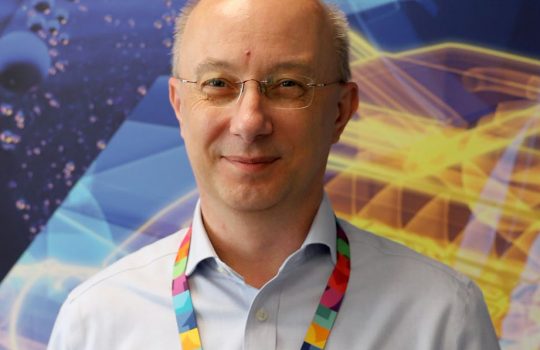
Norbert Holtkamp brings deep scientific and operational expertise to Fermilab, having managed large scientific projects throughout his career.
The experiment demonstrated the power of liquid-argon time projection chamber technology for neutrino research, and to date, the collaboration has published more than 80 scientific papers, helping lay the foundation for Fermilab’s neutrino research program.