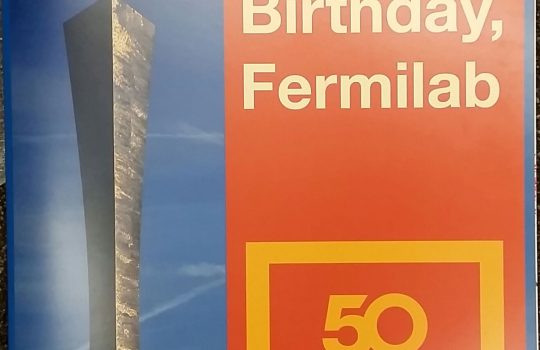
Happy birthday wishes from Washington and beyond
Government officials in Washington, D.C., wish Fermilab a happy 50th birthday.
631 - 640 of 799 results
Government officials in Washington, D.C., wish Fermilab a happy 50th birthday.
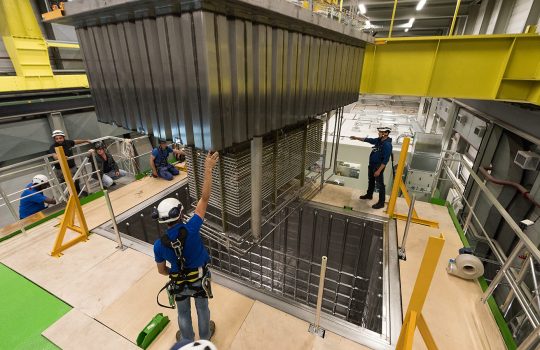
The startup of a 25-ton test detector at CERN advances technology for the Deep Underground Neutrino Experiment.
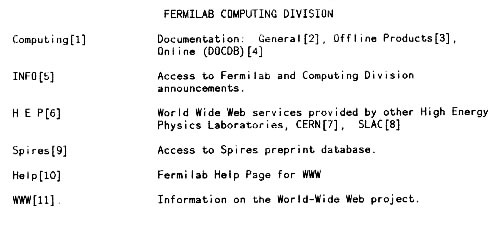
Twenty-five years ago this month, Fermilab stood up its first website — one of the earliest websites in the United States.
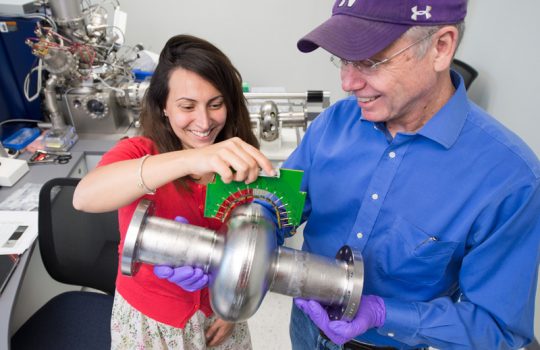
The partnership is expected to advance a wide range of science, including medicine and energy.

University of Chicago, Argonne National Laboratory and Fermilab prepare for quantum information revolution.
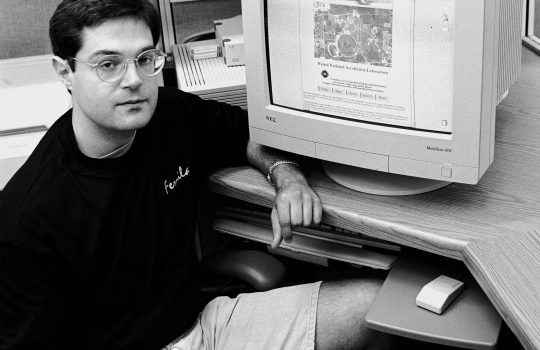
Fermilab and the field of particle physics were pioneers of electronic communication.

Fermilab celebrates 50 years of discovery.
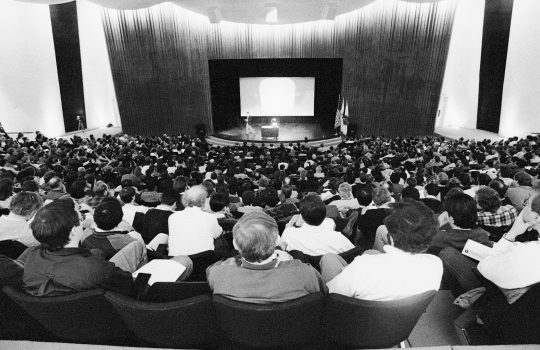
The list covers 50 important particle physics measurements, advances in accelerator science, astrophysics discoveries, theoretical physics papers, game-changing computing developments and more.
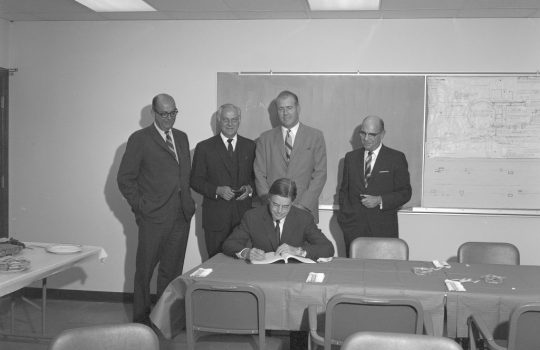
In the early 1970s, many of us were working lots of overtime, about 12-hour days. One day, I’d just gotten home when I got a phone call: “We need your help.”
The particle physics laboratory makes a Spanish connection.