‘They’re working beautifully’: Photon detectors built at CSU see first light
From Colorado State University, Oct. 25, 2018: Colorado State University contributes detectors to the ProtoDUNE detector at CERN.
1651 - 1660 of 2261 results
From Colorado State University, Oct. 25, 2018: Colorado State University contributes detectors to the ProtoDUNE detector at CERN.
From Live Science, Oct. 24, 2018: There are many huge unanswered questions in science, but it’s hard to beat “Why is there something, instead of nothing?” Fermilab scientist Don Lincoln explains how the study of neutrinos could answer it.
From University of Chicago, Oct. 24, 2018: National labs and the University of Chicago are to create one of world’s longest fiber-optic links to “teleport” information.

We already know neutrinos break the mold of the Standard Model. The question is: By how much?
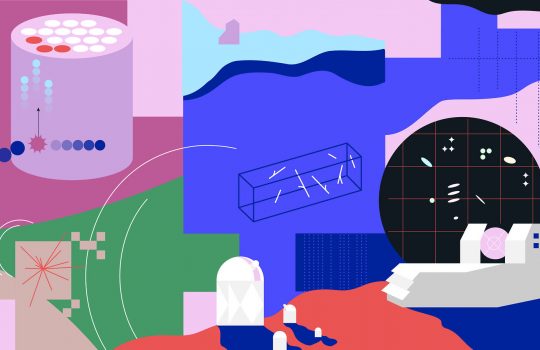
These international projects, selected during the process to plan the future of U.S. particle physics, are all set to come online within the next 10 years.
From FAPAESP’s Pesquisa, Oct. 18, 2018: Em meados de setembro, partículas vindas do espaço começaram a atravessar um tanque em forma de cubo com 6 metros de altura, instalado na Cern, na Suíça, e deixar rastros de luz que foram captados por detectores criados no Brasil.
From UFO Spain, Oct. 18, 2018: El mayor detector de neutrinos de argon líquido del mundo acaba de registrar sus primeras trazas de partículas, marcando el inicio de un nuevo capítulo en la historia de DUNE.
From The Chicago Maroon, Oct. 18, 2018: The particle physicist and Nobel laureate also helped found a publicly funded math and science academy for Illinois teenagers.
From Illinois Public Radio’s The 21st, Oct. 15, 2018: Fermilab archivist Valerie Higgins appears on Illinois Public Radio to talk about Enrico Fermi and Leon Lederman. Segment starts at 41:20
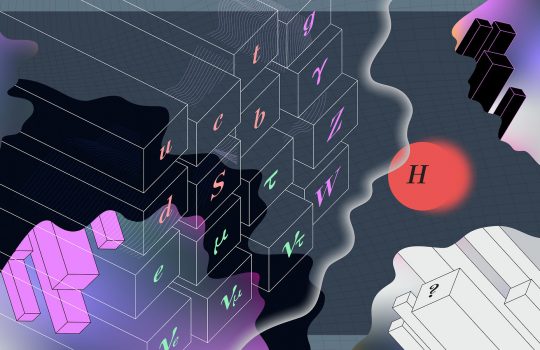
Our best model of particle physics explains only about 5 percent of the universe.