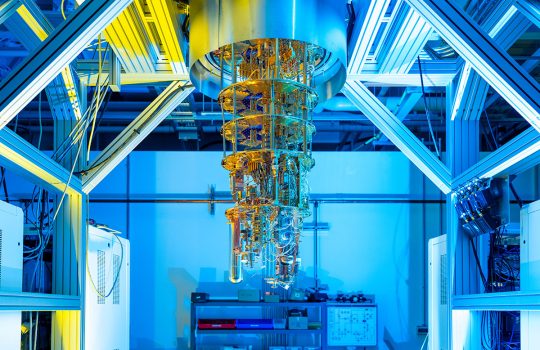
DOE releases national quantum computing roadmap following field-wide effort led by SCAC subcommittee
Quantum computing is becoming a revolutionary tool for scientific discovery.
11 - 20 of 1341 results
Quantum computing is becoming a revolutionary tool for scientific discovery.
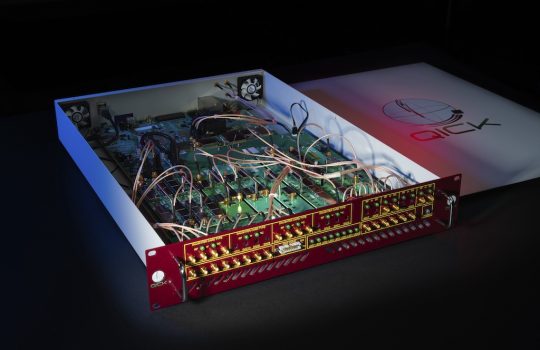
Fermilab is among the initial partners in Microsoft Quantum’s newly established quantum research center. Opening in the Discovery District, Maryland, the center will feature a quantum hardware makerspace, where researchers can develop new approaches to hands-on quantum training. As part of this effort, Fermilab will expand the capabilities of its Quantum Instrumentation Control Kit, or QICK, an open-source quantum control and readout system, providing flexible new tools to the quantum community.
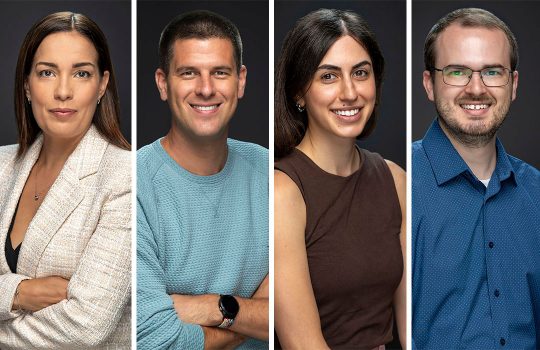
Tyler Barrett, Charis-Kleio Koraka, Kevin Kelly and Silvia Zorzetti are the recipients of the 2026 URA Honorary Awards. The awards are presented each year by Universities Research Association to recognize significant contributions to research at Fermilab.
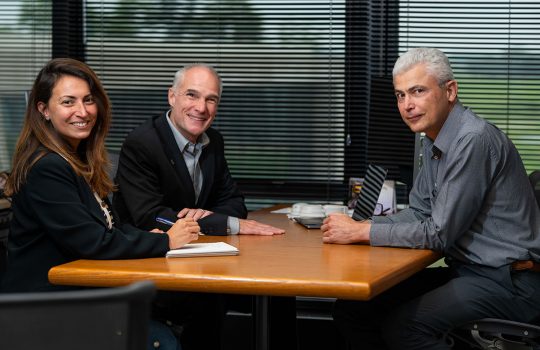
Fermilab’s recent reorganization brings its accelerator, physics and technology programs under three unified directorates, each charged with advancing the laboratory’s most important scientific priorities. Together, these directorates form a coordinated leadership structure designed to deliver world class research and guide Fermilab’s future.
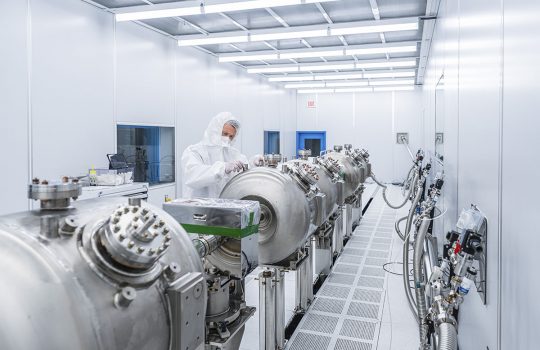
In a project selected for funding by the Department of Energy’s Genesis Mission, Fermi National Accelerator Laboratory and partners from other national laboratories, universities and industry will apply artificial intelligence and machine learning to enable precise and adaptive resonance control in particle accelerators. Their work aims to lower operating costs by millions of dollars each year and improve accelerator performance, driving scientific discovery.
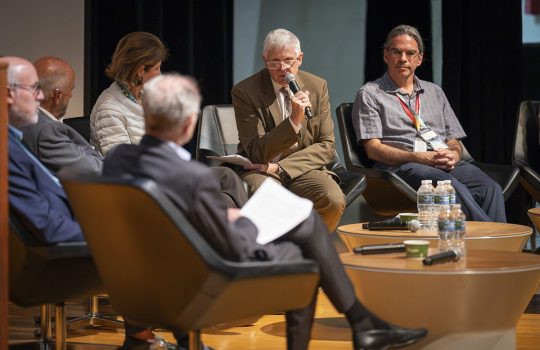
Fermilab recently hosted over 500 physicists for the American Physical Society’s biennial Division of Particles and Fields meeting. With presentations by Fermilab Director Norbert Holtkamp and CERN Director-General Mark Thomson, the meeting provided particle physicists the opportunity to come together and consider the future of high-energy physics research.
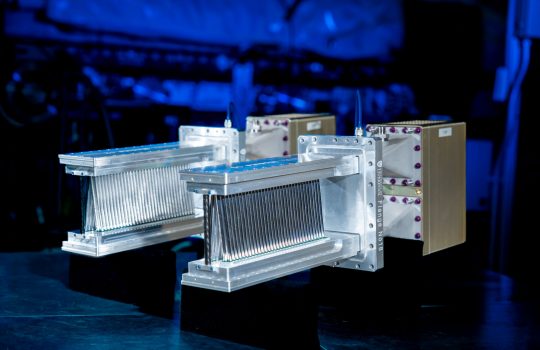
The experiment, designed to measure the magnetic moment of the muon, is also sensitive to a particle property called the electric dipole moment.
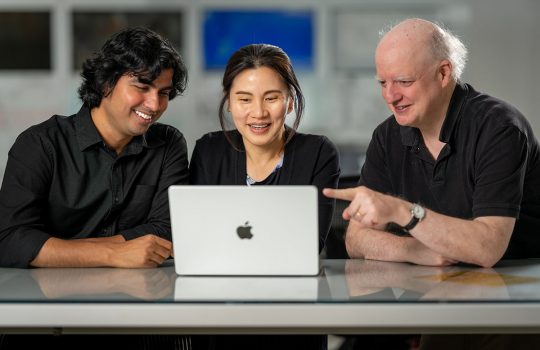
DUNE is pioneering the future of neutrino research by integrating artificial intelligence into its experiment, drawing on decades of machine learning work at Fermilab.
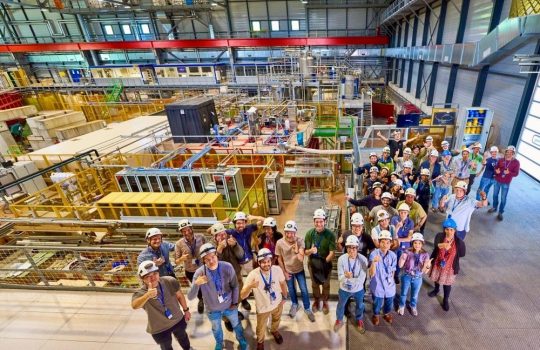
A prototype for the world’s biggest neutrino experiment is running under extreme conditions to see how well the technology performs under pressure.
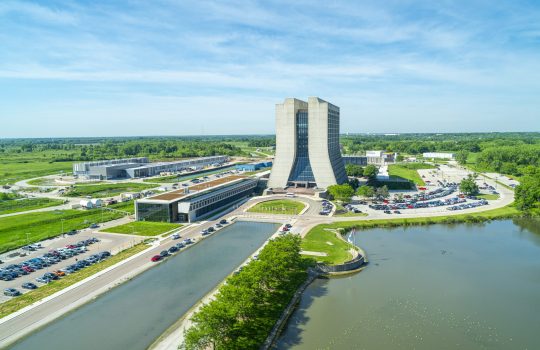
The awards will support Fermilab projects by leveraging AI to boost innovation and technology development, advance DOE’s Genesis Mission and accelerate scientific discovery.