CERN

71 - 80 of 237 results

Tests start at CERN for large-scale prototype of new technology to detect neutrinos

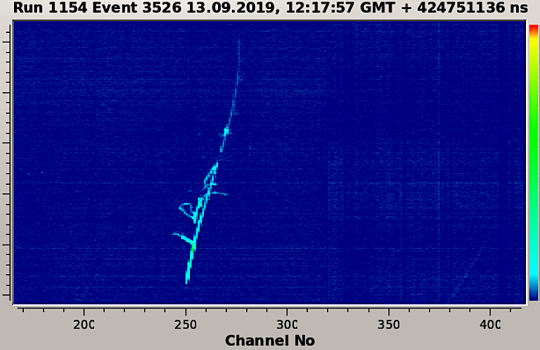
Scientists working at CERN have started tests of a new neutrino detector prototype using a promising technology called “dual phase.” If successful, this new technology will be used at a much larger scale for the international Deep Underground Neutrino Experiment, hosted by Fermilab. Scientists began operating the dual-phase prototype detector at CERN at the end of August and have observed first tracks. The new technology may be game-changing, as it would significantly amplify the faint signals that particles create when moving through the detector.

Fighting cancer with physics

    Researchers at CERN are investigating how very high-energy electrons could help target tumors. The possibility of using high-energy electrons for cancer treatment combined with new experimental dose-delivery techniques poises the medical field for a revolution in cancer treatment.

    The right stuff

      A lot of people say they would like to travel to Mars, but Zoe Townsend doesn’t just talk the talk. As a mechanical engineer at CERN, she knows the importance of putting ideas to the test. To see if she could actually handle the unique challenges posed by living and doing science on another planet, Townsend spent 12 days on a simulated Mars mission in the deserts of Utah.

      High precision for studying the building blocks of the universe

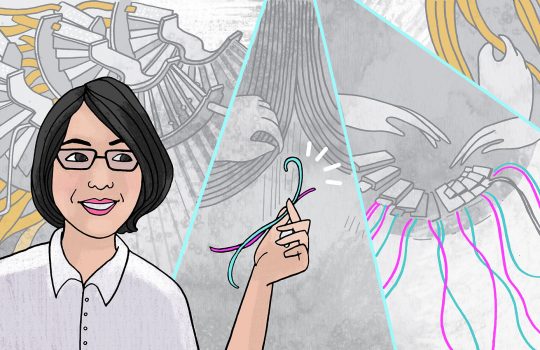
        From Exascale Computing Project, May 28, 2019: Fermilab scientist Andreas Kronfeld is featured in this piece on the Excascale Computing Project, quantum chromodynamics and lattice QCD. Kronfeld, the principal investigator of ECP’s LatticeQCD project, explains how exascale computing will be essential to extending the work of precision calculations in particle physics to nuclear physics. The calculations are central for interpreting all experiments in particle physics and nuclear physics.

        Sharing CERN with Nepal

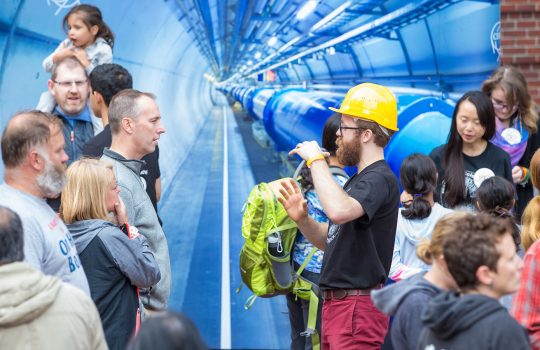
          A dynamic duo at CERN is planting seeds to foster physics research in Nepal. Like many students in Nepal, they moved abroad to pursue the best higher education opportunities. Now, they are using their unique experiences working at CERN to bring some of these opportunities back to his home country.