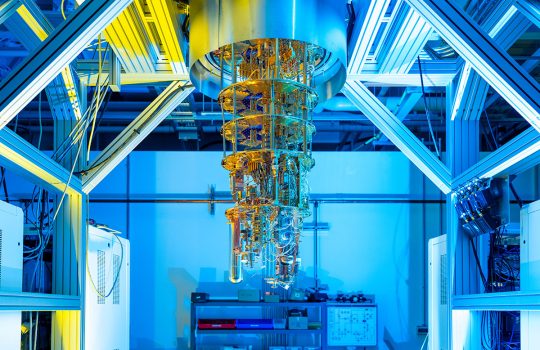
DOE releases national quantum computing roadmap following field-wide effort led by SCAC subcommittee
Quantum computing is becoming a revolutionary tool for scientific discovery.
1 - 10 of 46 results
Quantum computing is becoming a revolutionary tool for scientific discovery.
From the Department of Energy, Feb. 25, 2021: Jennifer M. Granholm was sworn in on Feb. 25 as the 16th U.S. secretary of energy. She is only the second woman to lead the U.S. Department of Energy.
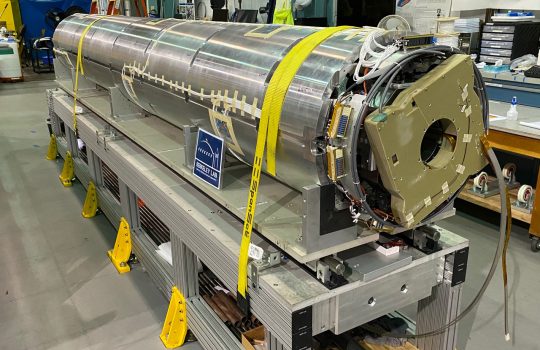
The U.S. Department of Energy has given the U.S. High-Luminosity Large Hadron Collider Accelerator Upgrade Project approval to move full-speed-ahead in building and delivering components for the HL-LHC, specifically, cutting-edge magnets and accelerator cavities that will enable more rapid-fire collisions at the collider. The collider upgrades will allow physicists to study particles such as the Higgs boson in greater detail and reveal rare new physics phenomena. The U.S. collaborators on the project may now move into production mode.
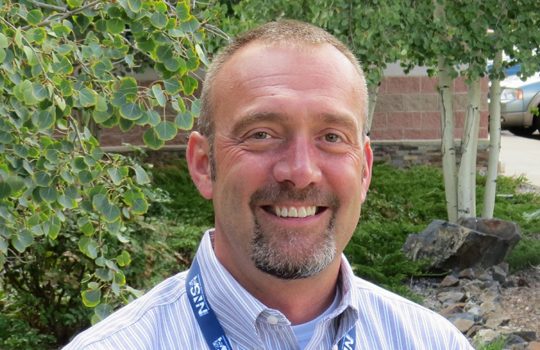
As the liaison between Fermilab and the Department of Energy Office of Science, Verhaagen will work to enable the laboratory mission and ensure work is accomplished safely and within DOE requirements.
From DOE, Dec. 9, 2020: Computer Science Education Week is aimed at inspiring students to discover computer science activities and careers. The national laboratories, including Fermilab, are scheduled to host a number of activities to highlight The Department of Energy’s efforts, including increasing access to computer science education, building computational literacy, and growing the cyber workforce of the future.
From Science, Oct. 2, 2020: As U.S. particle physicists start to drum up new ideas for the next decade in a yearlong Snowmass process they have no single big project to push for (or against). Physicists have just started to build the current plan’s centerpiece: The Long-Baseline Neutrino Facility at Fermilab will shoot particles through 1,300 kilometers of rock to the Deep Underground Neutrino Experiment in South Dakota. Fermilab Deputy Director of Research Joe Lykken and Fermilab scientist Vladimir Shiltsev comment on other possible pursuits in high-energy physics.
From Radiotelevisione Italiana Spa, Sept. 2, 2020: Anna Grassellino, 39 anni, marsalese, è stata incaricata dal governo americano di realizzare al Fermilab di Chicago il calcolatore più veloce di sempre. Il progetto prevede anche iniziative di formazione in Sicilia.
From AIP’s FYI, Sept. 11, 2020: FYI speaks with Department of Energy Office of Science Director Chris Fall about a range of issues bearing on the national lab system, including a new “Labs of the Future” thought exercise, pandemic recovery, diversity initiatives, and research security.
From INFN, Aug. 26, 2020: Il Department of Energy degli Stati Uniti finanzia il Superconducting Quantum Materials and Systems Center, coordinato dal Fermilab di Chicago e guidato dall’italiana Anna Grassellino. L’INFN parteciperà al progetto con il suo know-how scientifico e tecnologico, e grazie al finanziamento realizzerà una facility per dispositivi quantistici
nei suoi Laboratori Nazionali del Gran Sasso.
From Open Access Government, Sept. 10, 2020: DOE Associate Director of Science for High Energy Physics Jim Siegrist charts how future machines will explore new frontiers in particle physics. The DOE Office of Science is working with partners around the globe to realize the next generation of particle physics facilities and experiments, including the international, Fermilab-hosted Deep Underground Neutrino Experiment and its Long-Baseline Neutrino Facility, PIP-II, and LHC experiments, including CMS.